By Jason Polonski, REALTOR® with Right at Home Realty · 15+ years in Ottawa real estate · Updated September 2026
Is Kanata a good place to live? For most buyers, yes. Kanata is a large suburb about 20 to 25 kilometres west of downtown Ottawa, home to the Kanata North tech park and the Canadian Tire Centre. It offers everything from 1970s bungalows to new townhomes and executive singles, with good schools, extensive trails and quick Highway 417 access. The main trade-off is a longer commute downtown.
Kanata is Ottawa’s largest west-end suburban community — a planned “Garden City” that grew from farmland in the 1960s into a home for well over 100,000 residents and the heart of Canada’s largest technology park. Sitting roughly 20 to 25 kilometres west of downtown along Highway 417, Kanata blends a fast-growing tech economy, some of Ottawa’s most respected schools, an unusual amount of green space, and a range of neighbourhoods that run from heritage garden-city streets to executive golf-course communities and attainable family enclaves.
This guide is the complete picture of Kanata as a place to live: where it is, how it came to be, what drives its economy, what each of its neighbourhoods is like, and what day-to-day life looks like across schools, parks, shopping, recreation, and getting around. It is written for anyone getting to know the community — whether you are considering a move, new to the area, or simply want to understand why Kanata has become one of the most sought-after places to live in the National Capital Region. For the housing market specifically— prices, trends, and buying or selling— the Kanata real estate hub goes deeper.

Where is Kanata?
Kanata is a suburban district in the western part of the City of Ottawa, in eastern Ontario. It lies about 20 to 25 kilometres west of Parliament Hill and the downtown core, connected to the rest of the city primarily by Highway 417 (the Queensway), which runs along its southern edge, and by major arterials including Terry Fox Drive, March Road, Eagleson Road, and Hazeldean Road. Depending on traffic and starting point, the drive downtown typically takes 25 to 35 minutes.
Within the City of Ottawa’s ward system, Kanata is divided into Kanata North and Kanata South, and it borders the neighbouring community of Stittsville to the west and the rural areas of the former West Carleton and Goulbourn townships beyond. To its east and north, large sections of the National Capital Commission’s Greenbelt and natural areas such as the South March Highlands separate Kanata from the rest of the urban area, which is part of why the community feels distinct and green rather than like an undifferentiated extension of the city. The Ottawa International Airport is roughly a 30-minute drive to the southeast.
What Is the History of Kanata?
Kanata’s history is unusually deliberate for a suburb. In the early 1960s, the developer and architect William Teron — later nicknamed the “Father of Kanata” — began assembling roughly 4,000 acres of farmland in the former Township of March with the vision of building a planned “Garden City”: a community designed around preserved trees, winding streets, parks, and green corridors rather than a flat grid. Teron’s first neighbourhood, Beaverbrook, established that template in the 1960s, and its first street, Tiffany Crescent, was laid out in 1964.
The community grew quickly through the 1970s and 1980s. Kanata was incorporated as its own municipality in 1978, becoming a town and later a city in its own right, with its own council and identity separate from Ottawa. Over the following decades it expanded south and west, adding neighbourhoods, schools, shopping, and — crucially — a technology sector that would come to define it. On January 1, 2001, Kanata was amalgamated along with Ottawa’s other surrounding municipalities into the single, enlarged City of Ottawa. Residents still refer to Kanata by name, and it remains one of the city’s most recognizable and self-contained communities.
For the full story, including which other communities joined Ottawa at the same time, see is Kanata part of Ottawa?
That layered history is visible on the ground today. The oldest neighbourhoods, like Beaverbrook and Glen Cairn, date to the 1960s and have mature trees and settled streetscapes; the executive communities around the golf course were built out from the 1980s; and newer subdivisions continue to rise on Kanata’s growing edges. Few Ottawa suburbs can trace their character so directly to a single founding idea.
Sell Your Ottawa Home for Just 1% Listing Commission
Why pay 2.5% listing commission to sell your home when you don't have to? Jason Polonski lists Ottawa homes for a simple 1% listing commission. Full MLS® and REALTOR.ca exposure, professional photography, powerful online marketing, expert pricing, and a skilled negotiator fighting for every dollar of your sale price. Top-tier service — you just keep thousands more when your home sells. Smart sellers are already making the switch. Your home deserves the best, and your wallet deserves a break.
Kanata at a glance
| What it is | Ottawa’s largest west-end suburban district (Kanata North & Kanata South wards) |
|---|---|
| Location | ~20–25 km west of downtown Ottawa, along Highway 417 |
| Founded | Planned “Garden City” begun in the 1960s by William Teron |
| Incorporated | 1978 as its own municipality; amalgamated into Ottawa in 2001 |
| Population | Well over 100,000 residents |
| Known for | Kanata North Technology Park — Canada’s largest tech park |
| Major landmark | Canadian Tire Centre — home of the NHL’s Ottawa Senators |
| Commute downtown | ~25–35 minutes via Highway 417 |
Get Cash Back When You Buy a Home in Ottawa
Can you get cash back when buying a home in Ottawa? Yes. Jason Polonski, a Chairman's Club REALTOR® serving Ottawa and Kanata, shares part of his commission with buyers — up to $3,000 cash back at closing.* You still get full-service, award-winning representation: expert pricing, sharp negotiation, and hands-on guidance from first showing to keys in hand. No cut corners and no rebate-only shortcuts — just real money back in your pocket when you buy your Ottawa or Kanata home.
What Are the Main Employers Near Kanata?
More than anything else, Kanata is defined by technology. The Kanata North Technology Park is the largest in Canada and one of the densest concentrations of tech talent on the continent. By the business association’s 2025 figures, the area is home to more than 800 companies, supports roughly 63,000 jobs, and generates on the order of $17.9 billion in economic output across Canada. Its companies work in telecommunications, semiconductors, photonics, artificial intelligence, cybersecurity, cloud software, and medical technology, and the cluster includes global names alongside a deep bench of startups and scale-ups.
The roots of that ecosystem run deep. Kanata’s technology story is tied to entrepreneurs like Terry Matthews, the founder of Mitel and Newbridge Networks, whose ventures seeded generations of Ottawa tech companies, and to the legacy of major telecommunications firms that once anchored the area. Today the park continues to attract international employers and talent, which is a major reason housing demand in Kanata stays strong: a large share of residents either work in the park or in the professional and public-sector jobs that surround it.
For anyone weighing a move, the practical takeaway is that Kanata offers something many suburbs do not — a genuine local employment base. Many residents enjoy a short “reverse commute” to jobs minutes from home rather than a long daily trip downtown, and the presence of stable, well-paid employment underpins the community’s schools, amenities, and property values.

Kanata’s neighbourhoods
Kanata is not one place but a collection of distinct neighbourhoods, each with its own character, history, and housing. Understanding them is the key to understanding Kanata. Alongside the established areas below, newer master-planned communities like Brookline and Northwoods are expanding Kanata North’s new-build options. The community’s most established and sought-after neighbourhoods include:
Beaverbrook
Kanata’s original neighbourhood and the birthplace of the whole community. Built from the 1960s on William Teron’s garden-city principles, Beaverbrook is known for mature trees, heritage-era architecture, and a strong sense of history. It suits buyers who value character and Kanata’s origin story. See the full Beaverbrook neighbourhood guide.
Kanata Lakes
The community’s executive tier — a master-planned, golf-course neighbourhood in Kanata North with larger detached homes, some of the region’s top-ranked schools, and quick access to the tech park. It sits at the upper end of Kanata’s market. See the full Kanata Lakes neighbourhood guide.
Bridlewood
One of Kanata’s largest family communities, in Kanata South, wrapped by the National Capital Greenbelt. Bridlewood offers a wide mix of homes — from townhomes to detached — plus newer sub-areas like Emerald Meadows, at a more attainable, mid-market price point. See the full Bridlewood neighbourhood guide.
Glen Cairn
One of Kanata’s oldest and most affordable neighbourhoods, built from the 1960s in what is now Kanata South. Glen Cairn is known for mature streets, established homes, strong civic amenities, and an attainable entry point into the community. See the full Glen Cairn neighbourhood guide.
And more: Katimavik, Morgan’s Grant & beyond
Kanata also includes Katimavik-Hazeldean, a large and well-located family community in Kanata South; Morgan’s Grant, a newer neighbourhood in the north close to the tech park; the Marchwood-Lakeside area; and rural pockets on Kanata’s edges. Each offers a different balance of price, age, and lifestyle. To compare them side by side, see the best neighbourhoods in Kanata guide, and for the northern cluster specifically, the Kanata North overview.
What Is It Like to Live in Kanata?
Life in Kanata tends to be family-oriented, active, and community-minded. Neighbourhoods are anchored by schools, parks, and community associations that run events, sports leagues, and seasonal programs, and the overall feel is of a large suburb that still functions as a set of connected communities rather than an anonymous sprawl. Safety, quiet streets, and green space are consistently what residents cite as the reasons they stay. For a fuller sense of daily life, the Living in Kanata page explores the experiential side, and the benefits of living in Kanata page lays out the practical case.
Kanata also works well across life stages. Young families are drawn by schools and parks; professionals by the short commute to the tech park; and retirees by the quiet, the amenities, and the single-level and low-maintenance housing options in established areas. Readers weighing those questions may find the is Kanata a good place to live and is Kanata a good place to retire pages useful.
What Are the Schools Like in Kanata?
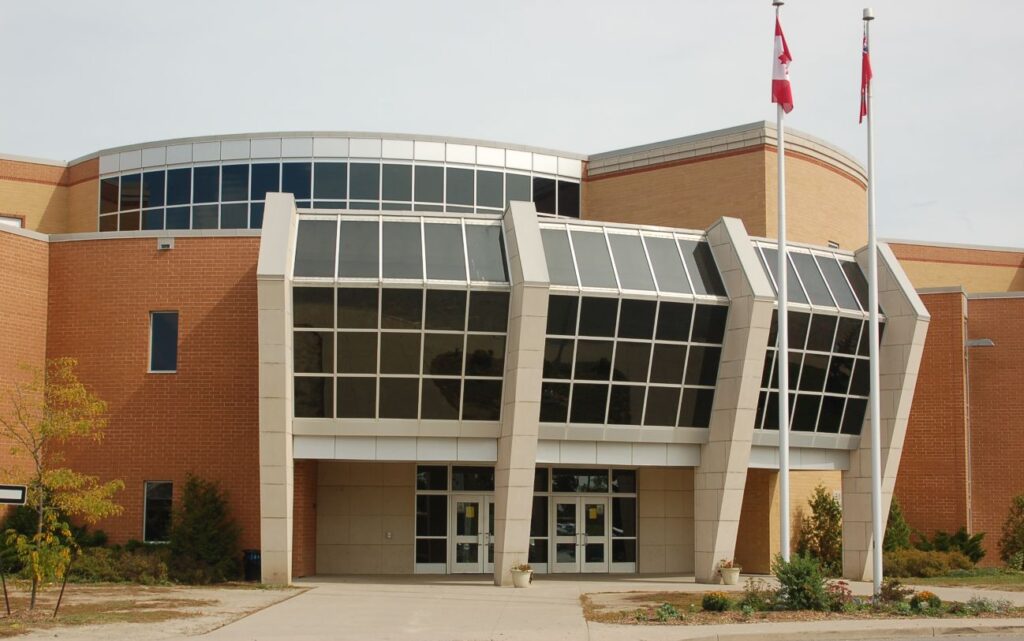
Education is one of Kanata’s strongest draws. The community is served by four school boards — the Ottawa-Carleton District School Board (English public), the Ottawa Catholic School Board (English Catholic), and the region’s French public and French Catholic boards — and includes a large number of well-regarded elementary schools plus several respected high schools. Public secondary anchors include Earl of March Secondary School in the north and A.Y. Jackson Secondary School in the south, alongside Catholic options such as All Saints and Holy Trinity. French Immersion is widely available across the public system.
Because school catchments determine which schools a given address is assigned to — and because those boundaries can change — families buying with a specific school in mind should always confirm the current catchment with the relevant board. A full breakdown of Kanata’s schools, from elementary through secondary, is available on the Kanata schools guide.

What Parks and Trails Are in Kanata?
For a suburb of its size, Kanata is remarkably green — a direct legacy of the garden-city vision and of the natural areas that ring the community. The National Capital Greenbelt wraps large parts of Kanata South, giving neighbourhoods like Bridlewood direct access to protected forest and trails.
To the north, the South March Highlands offer one of the region’s most valued natural areas, with extensive hiking and mountain-biking trails through mature forest and wetlands. The Trans-Canada Trail runs through the community, and hundreds of municipal parks, ponds, sports fields, and pathways are threaded through its neighbourhoods.
Beyond nature, Kanata is well equipped for organized recreation, with arenas, pools, tennis and pickleball courts, and community centres across both wards, plus a championship golf course at the heart of Kanata Lakes. Residents who prioritize the outdoors can explore the Kanata outdoors guide for trails and nature, the Kanata parks guide for municipal green space, and the family-friendly activities guide for ideas with kids.

What Is There to Do in Kanata?
Kanata’s biggest landmark is the Canadian Tire Centre, the arena on Palladium Drive that is home to the National Hockey League’s Ottawa Senators and one of the city’s main venues for major concerts and events. Beyond it, the community supports a rich amateur sports scene — minor hockey, soccer, tennis, and more — and a genuine arts culture, including the long-running Kanata Theatre and community music and art groups. Major shopping-and-entertainment districts like Kanata Centrum add cinemas and dining to the mix. For a fuller list, see the things to do in Kanata and Kanata sports complexes guides.

Where Do Kanata Residents Shop and Eat?
Kanata is well supplied for day-to-day life. The main retail districts — Kanata Centrum and the surrounding big-box centres, Hazeldean Mall, the Signature Centre, and Tanger Outlets — together cover grocery, department-store, home, electronics, and brand-name shopping, along with a broad range of restaurants and services. Local plazas along the main arterials handle everyday errands close to home.
Healthcare is anchored by the nearby Queensway Carleton Hospital, and the community has a full complement of libraries, clinics, and civic services. For most residents, very little routine shopping or errand-running requires leaving Kanata.

How Do You Get Around Kanata?
Kanata is built primarily around driving, with Highway 417 providing the main connection to the rest of Ottawa and beyond, and a network of arterials — Terry Fox Drive, March Road, Eagleson Road, Hazeldean Road, and Castlefrank Road — moving traffic within the community. OC Transpo provides bus service throughout Kanata, including connections to park-and-ride lots and transit stations that link into the city’s wider rapid-transit network.
Ottawa’s light rail system (the O-Train) is being extended westward toward Kanata in stages; at the time of writing, LRT does not yet reach Kanata itself, so residents relying on rapid transit should treat it as a future improvement and evaluate current bus service for their specific area. Full details are in the Kanata public transit guide.
What Homes Can You Buy in Kanata?
Kanata’s housing market is as varied as its neighbourhoods. Buyers will find everything from condominium apartments and townhomes to semi-detached and detached family homes to executive and estate properties — spanning heritage streets in Beaverbrook, executive enclaves in Kanata Lakes, family communities in Bridlewood, and attainable options in Glen Cairn. That range means Kanata serves first-time buyers, growing families, professionals, downsizers, and investors alike.
Because prices, inventory, and market conditions change constantly, this guide does not try to pin down current values — that is the job of the market pages, which are kept up to date. For the full picture of the market, see the Kanata real estate hub, along with the Kanata home prices and market trends pages. Buyers and sellers ready to act can start with the buying a home in Kanata and selling your home in Kanata guides, and those considering apartment-style living can explore condos in Kanata.
To plan the numbers before you buy in Kanata, estimate your maximum budget with the Ottawa home affordability calculator and your annual property tax with the Ottawa property tax calculator.
Is Kanata right for you?
Kanata tends to suit people who want the space, schools, and green surroundings of a suburb without giving up a real local economy and everyday convenience. It is an especially strong fit for households connected to the technology sector, for families prioritizing schools and parks, and for buyers who want a settled, community-oriented place to put down roots. It appeals less to those who want the walkable, downtown-core lifestyle of central Ottawa or the lowest possible urban commute. With neighbourhoods spanning heritage, executive, family, and attainable price points, most people who want the west end can find a version of Kanata that fits.

Posted on Google
 Joe Ireland7 days ago
Trustindex verifies that the original source of the review is Google.
Jason helped me buy my first home. He was extremely responsive and available from our very first call, and assisted with booking multiple viewings across Ottawa. He was punctual to every viewing and honest with his feedback with the homes we saw, and when it came time to go from viewing to buying, he had an impressive array of contacts from brokers to inspectors to lawyers, all with excellent reviews and who were great to work with in their own right. As a first-time home buyer, his responsiveness and patience with many questions were extremely reassuring and really streamlined the process, and I signed an offer on my home within just 2 weeks of meeting him. I would strongly recommend Jason to anyone buying a home in Ottawa, especially to those who are strangers to the process like I was. Thank you again, Jason!Posted on Google Marina37 days agoWe had a wonderful experience working with our realtor - Jason Polonski. He is a professional, knowledgeable, responsive, and truly attentive to our needs. Jason guided us through every step of the process, answered all of our questions. My family are very grateful for his work and would absolutely recommend him to anyone looking for a reliable and trustworthy realtor in Ottawa and around !Posted on Google
 Vatrul “Vatrul”41 days agoFirst time home seller. Every process of the journey was explained and laid out perfectly.. Very highly recommended.. thank you Jason..Posted on Google
 Olga V.42 days agoJason is very knowledgeable realtor in Kanata. He’s been always good beyond to help his clients. We had a place experience buying a house in Kanata. I highly recommend him.Posted on Google
 Yuri Tsouker49 days agoWorking with Jason on the sale of my property was genuinely one of the smoothest professional experiences I've had. He was responsive at every step, patient with every question (and I had many), and he clearly knew the local market inside and out. My sale wasn't a simple one — there was a tenant, a rental water heater, a plumber to coordinate, and plenty of complications that made this a genuinely difficult case. Jason handled all of it with calm, practical advice and always got back to me quickly, often with a solution before I even finished asking about the problem. What stood out most was his honesty. He didn't push, he didn't overpromise, and every recommendation he made turned out to be exactly right. I felt like I had a professional in my corner from day one. If you're looking for a realtor who is knowledgeable, responsive, and genuinely trustworthy, I can't recommend Jason highly enough. Thank you, Jason — much appreciated!Posted on Google
 Denis Pepin73 days agoOutstanding Experience with Jason Polonski! Last May, my wife and I sold our home in Stittsville with Jason Polonski, and we couldn't be happier with our decision. Jason made the entire process remarkably smooth and stress-free. From day one, Jason stood out for his exceptional communication. He was always prompt and available to answer our queries—often within minutes—no matter the time of day. Whenever we had questions regarding paperwork, listing strategies, or handling property details, he addressed every concern with a truly genuine, human touch. What impressed us most was how proactive and reassuring he was at every step. When we had to coordinate the buyout of our water heater rental, Jason handled the reimbursement seamlessly, reassuring us with, "We should have a smooth sale now. :)"—and it truly was! Even post-closing, when we needed to arrange delivery for mailbox keys or track down final funds from head office, Jason stayed on top of every detail, putting a rush on things and constantly keeping us updated. Jason is a dedicated, attentive, and highly professional realtor who genuinely cares about his clients. It has been an absolute pleasure working with him, and we highly recommend Jason Polonski to anyone looking to buy or sell a home in the Ottawa region.Posted on Google
 Tammy Puhakka82 days agoI highly recommend Jason Polonski, a realtor in Kanata, Ottawa. He truly went above and beyond for me. During a long weekend, he called me and, within just two hours, had an offer to purchase prepared and sent so I could secure the home I had found and fallen in love with. Jason was professional, efficient, knowledgeable, and incredibly pleasant to work with. His rates are very reasonable, and his dedication to his clients is outstanding. If you’re looking for fast, reliable, and friendly service, I would absolutely recommend contacting him.❤️Posted on Google
 Joe Melindy87 days agoEverything went smoothly. Jason is very good at what he does. Would highly recommend. Thanks Jason 😊Posted on Google
 Julianne Robert122 days agoJason recently helped me and my family find a home and we were extremely happy with our experience. He did everything he could to secure us the best property, was always readily available and had a lot of knowledge on the house buying process. My family would highly recommend him.Posted on Google
 Shawnae Flieler124 days agoBuying our first home was a huge milestone for us, and we genuinely couldn't have asked for a better person to guide us through it than Jason. From day one, he made the entire process feel so much less overwhelming. What could have been a stressful experience was instead exciting, enjoyable, and honestly a lot of fun. He has a great sense of humour and a way of keeping things light when needed, while still being incredibly thorough and professional. One of the things we appreciated most was how much he genuinely cared about finding us the right home. He wasn't just trying to help us buy a house, he wanted to make sure we were making a good decision. He took the time to point out things we never would have noticed ourselves, shared insights about the homes we viewed, and was always looking out for potential issues that could become headaches down the road. It was obvious that he wanted us to end up somewhere we'd be truly happy, not just somewhere that checked a box. He also listened. Every preference, every must-have, every little detail we mentioned along the way was remembered and taken into consideration. We never felt pressured, rushed, or like we were compromising on what mattered to us. On top of that, he was incredibly responsive and always on the ball. Whether it was answering a last-minute question, booking a showing, or helping us navigate the next step, he was always there when we needed him. We felt supported every step of the way, and that's not something we'll forget. If you're looking for a realtor who is knowledgeable, honest, hardworking, and genuinely invested in his clients, we can't recommend Jason enough. We are so grateful for everything he did to help us find our home.

What Is the Kanata Real Estate Market Like in Fall 2026?
Kanata sits in the healthiest part of Ottawa’s market right now. In August 2026, OREB’s west-end suburban submarket had 3.6 months of inventory — the tightest of Ottawa’s three suburban areas — even though its sales fell 14.3% from a year earlier. Across the city, the single-family benchmark rose 2.2% to $726,700 while the townhouse benchmark fell 4.0% to $547,300. That split matters in Kanata, where townhomes made up 185 of 396 active listings on September 28: detached sellers are holding value, and townhouse buyers have more room to negotiate.
Sources: Ottawa Real Estate Board, August 2026 market report and OREB August 2026 submarket update (PDF). Figures are city-wide or submarket-level; OREB does not publish neighbourhood prices. For a price on a specific home, request a free home evaluation.
Where Can You Find Official Information About Kanata?
Before you make an offer in Kanata, check these sources directly:
- OCDSB school locator — confirm English public school catchment for the exact address
- Ottawa Catholic School Board school directory — find Catholic schools and their boundaries
- OC Transpo travel planner — test your rush-hour commute before you buy
- Ottawa Police Service crime maps — check reported incidents near a specific street
- Kanata North Business Association — the tech park that employs many local residents
- Canadian Tire Centre — home of the Ottawa Senators and major concerts
- Beaverbrook branch of the Ottawa Public Library — hours, programs and community events
- Hazeldean branch of the Ottawa Public Library — hours, programs and community events
Which Nearby Neighbourhoods Should You Compare With Kanata?
Kanata is one of the communities in the Ottawa neighbourhoods guide. Buyers looking here often also compare:
- Kanata Lakes — executive homes around a golf course
- Bridlewood — family space and value in Kanata South
- Beaverbrook — Kanata’s original garden-city neighbourhood
- Kanata vs Barrhaven
- Kanata vs Stittsville
- Kanata schools guide
- Cost of living in Kanata
Getting to know Kanata with a local REALTOR®
Jason Polonski is a Kanata-based REALTOR® with Right at Home Realty who lives and works in the community. Whether you are researching a possible move, comparing neighbourhoods, or getting ready to buy or sell, his local knowledge — backed by a construction and licensed electrical background that sharpens his read on a home’s true condition — helps clients make confident decisions. To ask a question about any Kanata neighbourhood, or to talk through buying or selling, learn more about Jason, explore the Kanata real estate hub, or call directly at (613) 601-9333.
Related guides: Carp vs Kanata · Dunrobin vs Kanata
Jason also holds a Bachelor of Commerce from Concordia University, with a double major in Marketing and Finance, and has more than 15 years of experience helping Ottawa buyers and sellers.
Kanata: Frequently Asked Questions
Kanata is a large suburban district in the western part of the City of Ottawa, in eastern Ontario, about 20 to 25 kilometres west of downtown along Highway 417. Once its own municipality, it was amalgamated into Ottawa in 2001 and is now divided into the Kanata North and Kanata South wards.
Yes. Kanata was an independent municipality from 1978 until January 1, 2001, when it was amalgamated into the enlarged City of Ottawa. Residents still identify strongly with Kanata as a distinct community, but it is officially part of Ottawa.
Kanata is best known as the home of the Kanata North Technology Park — the largest technology park in Canada, with more than 800 companies and roughly 63,000 jobs — and as the location of the Canadian Tire Centre, the arena where the NHL’s Ottawa Senators play. It is also known for its origins as a planned “Garden City” designed by developer William Teron.
Kanata is consistently regarded as one of the best places to live in the Ottawa area, thanks to its strong schools, abundant parks and trails, low crime, family-friendly neighbourhoods, and a major local job base in the technology sector. It offers neighbourhoods across a wide range of price points, from attainable to executive.
Kanata’s established neighbourhoods include Beaverbrook (its original, heritage community), Kanata Lakes (executive, golf-course community), Bridlewood and Glen Cairn (family communities in Kanata South), plus Katimavik, Morgan’s Grant, Marchwood-Lakeside, and newer subdivisions. Each has its own character, housing mix, and price range.
Kanata is roughly 20 to 25 kilometres from downtown Ottawa, which is typically a 25-to-35-minute drive via Highway 417, depending on traffic. OC Transpo buses connect Kanata to the city’s transit network, and light rail is planned to reach the area in the future.
Kanata offers Ottawa Senators games and major concerts at the Canadian Tire Centre, extensive parks and trails, including the South March Highlands and the Greenbelt, golf, arenas and pools, community theatre and arts, and major shopping and dining districts like Kanata Centrum. It is a well-rounded community for families and active residents.
Jason Polonski is a Kanata-based REALTOR® with Right at Home Realty who lives and works in the community and knows its neighbourhoods in detail. He can answer questions about any part of Kanata and help with buying or selling. He can be reached at (613) 601-9333.
