Last updated: October 2026
Yes, Kanata is part of Ottawa. The former City of Kanata was merged into a new, single City of Ottawa on January 1, 2001, along with ten other municipalities. Today Kanata is a community in Ottawa’s west end, with city councillors, services and property taxes from the City of Ottawa, although many residents and businesses still use “Kanata” in their addresses.
Kanata isn’t unusual in this. Stittsville, Barrhaven, Orléans, Manotick, Carp and dozens of other places that look like separate towns on a map are all inside Ottawa’s city limits. This guide explains how that happened, which former municipality each community came from, and what it means in practice when you buy or sell a home. For the bigger picture of life in the capital, start with our Living in Ottawa guide.
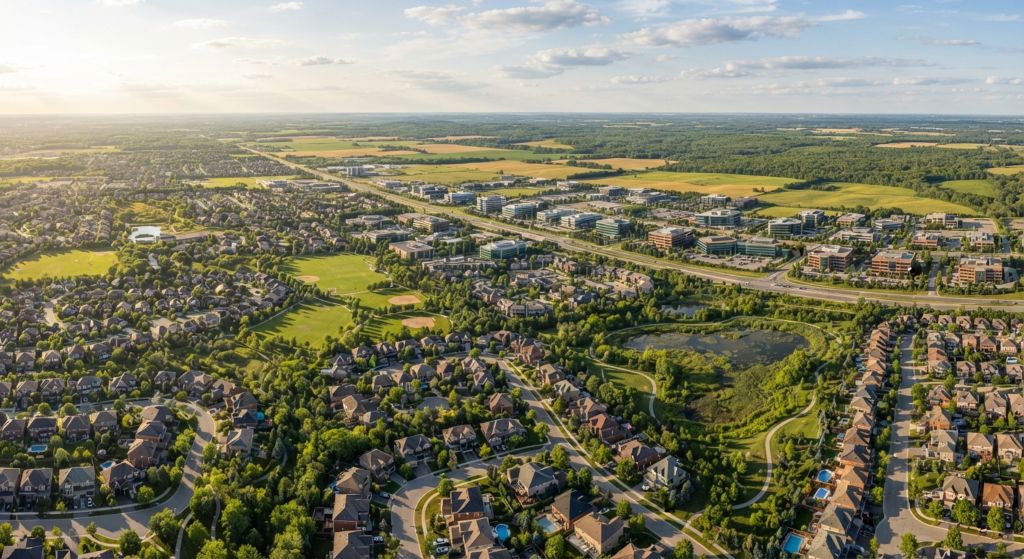
Is Kanata Part of Ottawa? The Short History
Kanata began as part of March Township, a rural area west of Ottawa. In the 1960s, developer and planner Bill Teron began building a planned garden community on farmland there, with homes, green space and land set aside for technology employers. That plan is why Kanata became home to one of Canada’s best-known tech clusters.
The area was incorporated as the City of Kanata in 1978, taking in March Township along with parts of neighbouring townships. For the next two decades it had its own mayor and council, sitting under the Regional Municipality of Ottawa-Carleton, which had handled region-wide services such as transit, water and major roads since 1969.
That two-tier system ended when the Ontario government passed the City of Ottawa Act, 1999. On January 1, 2001, the regional government and its eleven lower-tier municipalities, including Kanata, were dissolved and replaced by one amalgamated City of Ottawa. So the short answer is that Kanata has been part of Ottawa for more than 25 years. It’s still widely called Kanata because the community’s identity didn’t disappear when the city did.
The 11 Municipalities That Became Today’s Ottawa
If you’re relocating, it helps to know which old municipality a neighbourhood came from. It explains a lot about the area’s character, its services and even how locals describe where they live.
| Former municipality | Communities you’ll hear about today |
|---|---|
| City of Ottawa | Centretown, The Glebe, Westboro, Hintonburg, Alta Vista, Old Ottawa South |
| City of Kanata | Beaverbrook, Katimavik-Hazeldean, Glen Cairn, Bridlewood, Kanata Lakes, Morgan’s Grant |
| City of Nepean | Barrhaven, Centrepointe, Bells Corners, Craig Henry, Merivale |
| City of Gloucester | Blackburn Hamlet, Beacon Hill, western Orléans |
| City of Cumberland | Eastern Orléans, Navan, Sarsfield, Cumberland village |
| City of Vanier | Vanier |
| Village of Rockcliffe Park | Rockcliffe Park |
| Township of Goulbourn | Stittsville, Richmond, Munster |
| Township of West Carleton | Carp, Dunrobin, Constance Bay, Kinburn, Fitzroy Harbour, Woodlawn |
| Township of Rideau | Manotick, North Gower, Kars, Burritts Rapids |
| Township of Osgoode | Greely, Metcalfe, Osgoode village, Vernon |
Not every neighbourhood fits neatly into one box. Orléans, for example, straddled the old Gloucester and Cumberland boundary. Today’s ward boundaries are different again and are reviewed periodically; you can look up any address on the City’s wards and councillors page. Kanata is currently split mainly between Kanata North and Kanata South wards.
Our Ottawa neighbourhoods guide covers what these communities are like to live in today.
Sell Your Ottawa Home for Just 1% Listing Commission
Why pay 2.5% listing commission to sell your home when you don't have to? Jason Polonski lists Ottawa homes for a simple 1% listing commission. Full MLS® and REALTOR.ca exposure, professional photography, powerful online marketing, expert pricing, and a skilled negotiator fighting for every dollar of your sale price. Top-tier service — you just keep thousands more when your home sells. Smart sellers are already making the switch. Your home deserves the best, and your wallet deserves a break.
What “Part of Ottawa” Means When You Buy a Home
Buyers moving from other provinces are often surprised by how big Ottawa is. The city covers roughly 2,800 square kilometres, and much of it is farmland, forest and villages. That has real consequences for homeowners.
One property tax system, with urban and rural differences
Every property in Ottawa is taxed by the City of Ottawa, based on its assessed value from the Municipal Property Assessment Corporation. The tax rate isn’t identical everywhere, though. Levies for services such as public transit and fire protection differ between urban and rural areas, so two homes of the same value in Kanata and in Dunrobin can have different tax bills. The City’s property tax page explains how the bill is built.
Municipal water or a well and septic
Urban communities such as Kanata, Barrhaven and Orléans are on city water and sewer. Many rural communities, including large parts of Carp, Dunrobin, Constance Bay and Manotick, rely on private wells and septic systems. These are all Ottawa addresses, but they come with very different maintenance responsibilities. Our guide to buying a rural property in Ottawa covers what to check.
No extra municipal land transfer tax
Buyers anywhere in Ottawa pay the Ontario land transfer tax, but there’s no second municipal land transfer tax like the one Toronto charges. Buying in Kanata costs the same in land transfer tax as buying downtown, for the same price.
The same school boards across the city
All four publicly funded school boards operate city-wide: the Ottawa-Carleton District School Board, the Ottawa Catholic School Board and two French-language boards. Your school depends on your exact address and program, not the old municipal boundary. See Kanata schools for the west end.
One set of planning rules
Zoning, building permits, secondary dwelling units and severances are all handled by the City of Ottawa under one Official Plan and zoning by-law. Rural and village areas have different zones from the suburbs, but the rules come from the same city hall.
Get Cash Back When You Buy a Home in Ottawa
Can you get cash back when buying a home in Ottawa? Yes. Jason Polonski, a Chairman's Club REALTOR® serving Ottawa and Kanata, shares part of his commission with buyers — up to $3,000 cash back at closing.* You still get full-service, award-winning representation: expert pricing, sharp negotiation, and hands-on guidance from first showing to keys in hand. No cut corners and no rebate-only shortcuts — just real money back in your pocket when you buy your Ottawa or Kanata home.
Kanata Addresses, Postal Codes and MLS® Listings
You can still use “Kanata, ON” on a mailing address, and Canada Post delivers mail to either Kanata or Ottawa as long as the postal code is correct. Kanata postal codes start with K2, including K2K, K2L and K2M; you can confirm any address with Canada Post’s postal code lookup.
On MLS® listings, the city field usually reads “Ottawa”, with Kanata or the specific neighbourhood recorded as the community. If you’re searching for homes, filter by neighbourhood rather than city, or you’ll see listings from across the whole of Ottawa.
For legal documents, purchase agreements and property tax bills, the municipality is the City of Ottawa. Your real estate lawyer will use the legal description and municipal address from the land registry, whichever community name appears on your mail.
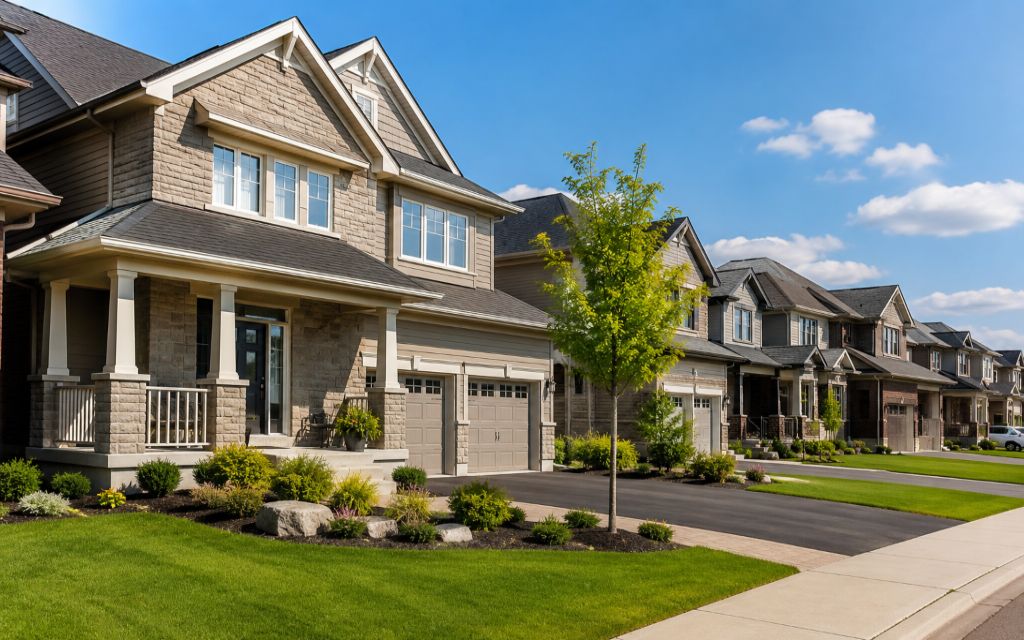
Kanata Today: Ottawa’s West-End Tech and Family Hub
Kanata is one of Ottawa’s largest suburban communities and its main west-end employment centre. The Kanata North technology park is home to many of the city’s technology employers, and Kanata’s south and west sides are mostly family neighbourhoods built from the 1970s onward, with newer communities still being added.
Everyday life centres on a few key spots: the Kanata Centrum and Hazeldean Road shopping areas, the Canadian Tire Centre, home of the Ottawa Senators, and Highway 417, the main route downtown. Trails and green space run through many neighbourhoods, and the Ottawa River and the Carp Hills are close by.
Getting downtown is the trade-off. Most Kanata commuters drive the 417 or take OC Transpo express buses. The City’s Stage 2 light rail project is extending the O-Train west to Moodie and Algonquin stations, which will shorten some transit trips but won’t reach Kanata itself; OC Transpo posts current service updates. Our page on public transit in Kanata covers routes, and Kanata vs downtown Ottawa compares the lifestyle trade-offs.
If you’re moving for a job in the tech park, our guide to relocating to Kanata is a good next step, and the Kanata real estate guide covers neighbourhoods, housing types and prices.
Other Common “Is It Part of Ottawa?” Questions
Is Stittsville part of Ottawa?
Yes. Stittsville was a village within Goulbourn Township, which joined the City of Ottawa in 2001. It sits just southwest of Kanata and has its own city ward. Our Stittsville real estate guide covers the community, and Kanata vs Stittsville compares the two.
Are Barrhaven, Orléans and Manotick part of Ottawa?
Yes. Barrhaven came from the former City of Nepean, Orléans from Gloucester and Cumberland, and Manotick from Rideau Township. All three have been inside Ottawa since 2001.
Is Gatineau part of Ottawa?
No. Gatineau is a separate city in Quebec, directly across the Ottawa River. Ottawa and Gatineau together form Canada’s capital region, which the National Capital Commission helps plan, but they have different municipal governments and provincial laws, including different rules for buying property.
Are Carleton Place, Arnprior and Rockland part of Ottawa?
No. These are separate towns outside Ottawa’s boundaries, in Lanark County, Renfrew County and Prescott and Russell respectively. Many people commute from them into Ottawa, but they have their own municipal governments and property tax systems.
Does the Old Municipality Still Matter?
Legally, no. In real estate, yes, and probably more than most newcomers expect.
Buyers search by community, not by “Ottawa”, and each former municipality developed its own housing stock. Kanata and Barrhaven are dominated by family subdivisions from the 1970s onward. The old City of Ottawa holds most of the century homes and walkable older neighbourhoods. West Carleton, Rideau and Osgoode are where you’ll find acreages, wells and septic systems, and village main streets. Those differences shape price, upkeep, commute and resale far more than the city name on your tax bill.
Community identity is still strong too. Kanata and Stittsville have their own community associations, events and local businesses, and many longtime residents still say they live “in Kanata” rather than “in Ottawa.” If you’re comparing areas, the questions that matter are which community fits your daily life, what kind of home you want, and how far you’re willing to commute.


Posted on Google 

Jennifer Clark
3 days ago
 Trustindex verifies that the original source of the review is Google.
His availability to communicate was incredible which is so important when selling a house. Great at everything else too.
Posted on Google

Aarushi Govil
14 days ago
Trustindex verifies that the original source of the review is Google. Working with Jason has been an absolute privilege from start to finish. Finding the right realtor can be daunting, but Jason exceeded every expectation. He is remarkably knowledgeable and was extremely punctual and responsive to every question or request we had, no matter the time or the day. What stood out most was his complete sincerity and zero-pressure approach. When we walked through houses, he was transparent, pointing out both the pros and potential red flags instead of trying to make a quick sale. His honest feedback gave us complete confidence in our decision. If you want a dedicated, honest, and highly skilled agent in your corner, look no further than Jason!
Posted on Google

Joe Ireland
28 days ago
Trustindex verifies that the original source of the review is Google. Jason helped me buy my first home.
He was extremely responsive and available from our very first call, and assisted with booking multiple viewings across Ottawa.
He was punctual to every viewing and honest with his feedback with the homes we saw, and when it came time to go from viewing to buying, he had an impressive array of contacts from brokers to inspectors to lawyers, all with excellent reviews and who were great to work with in their own right.
As a first-time home buyer, his responsiveness and patience with many questions were extremely reassuring and really streamlined the process, and I signed an offer on my home within just 2 weeks of meeting him.
I would strongly recommend Jason to anyone buying a home in Ottawa, especially to those who are strangers to the process like I was.
Thank you again, Jason!
Posted on Google

Marina
58 days ago
Trustindex verifies that the original source of the review is Google. We had a wonderful experience working with our realtor - Jason Polonski. He is a professional, knowledgeable, responsive, and truly attentive to our needs. Jason guided us through every step of the process, answered all of our questions. My family are very grateful for his work and would absolutely recommend him to anyone looking for a reliable and trustworthy realtor in Ottawa and around !
Posted on Google

Vatrul “Vatrul”
62 days ago
Trustindex verifies that the original source of the review is Google. First time home seller. Every process of the journey was explained and laid out perfectly.. Very highly recommended.. thank you Jason..
Posted on Google

Olga V.
63 days ago
Trustindex verifies that the original source of the review is Google. Jason is very knowledgeable realtor in Kanata. He’s been always good beyond to help his clients. We had a place experience buying a house in Kanata. I highly recommend him.
Posted on Google

Yuri Tsouker
70 days ago
Trustindex verifies that the original source of the review is Google. Working with Jason on the sale of my property was genuinely one of the smoothest professional experiences I've had. He was responsive at every step, patient with every question (and I had many), and he clearly knew the local market inside and out.
My sale wasn't a simple one — there was a tenant, a rental water heater, a plumber to coordinate, and plenty of complications that made this a genuinely difficult case. Jason handled all of it with calm, practical advice and always got back to me quickly, often with a solution before I even finished asking about the problem.
What stood out most was his honesty. He didn't push, he didn't overpromise, and every recommendation he made turned out to be exactly right. I felt like I had a professional in my corner from day one.
If you're looking for a realtor who is knowledgeable, responsive, and genuinely trustworthy, I can't recommend Jason highly enough. Thank you, Jason — much appreciated!
Posted on Google

Denis Pepin
94 days ago
Trustindex verifies that the original source of the review is Google. Outstanding Experience with Jason Polonski!
Last May, my wife and I sold our home in Stittsville with Jason Polonski, and we couldn't be happier with our decision. Jason made the entire process remarkably smooth and stress-free.
From day one, Jason stood out for his exceptional communication. He was always prompt and available to answer our queries—often within minutes—no matter the time of day. Whenever we had questions regarding paperwork, listing strategies, or handling property details, he addressed every concern with a truly genuine, human touch.
What impressed us most was how proactive and reassuring he was at every step. When we had to coordinate the buyout of our water heater rental, Jason handled the reimbursement seamlessly, reassuring us with, "We should have a smooth sale now. :)"—and it truly was! Even post-closing, when we needed to arrange delivery for mailbox keys or track down final funds from head office, Jason stayed on top of every detail, putting a rush on things and constantly keeping us updated.
Jason is a dedicated, attentive, and highly professional realtor who genuinely cares about his clients. It has been an absolute pleasure working with him, and we highly recommend Jason Polonski to anyone looking to buy or sell a home in the Ottawa region.
Posted on Google

Tammy Puhakka
103 days ago
Trustindex verifies that the original source of the review is Google. I highly recommend Jason Polonski, a realtor in Kanata, Ottawa. He truly went above and beyond for me. During a long weekend, he called me and, within just two hours, had an offer to purchase prepared and sent so I could secure the home I had found and fallen in love with.
Jason was professional, efficient, knowledgeable, and incredibly pleasant to work with. His rates are very reasonable, and his dedication to his clients is outstanding. If you’re looking for fast, reliable, and friendly service, I would absolutely recommend contacting him.❤️
Posted on Google

Joe Melindy
108 days ago
Trustindex verifies that the original source of the review is Google. Everything went smoothly. Jason is very good at what he does. Would highly recommend. Thanks Jason 😊
Find the Right Ottawa Community With Jason Polonski
Jason Polonski is a REALTOR® with Right at Home Realty, based in Kanata, with more than 15 years of experience helping buyers and sellers across Ottawa’s west end and the rural communities around it. He holds a Bachelor of Commerce from Concordia University with a double major in Marketing and Finance, and his construction and electrical trades background means he can explain the practical differences between a 1980s Kanata split-level, a new build in Stittsville and a rural home on a well and septic before you commit to one.
If you’re relocating, Jason can help you narrow Ottawa’s many communities down to the two or three that fit your commute, budget and lifestyle, then plan your purchase around your move. Sellers can list with a 1% Listing Commission, charged on the final sold price, and eligible buyers can receive up to $3,000 cash back. Learn more about Jason, read his Google reviews, or call (613) 601-9333.
Browse current homes for sale in Kanata, updated daily from MLS®.
Frequently Asked Questions
Yes. Kanata was a separate city from 1978 until January 1, 2001, when it was amalgamated with ten other municipalities into the current City of Ottawa. It’s now a community within Ottawa’s west end.
On January 1, 2001, when the Ontario government’s City of Ottawa Act, 1999, dissolved the Regional Municipality of Ottawa-Carleton and its eleven lower-tier municipalities, including the City of Kanata.
Yes. Canada Post accepts either Kanata or Ottawa as long as the postal code is correct. Legal documents and tax bills use the City of Ottawa.
No, not anymore. Kanata has no separate council or mayor; it’s represented by Ottawa city councillors and receives City of Ottawa services.
Yes. All Kanata properties are taxed by the City of Ottawa. Rates vary slightly between urban and rural areas because of service levies such as transit and fire protection.
Central Kanata is roughly 25 kilometres west of downtown via Highway 417. Off-peak drives are usually 20 to 30 minutes, and rush-hour commutes can take considerably longer.
