NEPEAN
Nepean Home Builders: Who Is Building New Homes in Nepean (2026)
By Jason Polonski, REALTOR® with Right at Home Realty · 15+ years in Ottawa real estate · Updated November 2026 · Client reviews
Last updated: November 2026
Nepean home builders fall into three groups in 2026: production builders selling master-planned communities in south Nepean, mainly Barrhaven (Mattamy, Minto, Caivan, Tamarack and Phoenix); custom and infill builders replacing older homes in established neighbourhoods inside the Greenbelt; and developers adding townhomes and apartments along busy corridors like Baseline and Merivale. Which group you need depends on where in Nepean you want to live.
That split surprises a lot of buyers. Nepean was its own city until it joined the new City of Ottawa in 2001, and it still covers a huge area, from Bells Corners and Crystal Beach in the north-west to Barrhaven in the south. Many Barrhaven addresses still show “Nepean” on listings and mail, so a search for a Nepean builder often turns up Barrhaven subdivisions.
This guide sorts out who builds where, what each type of builder offers, and what to check before you buy a new home, an infill lot or a teardown in Nepean. For the bigger picture on the area itself, start with my Nepean home buyer’s guide.
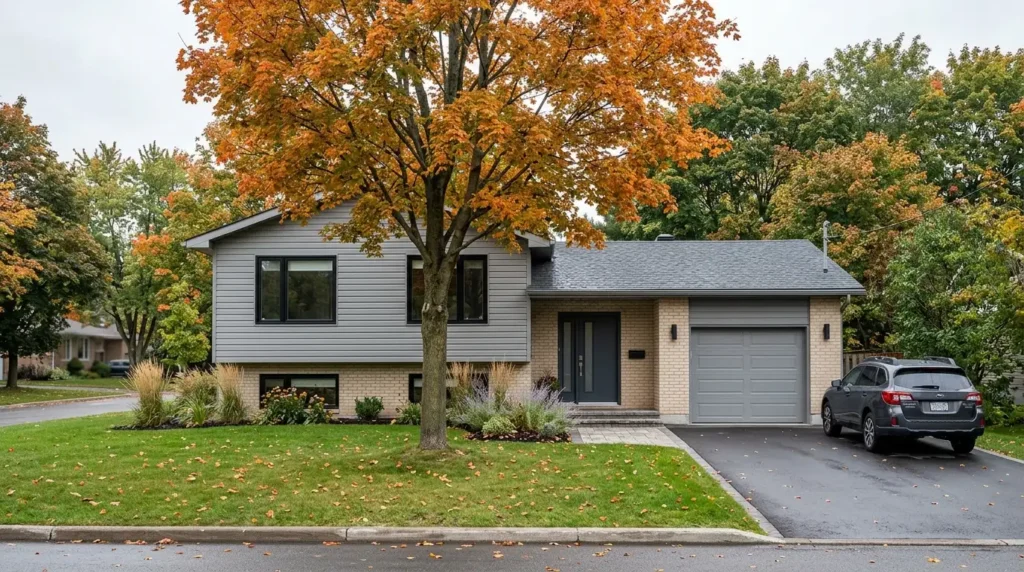
Where New Homes Are Actually Being Built in Nepean
New construction in Nepean happens in three very different settings, and each one comes with its own builders, price points and paperwork.
| Area | What’s being built | Who builds it | Typical buyer |
|---|---|---|---|
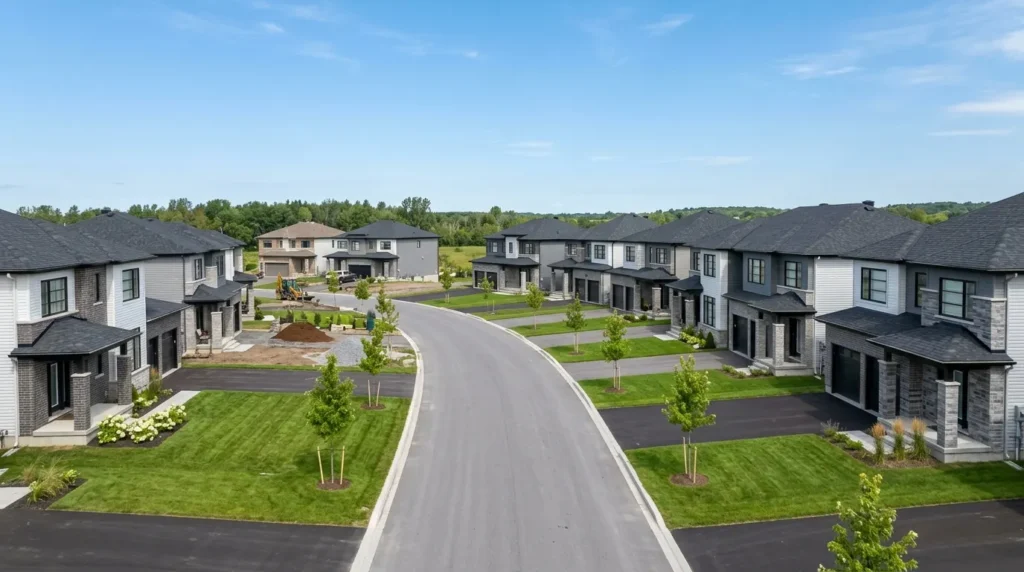
| South Nepean (Barrhaven, Half Moon Bay, Stonebridge, Davidson Heights) | Master-planned subdivisions: singles, towns, stacked towns, bungalows | Production builders such as Mattamy, Minto, Caivan, Tamarack and Phoenix | First-time buyers, young families, move-up buyers |
| Inner Nepean (Craig Henry, Centrepointe, Crystal Beach and Lakeview, Copeland Park, Qualicum, Briargreen, Bells Corners) | Custom homes and infill on lots where an older bungalow or backsplit is removed | Custom, design-build and infill builders | Move-up buyers who want a new home without leaving an established street |
| Corridors (Baseline, Merivale, Woodroffe, Greenbank) | Townhome blocks, condos and rental apartments on redeveloped commercial sites | Developers and condo builders | Downsizers, first-time buyers, investors |
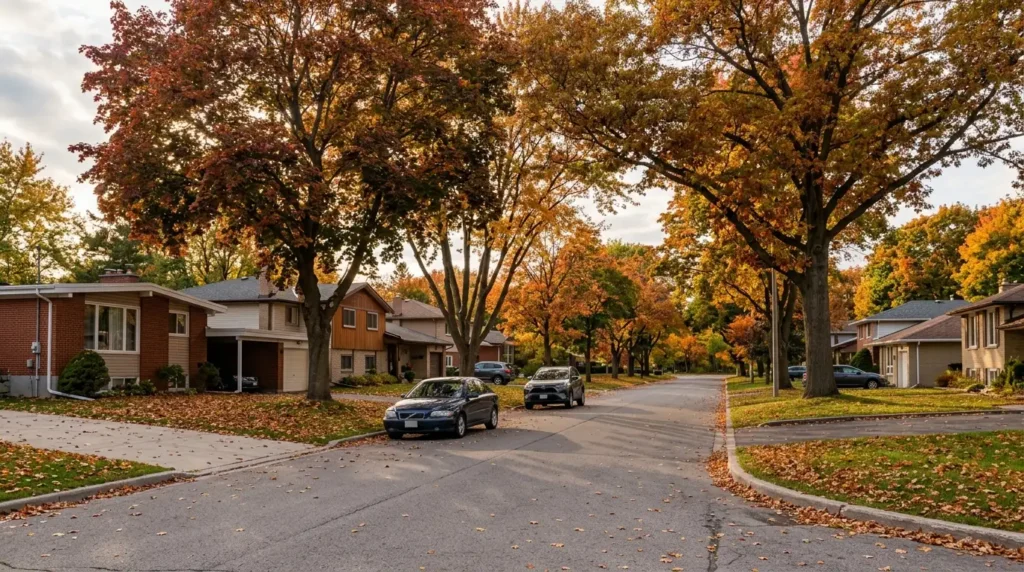
Inner Nepean is mostly built out. Its neighbourhoods went up between the 1950s and the 1980s, which is why so many streets are lined with bungalows, backsplits and side-splits on generous lots. New homes there arrive one lot at a time. South Nepean still has open land, so that’s where you’ll find model homes and sales centres.
If you’re still deciding between parts of Nepean, my guide to Nepean neighbourhoods and Nepean vs Barrhaven compare them on schools, commute and housing.
Production Builders in South Nepean
If you want a brand-new home from a sales centre with a model to walk through, south Nepean is where to look. Barrhaven has been one of Ottawa’s busiest new-home areas for two decades, and these builders are active there:
- Mattamy Homes builds Half Moon Bay, its long-running master-planned community off Greenbank Road. Mattamy expected to launch a seventh phase in 2026 with about 90 stacked units. See Mattamy Homes Ottawa.
- Minto Communities has several Barrhaven communities, including Quinn’s Pointe, with a wide townhome range and singles. See Minto Homes Ottawa.
- Caivan builds The Conservancy and The Ridge in south-west Barrhaven. See Caivan Homes Ottawa.
- Tamarack Homes, an Ottawa builder founded in 1987, builds The Meadows. See Tamarack Homes Ottawa.
- Phoenix Homes, whose office is on Bentley Avenue in Nepean, has announced Willow Court in Barrhaven East with condos and townhomes. See Phoenix Homes Ottawa.
I cover each Barrhaven community, its builders and its home types in detail in Barrhaven home builders, and current releases and pricing in new homes in Barrhaven. If you’re specifically after a new subdivision home, those two guides are the place to go next.
Affordable new townhomes in Nepean
Not every new Nepean home is sold on the open market. Habitat for Humanity Greater Ottawa is partnering with Caivan on Beechcliffe Homes, 33 affordable townhomes in Nepean with occupancy expected in early 2027, according to All Things Home. Families apply through Habitat Greater Ottawa rather than a builder’s sales office.
Sell Your Ottawa Home for Just 1% Listing Commission
Why pay 2.5% listing commission to sell your home when you don't have to? Jason Polonski lists Ottawa homes for a simple 1% listing commission. Full MLS® and REALTOR.ca exposure, professional photography, powerful online marketing, expert pricing, and a skilled negotiator fighting for every dollar of your sale price. Top-tier service — you just keep thousands more when your home sells. Smart sellers are already making the switch. Your home deserves the best, and your wallet deserves a break.
Custom and Infill Home Builders in Nepean
Inside the Greenbelt, most new Nepean homes are custom or infill builds. A buyer, or a builder, buys a 1950s or 1960s house on a wide lot, removes it and builds a new home, a pair of semis or a small multi-unit building in its place. Streets in Crystal Beach, Craig Henry and Centrepointe show the pattern clearly: a modern two-storey next to an original bungalow.
Why infill is picking up in Nepean
Ottawa’s new comprehensive zoning by-law, Zoning By-law 2026-50, was approved by council in January 2026 and enacted on March 11, 2026. It replaces the old residential zones with Neighbourhood zones (N1 to N6) that regulate a building’s size and placement rather than its type, which opens the door to more semis, multi-unit homes and “missing middle” buildings on ordinary residential lots. Parts of the by-law were appealed to the Ontario Land Tribunal, and the tribunal allowed the parts not under appeal to come into force in July 2026.
For you as a buyer, that means two things. A wide Nepean lot may now be worth more to a builder than to a family, which shows up in prices. And the new house going up next door may be larger, or contain more units, than you’d expect. Before you buy on any inner-Nepean street, check the zoning on geoOttawa with the new by-law layer turned on, and confirm anything important with the City.
Where infill is happening in Nepean
Infill isn’t spread evenly. In 2026 it’s concentrated in a few pockets where lots are wide, homes are original and transit is close:
- St. Claire Gardens, Crestview and Meadowlands. Streets such as Tower Road, Rita Avenue, Eleanor Drive and Capilano Drive, close to Algonquin College and Baseline Station, have seen a steady run of rebuilds. Lots marketed to builders here are often 45 to 75 feet wide and now carry Neighbourhood (N2 or N3) zoning under the new by-law.
- Crystal Bay and Lakeview Park. Large lots near the Ottawa River and the river pathway make this one of Nepean’s most sought-after spots for custom homes. See my Crystal Beach and Lakeview guide.
- Craig Henry and Centrepointe. Newer than most of inner Nepean, but close to the Baseline corridor and Algonquin College, with a mix of single rebuilds and townhome infill. See Craig Henry and Centrepointe.
- Bel-Air Heights and Copeland Park. Mostly mid-century bungalows on regular lots, built around 1959 to 1960 in Bel-Air Heights, which makes them classic candidates for a rebuild or a second unit.
Two things to know before you shop these streets. Lots with the right width and zoning attract builders as well as families, so the best ones often sell to whoever can close fastest. And a listing that promises “development potential” isn’t a permit: confirm the zone, setbacks and any appeal status with the City before you count on more than one unit.
Who builds custom and infill homes in Nepean
Custom builders don’t run sales centres, so they’re harder to find. These firms list Nepean among the areas they serve or work on infill lots across Ottawa’s established neighbourhoods:
- OakWood Designers & Builders, a fourth-generation family design-build firm founded in 1956, with an in-house architectural design team and Nepean in its service area. See OakWood’s RenoMark listing.
- Sanchez Homes, a custom luxury builder and Greater Ottawa Home Builders’ Association member that lists Nepean among the areas it serves.
- Revelstoke Design & Build and Haslett Construction, both listed by the GOHBA as infill builders, take on custom homes in Ottawa’s older neighbourhoods.
The Greater Ottawa Home Builders’ Association directory lists more infill and custom builders, and my guide to custom home builders in Ottawa explains how to compare them on contracts, allowances and change orders. If you’re weighing a rebuild against renovating what’s there, read renovating a bungalow or backsplit in Nepean and custom home vs new build in Ottawa.
Considering building instead of buying? Compare luxury custom home builders in Ottawa and where each one works.
Get Cash Back When You Buy a Home in Ottawa
Can you get cash back when buying a home in Ottawa? Yes. Jason Polonski, a Chairman's Club REALTOR® serving Ottawa and Kanata, shares part of his commission with buyers — up to $3,000 cash back at closing.* You still get full-service, award-winning representation: expert pricing, sharp negotiation, and hands-on guidance from first showing to keys in hand. No cut corners and no rebate-only shortcuts — just real money back in your pocket when you buy your Ottawa or Kanata home.
Buying a Lot or a Teardown in Nepean: What to Check First
A teardown looks simple on paper: buy the house, knock it down, build. In practice, the lot decides what you can build and what it will cost. This is where my years in construction and the electrical trades earn their keep, because I’m looking at the site the way a builder will.
- Zoning and what fits. Confirm the zone, lot width, setbacks and height limits before you fall in love with a design. A variance through the City’s Committee of Adjustment adds months and isn’t guaranteed.
- Services. Many older Nepean homes still have their original water service. The City’s lead pipe information explains how to check. A new build will need new water, sewer and electrical connections, so price them early.
- Electrical capacity. A modern home with a heat pump, induction cooking and an EV charger draws far more than the 60- or 100-amp service on many 1960s houses. Your builder will plan a new service, but the cost and timing of the utility work belong in your budget from day one.
- Trees. Mature trees are part of what makes inner Nepean appealing, and the City regulates the removal of many of them. Ask your builder to confirm what permits apply before you finalize a footprint.
- Water and flood rules. Lots near the Rideau River, the Jock River or local creeks may be regulated by the Rideau Valley Conservation Authority, which can affect where and how you build.
- Permits and schedule. Demolition and building permits both take time. Build that into your plan for where you’ll live in the meantime.
Warranty and tax differences on a custom build
A home built on land you already own is a “contract home.” When a licensed builder substantially completes it, it still gets Tarion’s one-, two- and seven-year warranty coverage, but deposit protection works differently from a subdivision purchase. Sales tax rebates also follow different rules for homes built on your own land than for homes bought from a builder. Confirm the warranty terms with your builder and the rebate position with your accountant before you sign. My guide to the cost to build a custom home in Ottawa covers the budget lines most people miss.
Buying a New Build? Bring Your Own Agent to the Sales Office
The builder's sales team works for the builder. Jason Polonski works for you: comparing builders and lots, reviewing the agreement's dates and closing adjustments, and walking your pre-delivery inspection with a tradesperson's eye. Builders generally pay the buyer-side commission, so representation usually costs you nothing. Register Jason on your first visit.
Townhomes and Condos Coming to Nepean’s Corridors
The third source of new Nepean homes is redevelopment along major roads. Older plazas, offices and car lots near Baseline, Merivale, Woodroffe and the Transitway are being proposed for townhomes, mid-rise condos and rental buildings. The City is preparing the Baseline-Merivale Secondary Plan to guide that change over the coming decades, as The Ottawa Lookout reported in April 2026.
Projects on the books in 2026 give a sense of the scale:
- Baseline and Merivale (southeast corner). A proposal to replace an automotive site with seven mixed-use buildings of 6 to 34 storeys, a public park and an internal street network, built in phases. Details are in All Things Home’s coverage.
- 1200 Baseline Road. A redevelopment application filed on behalf of Zena Investment Corporation.
- CitiPlace, 81 Colonnade Road North. Ashcroft Homes’ mixed-use community of condo flats, townhomes and terrace homes. Its earlier phases sold out and the remaining phases have been on hold.
- Brigil’s Baseline, 2944 Baseline Road. A completed 14-storey rental building with 162 units in the Centrepointe-Craig Henry area, an example of how much of the new corridor housing is rental rather than ownership.
Proposals change, shrink or stall, so treat these as a guide to direction rather than a list of homes you can buy today.
Many of these projects are years from completion, and some will be rentals rather than homes for sale. If you’re interested in a pre-construction condo or stacked town on one of these sites, the rules are different from a freehold subdivision home:
- Condo deposits have their own Tarion protection limits, and the 10-day cooling-off period comes from the Condominium Act.
- The disclosure statement and budget tell you a lot about future condo fees. The Condominium Authority of Ontario explains what to look for.
- Occupancy and final closing can be months apart, and you may pay occupancy fees in between.
My guides to pre-construction homes in Ottawa and buying a condo in Ottawa cover both in detail. For townhomes and condos already finished, see Nepean condos and townhomes.
New Build, Infill or Resale in Nepean?
Nepean has one of the deepest resale markets in Ottawa, so a new build always has competition. Here’s how I frame the choice with clients:
- A new subdivision home in south Nepean gives you a full Tarion warranty, modern systems and your own finishes, with a closing date that may be a year or more away.
- A custom or infill build in inner Nepean gives you a new home on a mature street close to the Greenbelt, Algonquin College, the Queensway Carleton Hospital and the Transitway. It also asks the most of you: design decisions, permits and a construction schedule you’ll live with.
- A resale gives you a firm date, mature trees and finished landscaping. A well-kept or updated Nepean bungalow can cost less than building new, even after renovation.
Most buyers I work with in Nepean already own a home here. If you’re one of them, the order of operations matters more than the builder. Get a realistic Nepean home value first, decide whether you’ll sell before or after you commit, and line your sale up with your new home’s firm date. My guide to selling and buying at the same time lays out the options, from bridge financing to a rent-back. You can also browse current Nepean homes for sale to compare against new-build pricing.

Posted on Google 

Jennifer Clark
4 days ago
 Trustindex verifies that the original source of the review is Google.
His availability to communicate was incredible which is so important when selling a house. Great at everything else too.
Posted on Google

Aarushi Govil
15 days ago
Trustindex verifies that the original source of the review is Google. Working with Jason has been an absolute privilege from start to finish. Finding the right realtor can be daunting, but Jason exceeded every expectation. He is remarkably knowledgeable and was extremely punctual and responsive to every question or request we had, no matter the time or the day. What stood out most was his complete sincerity and zero-pressure approach. When we walked through houses, he was transparent, pointing out both the pros and potential red flags instead of trying to make a quick sale. His honest feedback gave us complete confidence in our decision. If you want a dedicated, honest, and highly skilled agent in your corner, look no further than Jason!
Posted on Google

Joe Ireland
29 days ago
Trustindex verifies that the original source of the review is Google. Jason helped me buy my first home.
He was extremely responsive and available from our very first call, and assisted with booking multiple viewings across Ottawa.
He was punctual to every viewing and honest with his feedback with the homes we saw, and when it came time to go from viewing to buying, he had an impressive array of contacts from brokers to inspectors to lawyers, all with excellent reviews and who were great to work with in their own right.
As a first-time home buyer, his responsiveness and patience with many questions were extremely reassuring and really streamlined the process, and I signed an offer on my home within just 2 weeks of meeting him.
I would strongly recommend Jason to anyone buying a home in Ottawa, especially to those who are strangers to the process like I was.
Thank you again, Jason!
Posted on Google

Marina
59 days ago
Trustindex verifies that the original source of the review is Google. We had a wonderful experience working with our realtor - Jason Polonski. He is a professional, knowledgeable, responsive, and truly attentive to our needs. Jason guided us through every step of the process, answered all of our questions. My family are very grateful for his work and would absolutely recommend him to anyone looking for a reliable and trustworthy realtor in Ottawa and around !
Posted on Google

Vatrul “Vatrul”
63 days ago
Trustindex verifies that the original source of the review is Google. First time home seller. Every process of the journey was explained and laid out perfectly.. Very highly recommended.. thank you Jason..
Posted on Google

Olga V.
64 days ago
Trustindex verifies that the original source of the review is Google. Jason is very knowledgeable realtor in Kanata. He’s been always good beyond to help his clients. We had a place experience buying a house in Kanata. I highly recommend him.
Posted on Google

Yuri Tsouker
71 days ago
Trustindex verifies that the original source of the review is Google. Working with Jason on the sale of my property was genuinely one of the smoothest professional experiences I've had. He was responsive at every step, patient with every question (and I had many), and he clearly knew the local market inside and out.
My sale wasn't a simple one — there was a tenant, a rental water heater, a plumber to coordinate, and plenty of complications that made this a genuinely difficult case. Jason handled all of it with calm, practical advice and always got back to me quickly, often with a solution before I even finished asking about the problem.
What stood out most was his honesty. He didn't push, he didn't overpromise, and every recommendation he made turned out to be exactly right. I felt like I had a professional in my corner from day one.
If you're looking for a realtor who is knowledgeable, responsive, and genuinely trustworthy, I can't recommend Jason highly enough. Thank you, Jason — much appreciated!
Posted on Google

Denis Pepin
95 days ago
Trustindex verifies that the original source of the review is Google. Outstanding Experience with Jason Polonski!
Last May, my wife and I sold our home in Stittsville with Jason Polonski, and we couldn't be happier with our decision. Jason made the entire process remarkably smooth and stress-free.
From day one, Jason stood out for his exceptional communication. He was always prompt and available to answer our queries—often within minutes—no matter the time of day. Whenever we had questions regarding paperwork, listing strategies, or handling property details, he addressed every concern with a truly genuine, human touch.
What impressed us most was how proactive and reassuring he was at every step. When we had to coordinate the buyout of our water heater rental, Jason handled the reimbursement seamlessly, reassuring us with, "We should have a smooth sale now. :)"—and it truly was! Even post-closing, when we needed to arrange delivery for mailbox keys or track down final funds from head office, Jason stayed on top of every detail, putting a rush on things and constantly keeping us updated.
Jason is a dedicated, attentive, and highly professional realtor who genuinely cares about his clients. It has been an absolute pleasure working with him, and we highly recommend Jason Polonski to anyone looking to buy or sell a home in the Ottawa region.
Posted on Google

Tammy Puhakka
104 days ago
Trustindex verifies that the original source of the review is Google. I highly recommend Jason Polonski, a realtor in Kanata, Ottawa. He truly went above and beyond for me. During a long weekend, he called me and, within just two hours, had an offer to purchase prepared and sent so I could secure the home I had found and fallen in love with.
Jason was professional, efficient, knowledgeable, and incredibly pleasant to work with. His rates are very reasonable, and his dedication to his clients is outstanding. If you’re looking for fast, reliable, and friendly service, I would absolutely recommend contacting him.❤️
Posted on Google

Joe Melindy
109 days ago
Trustindex verifies that the original source of the review is Google. Everything went smoothly. Jason is very good at what he does. Would highly recommend. Thanks Jason 😊
Building or Buying New in Nepean With Jason Polonski
Jason Polonski helps Nepean buyers work out which route makes sense: a new home from a south Nepean builder, a custom or infill build on an established street, or a resale. At builder sales offices he represents buyers, usually at no cost to them, since builders generally pay the buyer-side commission. On teardown and infill purchases he walks the lot and the existing house with a tradesperson’s eye, flags the costs that don’t show up in the listing, and coordinates the timing with the sale of his clients’ current homes.
Jason has more than 15 years of experience as a REALTOR® with Right at Home Realty and has helped hundreds of buyers and sellers across Ottawa’s west end. He worked in construction and the electrical trades before real estate, holds a technical diploma in construction electricity, and earned a Bachelor of Commerce from Concordia University with a double major in Marketing and Finance. Learn more about Jason, read client reviews on his Google Business Profile, or visit the Nepean REALTOR® page.
Nepean Home Builders (FAQs)
Production builders such as Mattamy, Minto, Caivan, Tamarack and Phoenix build master-planned communities in south Nepean, mainly Barrhaven. Inside the Greenbelt, new homes are mostly custom and infill builds by firms such as OakWood and Sanchez Homes, and developers are proposing townhomes and condos along corridors like Baseline and Merivale.
Yes. Barrhaven was part of the former City of Nepean, which joined the City of Ottawa in 2001, and many Barrhaven addresses still show Nepean. Most of Nepean’s new subdivision homes are in Barrhaven and the surrounding south Nepean communities.
Very few. Inner Nepean neighbourhoods such as Craig Henry, Centrepointe, Crystal Beach and Copeland Park are largely built out, so new homes there usually replace an older house one lot at a time.
Often, yes, but check zoning, lot size, setbacks, tree rules, services and any conservation authority regulations first. Ottawa’s new Zoning By-law 2026-50 regulates building size and placement rather than type, which can allow more than one unit on some lots.
A home built on land you own is a contract home. When a licensed builder substantially completes it, Tarion’s one-, two- and seven-year warranty coverage applies, but deposit protection works differently from a subdivision purchase. Confirm the terms with your builder.
Check the builder’s licence in the HCRA’s Ontario Builder Directory, look at completed infill homes in similar neighbourhoods, ask for references from recent clients, and compare contracts on allowances, change orders and payment schedules. The Greater Ottawa Home Builders’ Association directory lists infill and custom builders.
It depends on timing and location. New subdivision homes in south Nepean offer warranties and modern systems but later closing dates. Infill builds put a new home on a mature street but take the most planning. Resale offers firm dates and mature landscaping, often for less.
