ALMONTE HERITAGE HOMES
Buying a Heritage Home in Almonte
By Jason Polonski, REALTOR® with Right at Home Realty · 15+ years in Ottawa real estate · Updated November 2026 · Client reviews
Buying a heritage home in Almonte means weighing real 19th-century character against older systems, stone foundations and, inside the downtown Heritage Conservation District, rules about what you can change on the exterior. Done carefully, it’s one of the most rewarding purchases in the Ottawa area. Done in a rush, it can be one of the most expensive.
Almonte was built by the woollen mill economy. By 1850 the town had seven mills on the Mississippi River, and the homes built for mill owners, managers and workers still define the streets around the downtown. Stone houses, brick Victorians, modest frame cottages and later Edwardian homes sit side by side, many within a few minutes’ walk of Mill Street. This guide covers what makes these homes special and what to check before you buy one.
What Counts as a Heritage Home in Almonte?
“Heritage home” is used loosely in listings. It’s worth separating three things:
- A century or older home. Any house built roughly 100 or more years ago. Age alone carries no legal restrictions.
- A home inside the Heritage Conservation District. Downtown Almonte is protected by a municipal by-law under Part V of the Ontario Heritage Act. The district covers the core along the river, including mills, commercial buildings, residential streets and riverfront landscapes. Changes are guided by district guidelines.
- An individually designated property. Some properties are designated on their own under Part IV of the Act, which protects specific heritage attributes.
The Ontario Heritage Trust maintains a provincial register of designated properties. Before you offer, confirm with the Town of Mississippi Mills whether the home is in the district or individually designated, and ask for the property owners’ guidelines.
What the Heritage Conservation District Means for Owners
Living in a Heritage Conservation District doesn’t freeze a house in time. Interior renovations are generally your own business, and routine maintenance doesn’t need special approval. The district guidelines focus on what the public sees.
Projects that may need a heritage permit or review include:
- Replacing original windows, doors or porches
- Changing exterior cladding, masonry or roofing materials
- Additions, demolitions and new outbuildings visible from the street
- Significant changes to the front yard or streetscape
The trade-off is protection. Because the district limits inappropriate changes around you, it helps preserve the downtown character that makes these homes valuable in the first place. Before you buy with renovation plans in mind, talk to the municipality’s planning staff about what’s realistic and how long approvals take.
The Building Systems to Check in an Almonte Heritage Home
This is where Jason’s construction and electrical trades background matters most. Heritage homes have usually been updated several times, by different owners, to different standards. The goal is to know what you’re buying before you commit.
Electrical
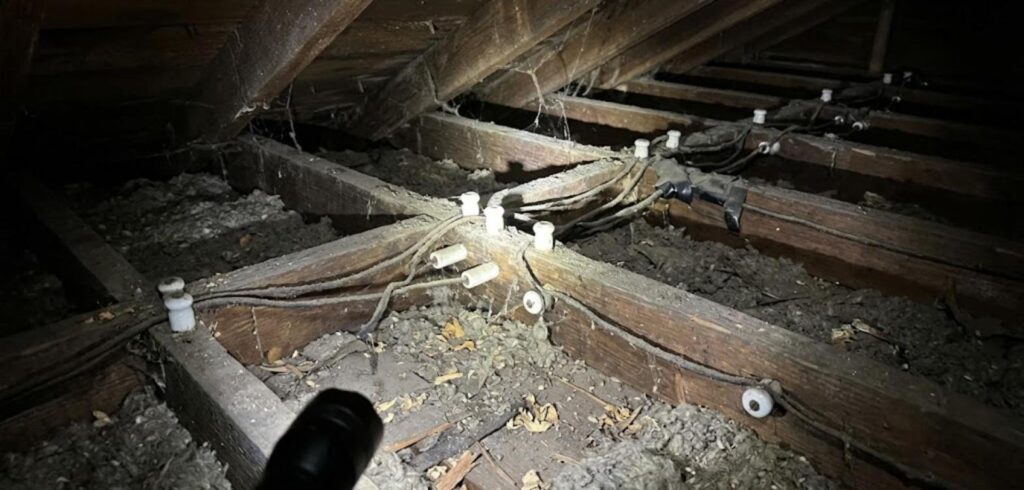
Older Almonte homes may still have knob-and-tube wiring hidden in walls or ceilings, often mixed with newer circuits. You may also find ungrounded two-prong circuits, old fuse panels or undersized service. These aren’t automatically deal-breakers, but they affect safety, insurance and renovation cost.
- Ask whether any knob-and-tube remains and whether a licensed electrician has assessed it.
- Expect some insurers to require an electrical inspection or replacement before they’ll cover the home. Call your insurer early. The Insurance Bureau of Canada explains how home insurance underwriting works.
- The Electrical Safety Authority has guidance on older wiring and finding licensed electrical contractors.
If you’re on the other side of the transaction, our guide to selling a home with knob-and-tube wiring explains how sellers handle it.
Foundations and basements
Many Almonte heritage homes sit on stone or rubble foundations. These can last for centuries, but they behave differently from poured concrete.
- Look for crumbling mortar, efflorescence (white mineral deposits) and damp walls.
- Historic stone foundations were built with soft lime mortar. Repointing with hard modern cement mortar can damage the stone. Ask whether past repairs used the right materials.
- Expect basements with low ceilings and some moisture. Grading, gutters and downspouts often solve more than expensive interior work.
Plumbing
Look for galvanized steel supply lines, older cast-iron drains and the material of the water service from the street. Older galvanized pipes corrode from the inside and can reduce water pressure. If the home is on municipal water, ask the municipality what it knows about the service line.
Heating, oil tanks and wood stoves
Some older homes still have, or once had, an oil tank. An active or abandoned oil tank affects insurance and may need removal. Our guide to selling a home with an oil tank explains why buyers and insurers care. Wood stoves and fireplaces should have a WETT inspection before closing.
Hazardous materials
Homes of this age can contain asbestos in pipe wrap, older flooring or vermiculite insulation, and lead in old paint layers. Disturbing these during renovation needs proper handling. Radon is a separate issue that can affect any home in the region regardless of age; Health Canada recommends testing every home. Our guide to radon in Ottawa covers testing.
Windows, insulation and comfort
Original single-pane windows and uninsulated walls are common. Upgrades are possible, but inside the district, window replacements may need to respect the original style. Many owners restore original windows and add storm windows rather than replacing them outright.
Sell Your Ottawa Home for Just 1% Listing Commission
Why pay 2.5% listing commission to sell your home when you don't have to? Jason Polonski lists Ottawa homes for a simple 1% listing commission. Full MLS® and REALTOR.ca exposure, professional photography, powerful online marketing, expert pricing, and a skilled negotiator fighting for every dollar of your sale price. Top-tier service — you just keep thousands more when your home sells. Smart sellers are already making the switch. Your home deserves the best, and your wallet deserves a break.
How to Structure Your Offer on a Heritage Home
Heritage homes reward a careful offer:
- Keep the home inspection condition, and choose an inspector with real experience in older homes.
- Add specialist inspections where needed: an electrician for older wiring, a WETT inspector for wood heat, and a structural review if the foundation shows signs of movement.
- Line up insurance before you firm up. Some insurers won’t quote on homes with knob-and-tube or an oil tank until conditions are met.
- Budget for updates beyond the purchase price, and get rough quotes during your condition period if you can.
Our general guide to buying an older home covers more of the inspection process, and what to look for in a home inspection explains how to read the report.
Get Cash Back When You Buy a Home in Ottawa
Can you get cash back when buying a home in Ottawa? Yes. Jason Polonski, a Chairman's Club REALTOR® serving Ottawa and Kanata, shares part of his commission with buyers — up to $3,000 cash back at closing.* You still get full-service, award-winning representation: expert pricing, sharp negotiation, and hands-on guidance from first showing to keys in hand. No cut corners and no rebate-only shortcuts — just real money back in your pocket when you buy your Ottawa or Kanata home.
Renovating an Almonte Heritage Home: Practical Tips
If you buy, a few habits make heritage renovations go more smoothly:
- Plan in phases. Deal with safety and the building envelope first: wiring, roof, drainage and foundation. Cosmetic work comes after.
- Hire trades with heritage experience. Masonry, plaster and window restoration all reward specialist skills. Ask for photos of similar past work.
- Keep original features where you can. Original trim, doors, floors and windows add value and are often irreplaceable.
- Check permits early. Electrical, plumbing and structural work needs the usual permits, and exterior work inside the district may need heritage review as well.
- Document everything. Keep records of upgrades. Future buyers and insurers will ask for them.

Older Homes Outside the Heritage District
Not every older Almonte home is in the Heritage Conservation District. Many century homes sit on streets outside the boundary, and rural farmhouses in the surrounding countryside can be just as old. These homes carry the same building-system questions covered above, without the exterior heritage guidelines. Rural farmhouses add well, septic and outbuilding considerations, covered in our guide to rural property in Mississippi Mills. Always confirm a property’s heritage status with the municipality rather than relying on the listing description.
Is a Heritage Home Worth It?
For the right buyer, absolutely. Almonte’s heritage homes offer craftsmanship, scale and a setting you can’t reproduce in a new subdivision: tall windows, original woodwork, thick stone walls and a five-minute walk to the river and Mill Street. Well-maintained heritage homes in a strong location also tend to hold their appeal because the supply is fixed.
The buyers who regret these purchases usually made one of three mistakes: skipping a specialist inspection, underestimating the cost of system updates, or assuming they could change the exterior freely. All three are avoidable.
If you already own a heritage home in town and are thinking about selling, see what your Almonte home is worth.
Exploring Almonte’s Heritage
If you’re new to the town, the Mississippi Valley Textile Museum, housed in the Rosamond Woollen Mill (a National Historic Site), is a good place to understand how Almonte was built. The Almonte Riverwalk passes several historic mill sites along the river. Our Almonte community guide covers the rest of the town, including schools, amenities and the different housing areas.
When you’re ready to look, browse current Almonte homes for sale. If you’d prefer something newer with less upkeep, compare new homes in Almonte. For heritage rules inside the City of Ottawa, see our separate guide to buying a heritage home in Ottawa.
For more ways to get to know the town before you buy, see our guide to things to do in Almonte. If a newer home is still on your list, compare the century homes downtown with Weavers Way, and check the commute from Almonte to Ottawa and how Almonte compares with Carp and Stittsville.


Posted on Google 

Jennifer Clark
10 days ago
 Trustindex verifies that the original source of the review is Google.
His availability to communicate was incredible which is so important when selling a house. Great at everything else too.
Posted on Google

Aarushi Govil
21 days ago
Trustindex verifies that the original source of the review is Google. Working with Jason has been an absolute privilege from start to finish. Finding the right realtor can be daunting, but Jason exceeded every expectation. He is remarkably knowledgeable and was extremely punctual and responsive to every question or request we had, no matter the time or the day. What stood out most was his complete sincerity and zero-pressure approach. When we walked through houses, he was transparent, pointing out both the pros and potential red flags instead of trying to make a quick sale. His honest feedback gave us complete confidence in our decision. If you want a dedicated, honest, and highly skilled agent in your corner, look no further than Jason!
Posted on Google

Joe Ireland
35 days ago
Trustindex verifies that the original source of the review is Google. Jason helped me buy my first home.
He was extremely responsive and available from our very first call, and assisted with booking multiple viewings across Ottawa.
He was punctual to every viewing and honest with his feedback with the homes we saw, and when it came time to go from viewing to buying, he had an impressive array of contacts from brokers to inspectors to lawyers, all with excellent reviews and who were great to work with in their own right.
As a first-time home buyer, his responsiveness and patience with many questions were extremely reassuring and really streamlined the process, and I signed an offer on my home within just 2 weeks of meeting him.
I would strongly recommend Jason to anyone buying a home in Ottawa, especially to those who are strangers to the process like I was.
Thank you again, Jason!
Posted on Google

Marina
65 days ago
Trustindex verifies that the original source of the review is Google. We had a wonderful experience working with our realtor - Jason Polonski. He is a professional, knowledgeable, responsive, and truly attentive to our needs. Jason guided us through every step of the process, answered all of our questions. My family are very grateful for his work and would absolutely recommend him to anyone looking for a reliable and trustworthy realtor in Ottawa and around !
Posted on Google

Vatrul “Vatrul”
69 days ago
Trustindex verifies that the original source of the review is Google. First time home seller. Every process of the journey was explained and laid out perfectly.. Very highly recommended.. thank you Jason..
Posted on Google

Olga V.
70 days ago
Trustindex verifies that the original source of the review is Google. Jason is very knowledgeable realtor in Kanata. He’s been always good beyond to help his clients. We had a place experience buying a house in Kanata. I highly recommend him.
Posted on Google

Yuri Tsouker
77 days ago
Trustindex verifies that the original source of the review is Google. Working with Jason on the sale of my property was genuinely one of the smoothest professional experiences I've had. He was responsive at every step, patient with every question (and I had many), and he clearly knew the local market inside and out.
My sale wasn't a simple one — there was a tenant, a rental water heater, a plumber to coordinate, and plenty of complications that made this a genuinely difficult case. Jason handled all of it with calm, practical advice and always got back to me quickly, often with a solution before I even finished asking about the problem.
What stood out most was his honesty. He didn't push, he didn't overpromise, and every recommendation he made turned out to be exactly right. I felt like I had a professional in my corner from day one.
If you're looking for a realtor who is knowledgeable, responsive, and genuinely trustworthy, I can't recommend Jason highly enough. Thank you, Jason — much appreciated!
Posted on Google

Denis Pepin
101 days ago
Trustindex verifies that the original source of the review is Google. Outstanding Experience with Jason Polonski!
Last May, my wife and I sold our home in Stittsville with Jason Polonski, and we couldn't be happier with our decision. Jason made the entire process remarkably smooth and stress-free.
From day one, Jason stood out for his exceptional communication. He was always prompt and available to answer our queries—often within minutes—no matter the time of day. Whenever we had questions regarding paperwork, listing strategies, or handling property details, he addressed every concern with a truly genuine, human touch.
What impressed us most was how proactive and reassuring he was at every step. When we had to coordinate the buyout of our water heater rental, Jason handled the reimbursement seamlessly, reassuring us with, "We should have a smooth sale now. :)"—and it truly was! Even post-closing, when we needed to arrange delivery for mailbox keys or track down final funds from head office, Jason stayed on top of every detail, putting a rush on things and constantly keeping us updated.
Jason is a dedicated, attentive, and highly professional realtor who genuinely cares about his clients. It has been an absolute pleasure working with him, and we highly recommend Jason Polonski to anyone looking to buy or sell a home in the Ottawa region.
Posted on Google

Tammy Puhakka
110 days ago
Trustindex verifies that the original source of the review is Google. I highly recommend Jason Polonski, a realtor in Kanata, Ottawa. He truly went above and beyond for me. During a long weekend, he called me and, within just two hours, had an offer to purchase prepared and sent so I could secure the home I had found and fallen in love with.
Jason was professional, efficient, knowledgeable, and incredibly pleasant to work with. His rates are very reasonable, and his dedication to his clients is outstanding. If you’re looking for fast, reliable, and friendly service, I would absolutely recommend contacting him.❤️
Posted on Google

Joe Melindy
115 days ago
Trustindex verifies that the original source of the review is Google. Everything went smoothly. Jason is very good at what he does. Would highly recommend. Thanks Jason 😊
Buying a Heritage Home With Jason Polonski
Heritage homes are where Jason’s background makes the biggest difference. With hands-on experience in construction and electrical trades and a technical diploma in construction electricity, he can usually tell during a first showing whether a home’s wiring, foundation and past renovations deserve a closer look, so you know which specialist inspections to book before your offer becomes firm.
Jason Polonski is a REALTOR® with Right at Home Realty, based in Kanata, about 25 minutes from Almonte. He has spent more than 15 years in Ottawa-area real estate and helped hundreds of buyers and sellers, and heritage and older homes are where his background makes the biggest difference.
Before real estate, Jason worked in construction and electrical trades, and he holds a technical diploma in construction electricity. He walks through a heritage home looking at wiring, foundations, moisture and past renovations, so you go into your inspection knowing what to watch for. He also holds a Bachelor of Commerce from Concordia University with a double major in Marketing and Finance, which helps him weigh the cost of updates against the price. To talk about a heritage home in Almonte, visit Jason’s Almonte realtor page or call or text (613) 601-9333.
Almonte Heritage Home FAQs
Yes. Downtown Almonte is a Heritage Conservation District under Part V of the Ontario Heritage Act, covering the core along the Mississippi River.
Generally, yes. Interior work is usually up to you, but exterior changes inside the Heritage Conservation District may need municipal review. Check with Mississippi Mills before you plan major work.
Some do, often mixed with newer wiring. Have a licensed electrician assess it and talk to your insurer before you firm up an offer.
Not necessarily. Stone foundations can last for centuries if they’re kept dry and repaired with compatible lime mortar. Look for moisture, crumbling mortar and past repairs with hard cement.
Some insurers restrict coverage for knob-and-tube wiring, oil tanks or older wood stoves. Get a quote during your condition period, before your offer becomes firm.
A general inspection by someone experienced with older homes, plus an electrical assessment, a WETT inspection for wood heat, and a structural review if the foundation shows movement.
