OTTAWA BUYERS
Buying a Heritage Home in Ottawa: Designation, Districts and What to Check
By Jason Polonski, REALTOR® with Right at Home Realty · Last updated: October 2026 · Client reviews
Buying a heritage home in Ottawa means buying a piece of the city’s history, along with rules about how you can change it. Whether a home is individually designated, inside a heritage conservation district or simply listed on the City’s heritage register affects what you can do to the exterior, whether you can add on or demolish, and sometimes how much it costs to insure.
This guide explains the types of heritage status in Ontario, Ottawa’s heritage districts, the permits involved and what to inspect before you buy. If you’re selling, see Jason’s guide to selling a heritage home in Ottawa. Heritage rules change, so confirm a property’s status with the City and your lawyer.
Looking at century homes just outside the city? Our guide to buying a heritage home in Almonte covers the town’s downtown Heritage Conservation District and its stone and brick mill-era homes.

Types of Heritage Status in Ontario
Heritage protection in Ontario comes from the Ontario Heritage Act. Municipalities apply it in three main ways:
| Status | What it means | What it usually affects |
|---|---|---|
| Part IV designation | The individual property is designated by by-law for its heritage value | Changes to the heritage attributes described in the by-law, plus demolition |
| Part V designation | The property is inside a heritage conservation district | Exterior changes, additions, new buildings and demolition, guided by the district plan |
| Listed (non-designated) | The property is on the municipal heritage register but not designated | Mainly demolition, which requires notice to the City so it can consider designation |
Interior changes are usually not regulated unless the designation by-law specifically includes interior features.
Recent Changes: Listed Properties and the 2027 Deadline
Provincial changes in recent years put a time limit on non-designated listings. Under the current rules, listed properties added before 2023 must be designated by January 1, 2027, or they come off the register and can’t be relisted for five years. That means some Ottawa properties may be designated in the coming months, while others drop off the register.
If you’re buying a listed property, ask the City whether a designation is planned. A home’s status could change soon after you buy.
Heritage Conservation Districts in Ottawa
Ottawa has many heritage conservation districts. Some that buyers often encounter include:
- Rockcliffe Park
- New Edinburgh
- Clemow Estate East in the Glebe
- Lowertown West and the ByWard Market
- Centretown and Bank Street
The City has also identified other areas, including Island Park Drive, Wellington Street West and parts of the Rideau Canal corridor, for possible future district study. See the City of Ottawa’s heritage pages for the current list and district plans.
Heritage Easements
Some properties are also protected by a heritage easement, a legal agreement registered on title, often held by the municipality or the Ontario Heritage Trust. An easement can set rules for maintenance and changes that go beyond a designation by-law, and it stays with the property when it sells. Your lawyer should flag any easement during the title search.
Sell Your Ottawa Home for Just 1% Listing Commission
Why pay 2.5% listing commission to sell your home when you don't have to? Jason Polonski lists Ottawa homes for a simple 1% listing commission. Full MLS® and REALTOR.ca exposure, professional photography, powerful online marketing, expert pricing, and a skilled negotiator fighting for every dollar of your sale price. Top-tier service — you just keep thousands more when your home sells. Smart sellers are already making the switch. Your home deserves the best, and your wallet deserves a break.
Heritage Permits
For a designated property, many exterior changes need a heritage permit from the City before work starts. Examples can include:
- Replacing windows, doors, roofing or cladding
- Adding a storey, an addition or a new garage
- Removing porches or architectural details
- Demolishing all or part of a building
Routine maintenance and repairs using matching materials often don’t need a permit, but rules vary by by-law and district plan. Ask the City’s heritage planners before you plan work, and allow extra time for approvals.
What Heritage Status Can Mean for Value
Heritage status cuts both ways. In established districts, it protects the character that draws buyers, and many heritage streets are among Ottawa’s most desirable. On the other hand, it can limit additions or rebuilds, which matters if you’re buying for redevelopment potential. Jason looks at both sides when he prices a heritage home.
Buying in a Heritage District: What Changes After You Move In
Living in a heritage district usually means planning exterior projects further ahead. A new fence, a front-yard change or a rear addition may need review, and the district plan sets the guidelines. Many owners find the process manageable once they’ve spoken with the City’s heritage planners early. The payoff is a streetscape that stays largely intact, which is a big part of why buyers pay a premium in areas such as Rockcliffe Park and New Edinburgh.
Get Cash Back When You Buy a Home in Ottawa
Can you get cash back when buying a home in Ottawa? Yes. Jason Polonski, a Chairman's Club REALTOR® serving Ottawa and Kanata, shares part of his commission with buyers — up to $3,000 cash back at closing.* You still get full-service, award-winning representation: expert pricing, sharp negotiation, and hands-on guidance from first showing to keys in hand. No cut corners and no rebate-only shortcuts — just real money back in your pocket when you buy your Ottawa or Kanata home.
What to Inspect in an Older Heritage Home
Many heritage homes are a century old or more. Jason’s background in the construction and electrical trades helps him spot issues to look at more closely:
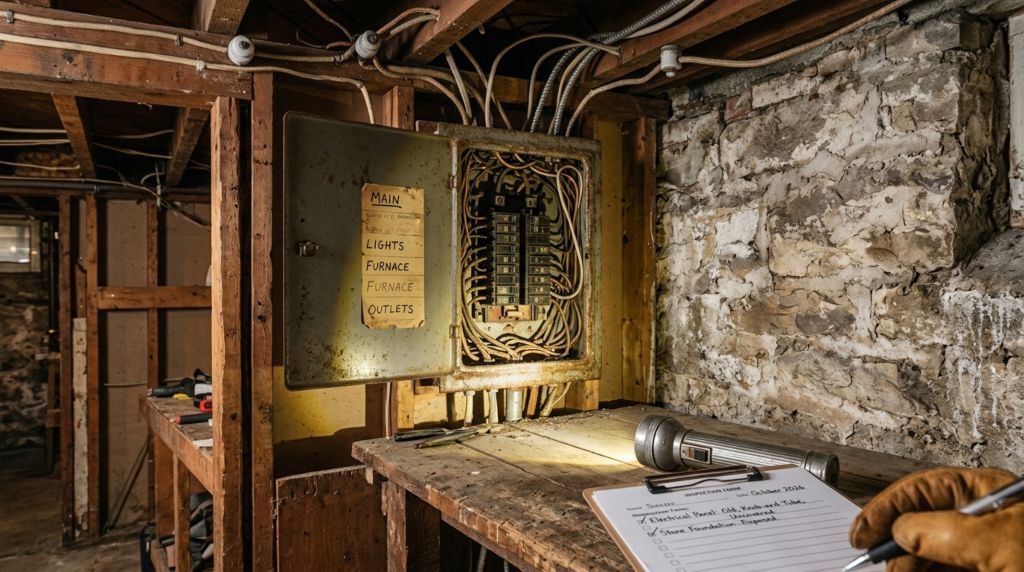
- Electrical: knob-and-tube or older wiring, undersized service and ungrounded circuits. These can affect insurance as well as safety
- Plumbing: galvanized or lead water lines, and the condition of the sewer lateral
- Foundations: stone or rubble foundations, moisture and past repairs
- Masonry: mortar condition and repointing history
- Windows and roofs: original windows and slate or other specialty roofing can be costly to restore
- Hazardous materials: asbestos, lead paint and vermiculite insulation
The Electrical Safety Authority explains how older wiring is assessed and when an electrical permit is needed for upgrades. Hire a home inspector with experience in older homes, and get specialist quotes for anything major.
Architecture You’ll See in Ottawa’s Heritage Areas
Ottawa’s older neighbourhoods were built over more than a century, and each era left its mark:
- Victorian and Queen Anne homes in Lowertown, Sandy Hill and Centretown, often brick with decorative trim, bay windows and steep roofs
- Edwardian and early 20th-century homes in the Glebe, New Edinburgh and Hintonburg, with front porches, simpler detailing and generous rooms
- Revival-style and Arts and Crafts homes in areas such as Island Park and Rockcliffe Park, often on larger, landscaped lots
- Stone buildings in older villages and the core, some built from local limestone
Knowing a home’s style helps you understand what’s original, what’s been changed and what a heritage planner is likely to want preserved.
Insurance and Financing
Some insurers charge more for older homes, especially those with older wiring, plumbing or specialty materials that cost more to replace. Get an insurance quote before you firm up your offer. The Insurance Bureau of Canada explains how insurers look at older homes. Ask whether the policy covers replacement with like materials, which heritage rules may require.
Updating a Heritage Home Without Losing Its Character
Most heritage owners want modern comfort: better heating, insulation, updated kitchens and baths. Much of that work is inside and isn’t regulated. Exterior changes take more care. Restoring original windows and adding storm windows is often preferred over full replacement. Insulating old masonry walls the wrong way can trap moisture, so use contractors who know older buildings. Ask for references from past heritage projects, and check that any work needing a permit gets one.
Grants and Incentives
The City of Ottawa has offered grant programs for restoring designated heritage buildings. Programs, amounts and eligibility change, so check the City’s heritage pages for what’s available now.
A Heritage Buying Checklist
- Confirm the property’s status with the City: Part IV, Part V, listed or none
- Read the designation by-law or district plan
- Ask the seller for past heritage permits and work records
- Book an inspection with an older-home specialist
- Get insurance quotes
- Talk to the City’s heritage planners about any plans
- Have your lawyer review title and any heritage easement agreements
Heritage Homes Beyond the Core
Heritage homes aren’t only in central Ottawa. Villages such as Manotick have their own history. See Jason’s guide to Manotick heritage homes. If you’re weighing a heritage home against a rebuild, Jason’s comparison of custom homes and new builds in Ottawa covers the other side.
Other neighbourhoods with many older homes include Island Park, Hintonburg and Wellington Village.
Where to Learn More
- Heritage Ottawa, a local non-profit that runs walking tours and publishes neighbourhood histories
- Canada’s Historic Places, a searchable register of recognized historic places
- Parks Canada’s Rideau Canal pages, for homes near the canal, a UNESCO World Heritage Site


Posted on Google 

Jennifer Clark
4 days ago
 Trustindex verifies that the original source of the review is Google.
His availability to communicate was incredible which is so important when selling a house. Great at everything else too.
Posted on Google

Aarushi Govil
15 days ago
Trustindex verifies that the original source of the review is Google. Working with Jason has been an absolute privilege from start to finish. Finding the right realtor can be daunting, but Jason exceeded every expectation. He is remarkably knowledgeable and was extremely punctual and responsive to every question or request we had, no matter the time or the day. What stood out most was his complete sincerity and zero-pressure approach. When we walked through houses, he was transparent, pointing out both the pros and potential red flags instead of trying to make a quick sale. His honest feedback gave us complete confidence in our decision. If you want a dedicated, honest, and highly skilled agent in your corner, look no further than Jason!
Posted on Google

Joe Ireland
29 days ago
Trustindex verifies that the original source of the review is Google. Jason helped me buy my first home.
He was extremely responsive and available from our very first call, and assisted with booking multiple viewings across Ottawa.
He was punctual to every viewing and honest with his feedback with the homes we saw, and when it came time to go from viewing to buying, he had an impressive array of contacts from brokers to inspectors to lawyers, all with excellent reviews and who were great to work with in their own right.
As a first-time home buyer, his responsiveness and patience with many questions were extremely reassuring and really streamlined the process, and I signed an offer on my home within just 2 weeks of meeting him.
I would strongly recommend Jason to anyone buying a home in Ottawa, especially to those who are strangers to the process like I was.
Thank you again, Jason!
Posted on Google

Marina
59 days ago
Trustindex verifies that the original source of the review is Google. We had a wonderful experience working with our realtor - Jason Polonski. He is a professional, knowledgeable, responsive, and truly attentive to our needs. Jason guided us through every step of the process, answered all of our questions. My family are very grateful for his work and would absolutely recommend him to anyone looking for a reliable and trustworthy realtor in Ottawa and around !
Posted on Google

Vatrul “Vatrul”
63 days ago
Trustindex verifies that the original source of the review is Google. First time home seller. Every process of the journey was explained and laid out perfectly.. Very highly recommended.. thank you Jason..
Posted on Google

Olga V.
64 days ago
Trustindex verifies that the original source of the review is Google. Jason is very knowledgeable realtor in Kanata. He’s been always good beyond to help his clients. We had a place experience buying a house in Kanata. I highly recommend him.
Posted on Google

Yuri Tsouker
71 days ago
Trustindex verifies that the original source of the review is Google. Working with Jason on the sale of my property was genuinely one of the smoothest professional experiences I've had. He was responsive at every step, patient with every question (and I had many), and he clearly knew the local market inside and out.
My sale wasn't a simple one — there was a tenant, a rental water heater, a plumber to coordinate, and plenty of complications that made this a genuinely difficult case. Jason handled all of it with calm, practical advice and always got back to me quickly, often with a solution before I even finished asking about the problem.
What stood out most was his honesty. He didn't push, he didn't overpromise, and every recommendation he made turned out to be exactly right. I felt like I had a professional in my corner from day one.
If you're looking for a realtor who is knowledgeable, responsive, and genuinely trustworthy, I can't recommend Jason highly enough. Thank you, Jason — much appreciated!
Posted on Google

Denis Pepin
95 days ago
Trustindex verifies that the original source of the review is Google. Outstanding Experience with Jason Polonski!
Last May, my wife and I sold our home in Stittsville with Jason Polonski, and we couldn't be happier with our decision. Jason made the entire process remarkably smooth and stress-free.
From day one, Jason stood out for his exceptional communication. He was always prompt and available to answer our queries—often within minutes—no matter the time of day. Whenever we had questions regarding paperwork, listing strategies, or handling property details, he addressed every concern with a truly genuine, human touch.
What impressed us most was how proactive and reassuring he was at every step. When we had to coordinate the buyout of our water heater rental, Jason handled the reimbursement seamlessly, reassuring us with, "We should have a smooth sale now. :)"—and it truly was! Even post-closing, when we needed to arrange delivery for mailbox keys or track down final funds from head office, Jason stayed on top of every detail, putting a rush on things and constantly keeping us updated.
Jason is a dedicated, attentive, and highly professional realtor who genuinely cares about his clients. It has been an absolute pleasure working with him, and we highly recommend Jason Polonski to anyone looking to buy or sell a home in the Ottawa region.
Posted on Google

Tammy Puhakka
104 days ago
Trustindex verifies that the original source of the review is Google. I highly recommend Jason Polonski, a realtor in Kanata, Ottawa. He truly went above and beyond for me. During a long weekend, he called me and, within just two hours, had an offer to purchase prepared and sent so I could secure the home I had found and fallen in love with.
Jason was professional, efficient, knowledgeable, and incredibly pleasant to work with. His rates are very reasonable, and his dedication to his clients is outstanding. If you’re looking for fast, reliable, and friendly service, I would absolutely recommend contacting him.❤️
Posted on Google

Joe Melindy
109 days ago
Trustindex verifies that the original source of the review is Google. Everything went smoothly. Jason is very good at what he does. Would highly recommend. Thanks Jason 😊
Buy a Heritage Home With Jason
Jason Polonski is a REALTOR® with Right at Home Realty and more than 15 years of experience in Ottawa real estate. His background in the construction and electrical trades means he can help you judge an older home’s wiring, foundation and restoration needs before you commit. He also holds a Bachelor of Commerce from Concordia University with a double major in Marketing and Finance, which guides how he prices and markets every home he lists.
If you are thinking about buying or selling in Ottawa, call or text Jason at (613) 601-9333, or send him a message.
See also: our guide to buying an older home in Ottawa.
Heritage Home FAQs
Check the City of Ottawa’s heritage register and ask the City’s heritage staff. Your lawyer can also check title for heritage designation by-laws and easements.
Yes, but many exterior changes to designated properties need a heritage permit. Interior work is usually not regulated unless the by-law includes interior features.
A designated property is protected by a by-law, and changes to its heritage attributes need approval. A listed property is on the register but not designated, and mainly requires notice to the City before demolition.
Demolition of a designated property requires City approval, which is often refused. For a listed property, the owner must give notice, and the City may move to designate it.
Some can be, especially with older wiring, plumbing or specialty materials. Get a quote before you firm up an offer.
Not necessarily. Many heritage districts are among Ottawa’s most desirable areas. Designation can limit redevelopment, which matters to some buyers more than others.
