NEPEAN SELLER GUIDE
Selling Your Home in Nepean: Pricing, Preparation and What Buyers Check
By Jason Polonski, REALTOR® with Right at Home Realty · 15+ years in Ottawa real estate · Updated November 2026 · Client reviews
Last updated: November 2026
Selling your home in Nepean means selling to buyers who know the area and compare carefully. Nepean’s homes were built mostly between the 1950s and the 1980s, on established streets inside or beside the Greenbelt, and buyers usually cross-shop several pockets before they choose. They’ll compare your home with similar homes nearby, and many will bring an inspector who knows exactly what to look for in a house of your home’s age.
This guide covers how to price a Nepean home, what buyers and inspectors focus on, which updates are worth doing, how to time your sale and how much you keep. If you’re also buying, Jason’s guide to selling and buying at the same time explains how to line up both moves.
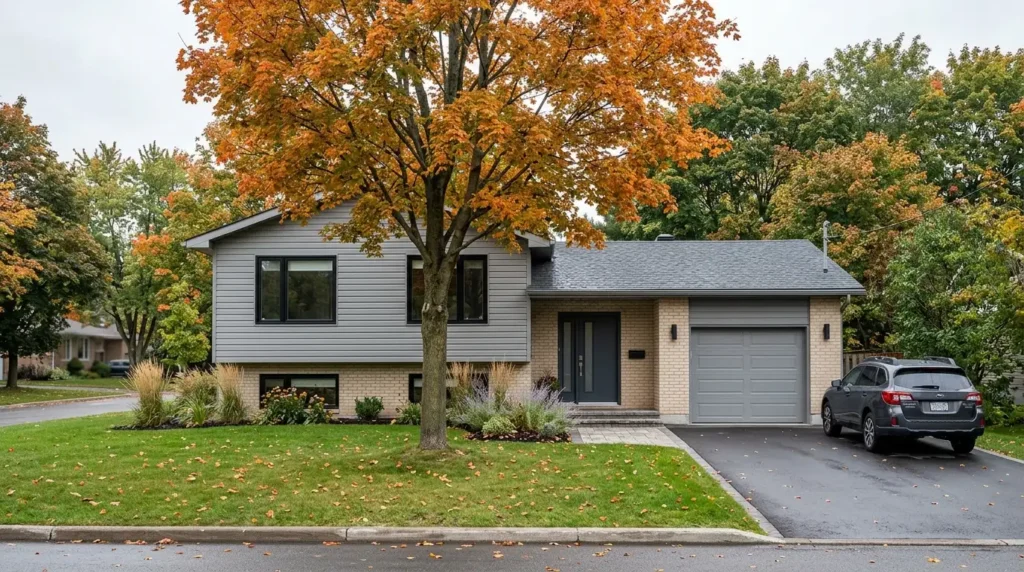
Pricing Your Nepean Home by Pocket
The biggest factor in how a Nepean sale goes is the starting price. Buyers here have choices, so a home priced above its comparables tends to get passed over in the first two weeks, when buyer interest is highest. It then sells later for less than it would have at the right price.
Jason prices Nepean homes using sales in the same pocket, not Nepean-wide averages. A 1960s backsplit in Briargreen, a two-storey in Centrepointe and a bungalow on a large lot in Qualicum each have their own buyer pool and price range. He looks at:
- Recent sales of similar homes nearby, adjusted for size, lot, condition and finished basement.
- Current competition: what buyers in your price range can see this week.
- Expired listings, which show the prices buyers turned down.
- Land value, for larger lots where infill builders may compete with families.
See recently sold homes in Nepean for how he reads sold data, or start with what your Nepean home is worth.
What Buyers and Inspectors Check in Nepean Homes
Most Nepean homes are 40 to 70 years old. Buyers expect some age, but they react badly to surprises. These are the items that come up most often in Nepean inspections. Knowing about them before you list lets you fix them, price for them or disclose them on your terms.
Electrical service and wiring
Homes built in the 1950s and early 1960s may still have 60-amp or 100-amp service and older panels, and homes wired from the mid-1960s to the late 1970s may have aluminum branch wiring. Insurers often ask about both. Jason’s guides on selling with an older electrical panel and selling with aluminum wiring explain your options. Any electrical work should be done by a licensed contractor with an Electrical Safety Authority permit.
Plumbing
Galvanized supply lines, original cast-iron stacks and Poly-B plumbing (used in many homes built from the late 1970s to the late 1990s) all draw attention. Read selling a home with Poly-B plumbing.
Foundation, grading and basement water
Cracks, efflorescence and signs of past water are common in older block foundations. Fixing grading and downspouts is cheap and makes a difference. Bigger issues are covered in selling a house with foundation problems.
Roof, windows and furnace
Buyers will ask for the age of each. Gather invoices and warranties now so you can answer in the listing.
Permits
Finished basements, decks and additions done without permits are common in older Nepean homes. Open or missing permits can hold up a sale, so check with the City of Ottawa early. Read selling a house with open permits.
For a full picture before you list, consider a pre-listing home inspection. In Ontario, sellers must not misrepresent known defects. Jason’s guide on what to disclose when selling explains how that works in practice.
Sell Your Ottawa Home for Just 1% Listing Commission
Why pay 2.5% listing commission to sell your home when you don't have to? Jason Polonski lists Ottawa homes for a simple 1% listing commission. Full MLS® and REALTOR.ca exposure, professional photography, powerful online marketing, expert pricing, and a skilled negotiator fighting for every dollar of your sale price. Top-tier service — you just keep thousands more when your home sells. Smart sellers are already making the switch. Your home deserves the best, and your wallet deserves a break.
Updates That Pay Back in Nepean
Not every update returns its cost. In Nepean, these usually do, because they remove the worries buyers have about older homes:
- Paint, lighting and flooring repairs. Fresh neutral paint and modern light fixtures make a 1970s interior look cared for.
- Electrical safety items. Replacing an obsolete panel or adding grounded outlets in key rooms can matter more to buyers than a new backsplash.
- Exterior and grading. Cleaning eavestroughs, extending downspouts, trimming trees and tidying the garden all help, especially on Nepean’s mature, tree-lined streets.
- Small kitchen and bathroom refreshes. New hardware, faucets, counters or caulking often do more than a full renovation you won’t get paid back for.
Leave large projects, such as a full kitchen or an addition, unless your comparables show buyers paying a clear premium for them. Jason’s staging guide explains how to present each room, and Selling an Older Home in Ottawa covers older homes in more depth.
Get Cash Back When You Buy a Home in Ottawa
Can you get cash back when buying a home in Ottawa? Yes. Jason Polonski, a Chairman's Club REALTOR® serving Ottawa and Kanata, shares part of his commission with buyers — up to $3,000 cash back at closing.* You still get full-service, award-winning representation: expert pricing, sharp negotiation, and hands-on guidance from first showing to keys in hand. No cut corners and no rebate-only shortcuts — just real money back in your pocket when you buy your Ottawa or Kanata home.
Getting Your Nepean Home Ready to List
Preparation usually takes three to six weeks, depending on how much needs doing. A practical order:
- Walk-through with Jason. Go room by room and decide what to fix, what to price in and what to leave.
- Repairs and safety items first. Electrical, plumbing leaks, missing handrails, loose steps and anything an inspector would flag.
- Declutter and pack early. Many Nepean homes have small closets by today’s standards, so clearing them makes them look larger.
- Paint and lighting. Neutral paint and bright, modern bulbs help listing photos.
- Exterior. Mature trees and gardens are a selling point if they’re trimmed and tidy. In winter, keep walkways and the driveway clear and well lit.
- Paperwork. Gather utility bills, the tax bill, permits, ESA certificates, warranties and invoices for major updates. Buyers and their lenders will ask, and having them ready builds trust.
- Professional photos, floor plans and video. These go live on REALTOR.ca and across Jason’s marketing on launch day.
Skipping preparation is a false economy. Buyers notice deferred maintenance and assume there’s more behind it, and that shows up in their offers.

Timing Your Nepean Sale
Spring is usually Ottawa’s busiest season, with the most buyers and the most listings. Early fall is a second strong window. Winter brings fewer buyers but also less competition, and serious buyers, including people relocating for government or tech jobs, are still looking. Jason’s guide to the best time to sell in Ottawa looks at the trade-offs.
For most Nepean sellers, getting your timing right matters more than the calendar. That means:
- Listing when the house is ready, not before.
- Checking what’s coming up in your pocket so you don’t launch against three similar homes at once.
- Coordinating with your purchase if you’re moving up or downsizing. Bridge financing can give you room.
What You Keep: Costs of Selling in Nepean
The main costs of selling are the listing brokerage commission, the buyer brokerage commission, HST on those commissions, legal fees, any mortgage discharge or prepayment penalty, and moving. Jason’s breakdown of the cost of selling a home in Ottawa covers each one, and his net proceeds calculator lets you run your own numbers.
The listing commission is where you have the most room to save. Jason’s 1% Listing Commission is charged on the final sold price. On a $700,000 sale, a 1% listing commission is $7,000 plus HST, compared with $17,500 plus HST at 2.5%. The buyer brokerage commission is separate and is set out in your listing agreement.
If the home has been your principal residence, the sale is usually covered by the principal residence exemption, but you still report the sale on your tax return. Rules change, so confirm your situation with your accountant. For marketing, see how Jason markets Ottawa homes. For offers, see reviewing and negotiating offers.

Choosing Your Listing Agent and Understanding the Agreement
In Ontario, the listing agreement sets out who represents you, what they’ll do, how long the agreement lasts and how commission is paid. Under the Real Estate Council of Ontario‘s rules, your brokerage must explain the agreement and give you a copy. Read it before you sign, and ask about:
- Term and cancellation. How long the agreement runs and what happens if you want to end it early.
- Commission. The listing commission, the buyer brokerage commission, and when each is payable. Jason’s 1% Listing Commission is charged on the final sold price.
- Marketing. Photography, floor plans, video, MLS® exposure through the Ottawa Real Estate Board, and how showings and offers will be handled.
- Multiple representation. Whether the brokerage may represent a buyer as well, and how that would work.
Your lawyer and your mortgage
Bring in a real estate lawyer early, especially for estates, separations, title questions or a home with open permits. The Law Society of Ontario has a directory if you need one. Call your lender before you list, too. If you’re breaking a mortgage before maturity, the prepayment penalty can be significant, and the Financial Consumer Agency of Canada explains how penalties are calculated. Porting the mortgage to your next home may avoid it.
Questions to ask any agent
How many homes have they sold in your pocket? How do they price older homes with dated systems? Who will actually be at your showings and offer presentations? What’s their plan if you don’t get the offers you want in the first two weeks? A good agent gives you specific answers, not general promises.


Posted on Google 

Jennifer Clark
10 days ago
 Trustindex verifies that the original source of the review is Google.
His availability to communicate was incredible which is so important when selling a house. Great at everything else too.
Posted on Google

Aarushi Govil
21 days ago
Trustindex verifies that the original source of the review is Google. Working with Jason has been an absolute privilege from start to finish. Finding the right realtor can be daunting, but Jason exceeded every expectation. He is remarkably knowledgeable and was extremely punctual and responsive to every question or request we had, no matter the time or the day. What stood out most was his complete sincerity and zero-pressure approach. When we walked through houses, he was transparent, pointing out both the pros and potential red flags instead of trying to make a quick sale. His honest feedback gave us complete confidence in our decision. If you want a dedicated, honest, and highly skilled agent in your corner, look no further than Jason!
Posted on Google

Joe Ireland
35 days ago
Trustindex verifies that the original source of the review is Google. Jason helped me buy my first home.
He was extremely responsive and available from our very first call, and assisted with booking multiple viewings across Ottawa.
He was punctual to every viewing and honest with his feedback with the homes we saw, and when it came time to go from viewing to buying, he had an impressive array of contacts from brokers to inspectors to lawyers, all with excellent reviews and who were great to work with in their own right.
As a first-time home buyer, his responsiveness and patience with many questions were extremely reassuring and really streamlined the process, and I signed an offer on my home within just 2 weeks of meeting him.
I would strongly recommend Jason to anyone buying a home in Ottawa, especially to those who are strangers to the process like I was.
Thank you again, Jason!
Posted on Google

Marina
65 days ago
Trustindex verifies that the original source of the review is Google. We had a wonderful experience working with our realtor - Jason Polonski. He is a professional, knowledgeable, responsive, and truly attentive to our needs. Jason guided us through every step of the process, answered all of our questions. My family are very grateful for his work and would absolutely recommend him to anyone looking for a reliable and trustworthy realtor in Ottawa and around !
Posted on Google

Vatrul “Vatrul”
69 days ago
Trustindex verifies that the original source of the review is Google. First time home seller. Every process of the journey was explained and laid out perfectly.. Very highly recommended.. thank you Jason..
Posted on Google

Olga V.
70 days ago
Trustindex verifies that the original source of the review is Google. Jason is very knowledgeable realtor in Kanata. He’s been always good beyond to help his clients. We had a place experience buying a house in Kanata. I highly recommend him.
Posted on Google

Yuri Tsouker
77 days ago
Trustindex verifies that the original source of the review is Google. Working with Jason on the sale of my property was genuinely one of the smoothest professional experiences I've had. He was responsive at every step, patient with every question (and I had many), and he clearly knew the local market inside and out.
My sale wasn't a simple one — there was a tenant, a rental water heater, a plumber to coordinate, and plenty of complications that made this a genuinely difficult case. Jason handled all of it with calm, practical advice and always got back to me quickly, often with a solution before I even finished asking about the problem.
What stood out most was his honesty. He didn't push, he didn't overpromise, and every recommendation he made turned out to be exactly right. I felt like I had a professional in my corner from day one.
If you're looking for a realtor who is knowledgeable, responsive, and genuinely trustworthy, I can't recommend Jason highly enough. Thank you, Jason — much appreciated!
Posted on Google

Denis Pepin
101 days ago
Trustindex verifies that the original source of the review is Google. Outstanding Experience with Jason Polonski!
Last May, my wife and I sold our home in Stittsville with Jason Polonski, and we couldn't be happier with our decision. Jason made the entire process remarkably smooth and stress-free.
From day one, Jason stood out for his exceptional communication. He was always prompt and available to answer our queries—often within minutes—no matter the time of day. Whenever we had questions regarding paperwork, listing strategies, or handling property details, he addressed every concern with a truly genuine, human touch.
What impressed us most was how proactive and reassuring he was at every step. When we had to coordinate the buyout of our water heater rental, Jason handled the reimbursement seamlessly, reassuring us with, "We should have a smooth sale now. :)"—and it truly was! Even post-closing, when we needed to arrange delivery for mailbox keys or track down final funds from head office, Jason stayed on top of every detail, putting a rush on things and constantly keeping us updated.
Jason is a dedicated, attentive, and highly professional realtor who genuinely cares about his clients. It has been an absolute pleasure working with him, and we highly recommend Jason Polonski to anyone looking to buy or sell a home in the Ottawa region.
Posted on Google

Tammy Puhakka
110 days ago
Trustindex verifies that the original source of the review is Google. I highly recommend Jason Polonski, a realtor in Kanata, Ottawa. He truly went above and beyond for me. During a long weekend, he called me and, within just two hours, had an offer to purchase prepared and sent so I could secure the home I had found and fallen in love with.
Jason was professional, efficient, knowledgeable, and incredibly pleasant to work with. His rates are very reasonable, and his dedication to his clients is outstanding. If you’re looking for fast, reliable, and friendly service, I would absolutely recommend contacting him.❤️
Posted on Google

Joe Melindy
115 days ago
Trustindex verifies that the original source of the review is Google. Everything went smoothly. Jason is very good at what he does. Would highly recommend. Thanks Jason 😊
Sell Your Nepean Home With Jason Polonski
Jason Polonski is a REALTOR® with Right at Home Realty with more than 15 years of experience in Ottawa’s west end. He holds a Bachelor of Commerce with a double major in Marketing and Finance from Concordia University and has a construction and electrical trades background. For Nepean sellers, that means he can walk through your home before you list, point out what an inspector will flag, and tell you which fixes are worth doing and which to price in instead.
As a move coordinator, he lines up your sale with your next purchase so you aren’t carrying two homes. He offers a 1% Listing Commission, charged on the final sold price, and his recognition includes the Chairman’s Club (2025, 2021) and Best in Ottawa Top REALTOR® seven years running. Learn more about Jason, see his Nepean REALTOR® page, or call or text (613) 601-9333.
Frequently Asked Questions
Use recent sales of similar homes in your own pocket, not Nepean-wide averages, adjusted for size, lot, condition and basement. Check current competing listings and recent expired listings too. On large lots, compare land value as well, because builders may be competing for the property.
Older electrical service and panels, aluminum wiring in mid-1960s to late-1970s homes, galvanized or Poly-B plumbing, foundation cracks and basement moisture, ageing roofs and windows, and renovations done without permits.
Usually not a major renovation. Paint, lighting, small repairs, exterior clean-up and fixing electrical safety items tend to pay back. Large kitchen or addition projects rarely return their full cost unless your comparables clearly show a premium.
Spring is usually busiest, with early fall a second strong window. The most important thing is listing when the home is ready, at a time when you won’t be competing with several similar homes in your pocket.
The main costs are the listing and buyer brokerage commissions plus HST, legal fees, any mortgage penalty and moving costs. Jason’s 1% Listing Commission is charged on the final sold price, and the buyer brokerage commission is separate.
If it was your principal residence for every year you owned it, the sale is generally covered by the principal residence exemption, but it must still be reported to the CRA. Rules change, so confirm with your accountant.
