OTTAWA HOME SELLERS
Selling a House With Foundation Cracks or Water Problems in Ottawa
By Jason Polonski, REALTOR® with Right at Home Realty · Last updated: November 2026 · Client reviews
Can you sell a house with foundation problems in Ottawa? Yes. Selling a house with foundation problems is common, and most foundation cracks are not structural. What decides the outcome is whether you know which kind you have, whether water is getting in, and whether you can show buyers a professional opinion and a cost instead of letting their inspector define the problem for them.
Ottawa has a particular reason to take foundations seriously. Parts of the region sit on sensitive marine clay, often called Leda clay, which can shrink and settle as it dries. Add a century of older poured and block foundations, spring thaws and the occasional sewer backup, and cracks and damp basements are some of the most frequent items in local inspection reports. Buyers know this, and some will walk away from anything they cannot size up quickly.
This guide explains the difference between cosmetic and structural cracks, how water problems change a sale, the professionals worth calling, and how to price and disclose so the deal holds together. It is part of the guide to selling an older home in Ottawa. To talk about your house, call or text Jason Polonski at (613) 601-9333.
Key takeaways
- Most foundation cracks are not structural; type, direction and water decide how serious they are.
- Parts of Ottawa sit on sensitive marine (Leda) clay, which can contribute to settlement.
- An engineer’s letter or a warrantied repair turns an open question into a known cost.
- Disclose known leaks and repairs, and back them up with documents.
Which Foundation Cracks Matter to Buyers?
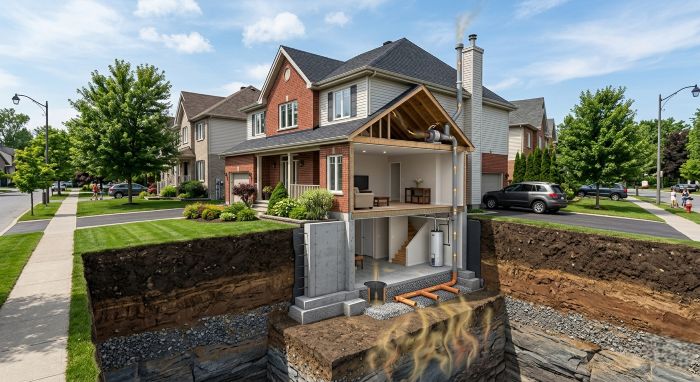
Concrete cracks as it cures and as the house settles, so a crack on its own does not mean a foundation is failing. Buyers and their inspectors look at the type, width, direction and whether water comes through.
Usually minor
- Hairline vertical cracks in a poured foundation, often from shrinkage as the concrete cured.
- Cracked parging, the thin cement coating on the exterior of the foundation, which is cosmetic unless it hides something else.
- Old, dry cracks that have been sealed and show no sign of movement or moisture.
Worth a closer look
- Horizontal cracks or bowing in a wall, which can indicate soil pressure against the foundation.
- Stair-step cracks through the mortar of a block foundation.
- Cracks wider at one end than the other, which can suggest movement.
- Doors and windows that stick, sloping floors or cracks in drywall above openings, especially if they are new.
- Active leaks, efflorescence (white mineral deposits) or damp spots along cracks.
Why Ottawa’s clay matters
Much of the Ottawa area sits on marine clay deposited by the ancient Champlain Sea. Research from the University of Ottawa on sensitive marine clays describes how differently these soils behave from other Canadian soils. Clay soils shrink as they lose moisture, so long dry summers and large trees planted close to a house can contribute to settlement. That is why some Ottawa homes show cracking that appears or widens after a drought, and why buyers in certain areas ask about it more often.
How Foundation and Water Problems Affect Your Sale
Foundation issues touch every part of a sale, from the number of showings to the conditions in the offer.
Inspection and the fear of the unknown
A home inspector is a generalist. When they see a crack they cannot assess, the report usually recommends evaluation by a structural engineer or a foundation specialist. To a buyer, that recommendation reads as an open-ended cost. Without your own information, the buyer either asks for time to bring in an engineer, asks for a large credit or walks away.
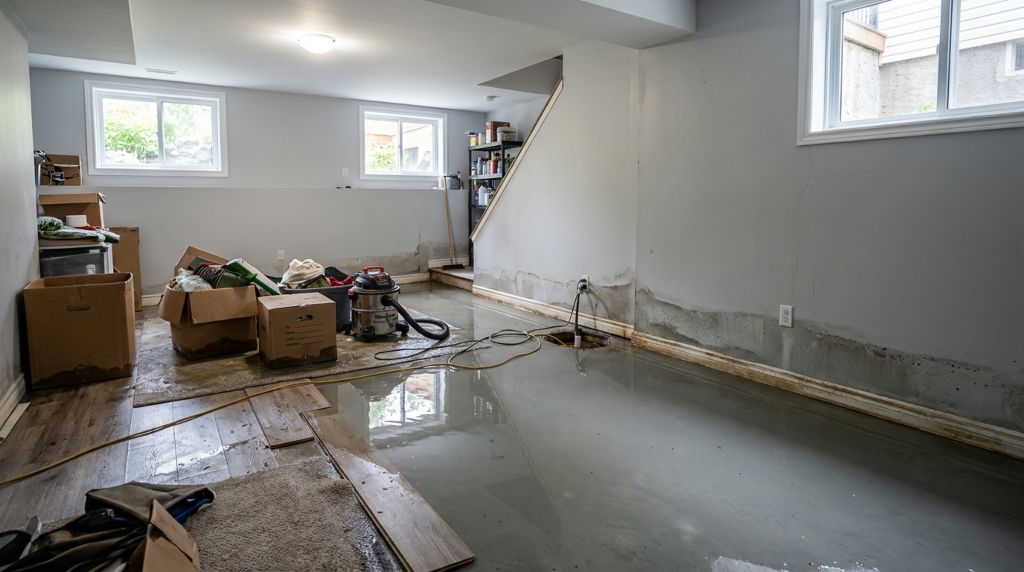
Water is often the bigger issue
Many buyers will accept a sealed crack. Fewer will accept a basement that takes on water. Water can come from groundwater seeping through cracks or the floor joint, from poor grading and downspouts, or from sewer backup during heavy rain. Each has a different fix, and buyers want to know which one applies. The guide to basement flooding in Ottawa explains the causes in more detail.
Insurance
Buyers need to insure the home before closing, and insurers ask about past water claims and protective equipment such as backwater valves and sump pumps. Water coverage, especially for sewer backup and overland flooding, is usually an add-on rather than automatic, as the Insurance Bureau of Canada explains. Homes close to the Rideau or Ottawa rivers may also be affected by regulated flood plain mapping, which the Rideau Valley Conservation Authority administers for much of the area. See the guide to flood plain homes in Ottawa for what buyers check.
Radon and cracks
Cracks and gaps in a foundation are also pathways for radon, a naturally occurring gas that Health Canada recommends testing for in all homes. Some buyers ask about radon at the same time as foundations, and a recent test result answers the question. The guide to radon in Ottawa homes explains testing and mitigation.
Sell Your Ottawa Home for Just 1% Listing Commission
Why pay 2.5% listing commission to sell your home when you don't have to? Jason Polonski lists Ottawa homes for a simple 1% listing commission. Full MLS® and REALTOR.ca exposure, professional photography, powerful online marketing, expert pricing, and a skilled negotiator fighting for every dollar of your sale price. Top-tier service — you just keep thousands more when your home sells. Smart sellers are already making the switch. Your home deserves the best, and your wallet deserves a break.
Get the Right Opinion Before You List
The most valuable thing a seller can do with a foundation question is replace guesswork with a written opinion from the right professional. Who you call depends on what you are seeing.
Structural engineer
For horizontal cracks, bowing, signs of movement or anything a buyer is likely to call structural, a licensed professional engineer gives the most authoritative assessment. You can confirm an engineer’s licence through Professional Engineers Ontario. An engineer’s letter that describes the crack, its likely cause, whether it is active and what repair (if any) is recommended carries far more weight with buyers and their lenders than a contractor’s sales quote.
Foundation or waterproofing contractor
For a leaking crack, a contractor can quote an injection repair from the inside or excavation and membrane work on the outside. Ask whether the repair comes with a written warranty and whether that warranty transfers to a new owner. A transferable warranty is a strong selling point because it shifts risk away from the buyer.
Home inspector
A pre-listing home inspection shows you what the buyer’s inspector is likely to say about the foundation and everything else. You can find members of the Ontario Association of Home Inspectors in the Ottawa area.
Protective plumbing
If water has entered through floor drains during heavy storms, a backwater valve and a sump pump may be part of the solution. The City’s Residential Protective Plumbing Program offers rebates toward eligible devices and the related building permit fee. Check current amounts and eligibility before you start, because the program has rules about permits and inspections.
Get Cash Back When You Buy a Home in Ottawa
Can you get cash back when buying a home in Ottawa? Yes. Jason Polonski, a Chairman's Club REALTOR® serving Ottawa and Kanata, shares part of his commission with buyers — up to $3,000 cash back at closing.* You still get full-service, award-winning representation: expert pricing, sharp negotiation, and hands-on guidance from first showing to keys in hand. No cut corners and no rebate-only shortcuts — just real money back in your pocket when you buy your Ottawa or Kanata home.
Repair, Price for It or Sell As-Is?
Once you know what you are dealing with, there are three realistic paths.
Repair before listing
Repairing a leaking crack or correcting grading and downspouts before listing is often money well spent, because a dry basement and a warrantied repair turn a scary item into a resolved one. Keep invoices, photos before and after, and the warranty document. If the work required a permit, the City’s compliance summary report can confirm it was closed properly.
Structural repairs, such as underpinning or wall bracing, are larger projects. They can be worth doing if you have time, but get the engineer’s recommendation first so you are not paying for more work than the house needs.
Price for it, with documents
If a repair is large or you are short on time, you can list with the engineer’s letter and a contractor’s quote in the listing package. Buyers then negotiate around a defined number, and many will accept the project in exchange for a fair price. This approach is especially effective in established neighbourhoods where the lot and location carry much of the value.
Sell as-is
Some homes, particularly those likely to be renovated heavily or rebuilt, sell best as-is to buyers who expect to deal with the foundation themselves. The guide to selling a home as-is in Ottawa covers how that works, including why as-is does not remove your disclosure obligations.
What not to do
Do not patch a crack cosmetically right before listing without fixing the cause, and do not freshly paint over water stains. Inspectors look for both, and a cover-up does far more damage to a negotiation than the original crack ever would.
What you see, who to call and what to do
| What you see | Who to call | Typical next step |
|---|---|---|
| Hairline vertical crack, dry | Home inspector | Seal and document; usually minor |
| Crack that leaks in spring | Waterproofing contractor | Injection or exterior repair with transferable warranty |
| Horizontal crack or bowing wall | Structural engineer | Engineer’s letter before listing; repair if recommended |
| Stair-step crack in block wall | Structural engineer | Assessment, then price or repair |
| Water through floor drains in storms | Licensed plumber | Backwater valve; check City rebate eligibility |
| Doors sticking, sloping floors | Structural engineer | Assess for settlement, including soil movement |
Disclosure: What Sellers Should Share
Foundation and water history is one of the areas where sellers most often get into trouble after closing. If you know about a past leak, a structural repair, a sewer backup or an insurance claim, answer questions about it honestly and back the answer up with documents. A known problem that has been fixed and documented is a selling point. A known problem that was hidden can become a legal claim.
Ontario’s real estate regulator, RECO, encourages sellers to understand their responsibilities, and the guide to what to disclose when selling a home in Ottawa explains how disclosure works in practice. For questions about your specific situation, speak with a real estate lawyer before listing.
Documents to gather
- Engineer’s letter or report, if one exists or is warranted.
- Contractor invoices, photos and any transferable warranty.
- Permit records for structural or waterproofing work.
- Details of protective plumbing, such as backwater valves and sump pumps, including installation dates.
- Insurance claim history related to water, if any.
- A recent radon test, if you have one.
With those documents in hand, a buyer’s agent can explain the situation to their client clearly, and the buyer’s lender and insurer have what they need. That reduces the chance of a deal collapsing during the condition period.
Pricing a Home With Foundation Issues in Ottawa
Pricing should start from comparable sales and then adjust for the cost and risk a buyer is taking on. Buyers tend to overestimate unknown foundation costs, so a documented scope usually leads to a smaller discount than an unanswered question. A thorough home value assessment should show those adjustments explicitly.
Timing matters too. A basement that is dry in August may tell a different story in April. If water has been an issue, list after you have fixed the cause and can show it has held through a wet season, or be upfront that the fix is recent.
When the inspection raises it anyway
Even with good preparation, a buyer’s inspector may recommend further evaluation. If you already have an engineer’s letter, share it immediately. If you do not, offer a short window for the buyer to bring in their own engineer rather than agreeing to an open-ended credit. The guide to what happens when a home fails inspection explains how to keep those negotiations on track.
The buyer’s perspective
Buyers who walk away from foundation issues are usually walking away from uncertainty, not from concrete. Every document you provide removes a little of that uncertainty. That is the most reliable way to protect your price.


Posted on Google 

Jennifer Clark
10 days ago
 Trustindex verifies that the original source of the review is Google.
His availability to communicate was incredible which is so important when selling a house. Great at everything else too.
Posted on Google

Aarushi Govil
21 days ago
Trustindex verifies that the original source of the review is Google. Working with Jason has been an absolute privilege from start to finish. Finding the right realtor can be daunting, but Jason exceeded every expectation. He is remarkably knowledgeable and was extremely punctual and responsive to every question or request we had, no matter the time or the day. What stood out most was his complete sincerity and zero-pressure approach. When we walked through houses, he was transparent, pointing out both the pros and potential red flags instead of trying to make a quick sale. His honest feedback gave us complete confidence in our decision. If you want a dedicated, honest, and highly skilled agent in your corner, look no further than Jason!
Posted on Google

Joe Ireland
35 days ago
Trustindex verifies that the original source of the review is Google. Jason helped me buy my first home.
He was extremely responsive and available from our very first call, and assisted with booking multiple viewings across Ottawa.
He was punctual to every viewing and honest with his feedback with the homes we saw, and when it came time to go from viewing to buying, he had an impressive array of contacts from brokers to inspectors to lawyers, all with excellent reviews and who were great to work with in their own right.
As a first-time home buyer, his responsiveness and patience with many questions were extremely reassuring and really streamlined the process, and I signed an offer on my home within just 2 weeks of meeting him.
I would strongly recommend Jason to anyone buying a home in Ottawa, especially to those who are strangers to the process like I was.
Thank you again, Jason!
Posted on Google

Marina
65 days ago
Trustindex verifies that the original source of the review is Google. We had a wonderful experience working with our realtor - Jason Polonski. He is a professional, knowledgeable, responsive, and truly attentive to our needs. Jason guided us through every step of the process, answered all of our questions. My family are very grateful for his work and would absolutely recommend him to anyone looking for a reliable and trustworthy realtor in Ottawa and around !
Posted on Google

Vatrul “Vatrul”
69 days ago
Trustindex verifies that the original source of the review is Google. First time home seller. Every process of the journey was explained and laid out perfectly.. Very highly recommended.. thank you Jason..
Posted on Google

Olga V.
70 days ago
Trustindex verifies that the original source of the review is Google. Jason is very knowledgeable realtor in Kanata. He’s been always good beyond to help his clients. We had a place experience buying a house in Kanata. I highly recommend him.
Posted on Google

Yuri Tsouker
77 days ago
Trustindex verifies that the original source of the review is Google. Working with Jason on the sale of my property was genuinely one of the smoothest professional experiences I've had. He was responsive at every step, patient with every question (and I had many), and he clearly knew the local market inside and out.
My sale wasn't a simple one — there was a tenant, a rental water heater, a plumber to coordinate, and plenty of complications that made this a genuinely difficult case. Jason handled all of it with calm, practical advice and always got back to me quickly, often with a solution before I even finished asking about the problem.
What stood out most was his honesty. He didn't push, he didn't overpromise, and every recommendation he made turned out to be exactly right. I felt like I had a professional in my corner from day one.
If you're looking for a realtor who is knowledgeable, responsive, and genuinely trustworthy, I can't recommend Jason highly enough. Thank you, Jason — much appreciated!
Posted on Google

Denis Pepin
101 days ago
Trustindex verifies that the original source of the review is Google. Outstanding Experience with Jason Polonski!
Last May, my wife and I sold our home in Stittsville with Jason Polonski, and we couldn't be happier with our decision. Jason made the entire process remarkably smooth and stress-free.
From day one, Jason stood out for his exceptional communication. He was always prompt and available to answer our queries—often within minutes—no matter the time of day. Whenever we had questions regarding paperwork, listing strategies, or handling property details, he addressed every concern with a truly genuine, human touch.
What impressed us most was how proactive and reassuring he was at every step. When we had to coordinate the buyout of our water heater rental, Jason handled the reimbursement seamlessly, reassuring us with, "We should have a smooth sale now. :)"—and it truly was! Even post-closing, when we needed to arrange delivery for mailbox keys or track down final funds from head office, Jason stayed on top of every detail, putting a rush on things and constantly keeping us updated.
Jason is a dedicated, attentive, and highly professional realtor who genuinely cares about his clients. It has been an absolute pleasure working with him, and we highly recommend Jason Polonski to anyone looking to buy or sell a home in the Ottawa region.
Posted on Google

Tammy Puhakka
110 days ago
Trustindex verifies that the original source of the review is Google. I highly recommend Jason Polonski, a realtor in Kanata, Ottawa. He truly went above and beyond for me. During a long weekend, he called me and, within just two hours, had an offer to purchase prepared and sent so I could secure the home I had found and fallen in love with.
Jason was professional, efficient, knowledgeable, and incredibly pleasant to work with. His rates are very reasonable, and his dedication to his clients is outstanding. If you’re looking for fast, reliable, and friendly service, I would absolutely recommend contacting him.❤️
Posted on Google

Joe Melindy
115 days ago
Trustindex verifies that the original source of the review is Google. Everything went smoothly. Jason is very good at what he does. Would highly recommend. Thanks Jason 😊
Selling a House With Foundation Problems With Jason Polonski
Jason Polonski is a full-time REALTOR® with Right at Home Realty who has worked in Ottawa real estate for more than 15 years, helping hundreds of buyers and sellers in Kanata, Nepean, Barrhaven, Alta Vista and across the city. Before real estate, he worked in the construction and electrical trades and holds a technical diploma in construction electricity, so he can walk a basement with you, separate the cosmetic from the concerning, and help you decide whether to bring in an engineer, a contractor or both before buyers see the house. He also earned a Bachelor of Commerce from Concordia University with a double major in Marketing and Finance, which shapes how he weighs the cost of a repair against the price it protects. His 1% Listing Commission means more of the sale stays with you. Call or text Jason at (613) 601-9333, or read his Google reviews.
For the full process from pricing to closing, see the guide to selling your house in Ottawa.
Selling a House With Foundation Problems (FAQs)
Yes. Most foundation cracks are not structural, and many homes sell with them. The key is knowing what type of crack you have, whether water is getting in, and having a professional opinion and a cost ready for buyers.
If you know about foundation problems, past leaks or repairs, answer questions about them honestly and support your answers with documents. Hiding a known defect can lead to legal claims after closing. A real estate lawyer can advise on your specific obligations.
If the crack is horizontal, the wall is bowing or there are signs of movement, an engineer’s letter is usually worth the cost. It gives buyers and lenders an authoritative assessment and often prevents the buyer from assuming the worst.
Parts of the Ottawa area sit on sensitive marine clay that can shrink as it dries, which may contribute to settlement in some homes. Many homes on clay soils have no issues. Where cracking is present, an engineer can assess whether soil movement is a factor.
Usually yes. Buyers often accept a sealed crack but are wary of a wet basement. Fixing the cause, documenting the repair and providing any transferable warranty generally protects your price better than offering a credit.
Yes. The City of Ottawa’s Residential Protective Plumbing Program offers rebates toward eligible protective plumbing devices, such as backwater valves and sump pumps, and the related building permit fee. Check the City’s current amounts and requirements before starting work.
It depends on the type of issue, the cost to repair it and how much uncertainty remains. Documented, defined problems usually lead to smaller discounts than unknown ones, because buyers tend to overestimate costs they cannot see.
