OTTAWA HOME SELLERS
Selling a House With an Old Electrical Panel or 60-Amp Service
By Jason Polonski, REALTOR® with Right at Home Realty · Last updated: November 2026 · Client reviews
Can you sell a house with an old electrical panel or 60-amp service in Ottawa? Yes. Selling a house with an old electrical panel is legal, but a fuse box, an undersized service or a panel brand that inspectors flag will affect the buyer’s insurance, the inspection and the price. Sellers who upgrade or document the electrical system before listing usually face fewer conditions and smaller credit requests than sellers who let the buyer’s inspector raise it first.
The electrical panel is one of the first things a home inspector opens, and one of the first things an insurer asks about. In older Ottawa neighbourhoods such as Alta Vista, Westboro, Nepean and the original parts of Kanata, it is common to find panels that are decades old, services that were sized long before heat pumps and electric vehicles, and the occasional fuse panel still in use. None of that makes a home unsellable. It does mean the panel needs a plan.
This guide covers the electrical equipment that worries buyers and insurers, how to find out what you have, the choices between upgrading and pricing for it, and the paperwork that proves the work was done properly. If your concern is the wiring itself rather than the panel, see the separate guides to knob-and-tube wiring and aluminum wiring. To talk about your home, call or text Jason Polonski at (613) 601-9333.
Key takeaways
- Fuse panels, 60-amp service and flagged panel brands draw the most insurer and inspector questions.
- Upgrades in Ontario need an ESA notification and inspection.
- An ESA Certificate of Acceptance is the strongest document you can give a buyer.
- If the house is likely to be rebuilt, disclosure and pricing may beat upgrading.

Which Electrical Panels and Services Concern Ottawa Buyers?
Buyers rarely understand electrical equipment in detail, but their inspectors, lenders and insurers do. Four situations come up most often in Ottawa listings.
Fuse panels
Screw-in or cartridge fuse panels were standard in homes built before breaker panels became common. Many have since been replaced, but some remain, often as a sub-panel in a basement or garage. Insurers frequently ask about fuses specifically, and some will surcharge or decline a new policy until the fuses are replaced with a breaker panel.
60-amp and small 100-amp services
The size of the electrical service is the capacity coming into the house from the utility. Many older homes were built with 60-amp service, and 100-amp service became the norm for decades after that. A 60-amp service struggles with modern loads such as central air conditioning, induction cooking, a heat pump or an electric vehicle charger, and insurers and buyers often treat it as due for an upgrade. A 100-amp service is still common and often adequate, but buyers planning a heat pump or EV charger will ask whether it has room to grow.
Panel brands inspectors flag
Some older panel lines are routinely flagged by home inspectors for evaluation by an electrician. In Canada, older Federal Pioneer Stab-Lok panels are the example buyers hear about most, and certain breaker models from that line were the subject of a limited recall in the 1990s. A flag in a report is not proof of a defect, but it puts the question on the table and often leads to a request for an electrician’s opinion.
Panels showing their age
Regardless of brand, inspectors note rust, scorch marks, double-tapped breakers, a full panel with no spaces, missing breaker covers and home-made additions. Each of those items invites the buyer to ask for repairs or money off.
How an Old Electrical Panel Affects Selling Your House
The panel shapes the sale in three places: insurance, inspection and price. Understanding each one lets you decide where to spend money and where to explain instead.
The buyer’s insurance
A buyer with a mortgage needs home insurance in place before closing, and insurers ask about the age and type of the electrical panel and the size of the service. Their answers differ from company to company, and the Insurance Bureau of Canada explains how insurers assess risk in older homes. If an insurer requires an upgrade within a set period or refuses coverage outright, the buyer may ask for an insurance condition or an extended closing. For more on how coverage works in local purchases, see the guide to home insurance in Ottawa.
The inspection
Inspectors open the panel cover and report what they see. A fuse panel, a flagged brand or signs of overheating will appear in the summary page, not buried in the appendix. Once it is written down, the buyer has a document to negotiate with, and the request is usually sized to a full service upgrade.
The price
Buyers subtract the cost and hassle of an upgrade from what they are willing to pay, and they tend to estimate high when they have no quote in front of them. A defined cost, from a licensed electrical contractor, keeps that subtraction realistic. If the panel is the only significant issue, the price effect is often modest. If it sits alongside original wiring, an older roof and dated mechanicals, buyers see a project house and price accordingly.
Electrical concerns also connect to fire safety, which buyers take seriously. The Office of the Fire Marshal publishes home fire-safety guidance that many buyers read when an inspection report raises electrical questions.
Sell Your Ottawa Home for Just 1% Listing Commission
Why pay 2.5% listing commission to sell your home when you don't have to? Jason Polonski lists Ottawa homes for a simple 1% listing commission. Full MLS® and REALTOR.ca exposure, professional photography, powerful online marketing, expert pricing, and a skilled negotiator fighting for every dollar of your sale price. Top-tier service — you just keep thousands more when your home sells. Smart sellers are already making the switch. Your home deserves the best, and your wallet deserves a break.
Upgrade Before Listing or Sell As-Is?
Most sellers end up choosing one of three paths. The right one depends on what you have, how long you have and who your likely buyer is.
Upgrade the panel or service before listing
Replacing a fuse panel or a flagged panel with a modern breaker panel, or increasing the service from 60 to 100 or 200 amps, removes the issue from the inspection report and the insurance questions. In Ontario, almost all electrical work requires a notification (often called a permit) filed with the Electrical Safety Authority, and the work is inspected. If you hire someone, Ontario law requires a Licensed Electrical Contractor, which you can confirm on the ESA website. A service upgrade also involves the utility, so your contractor will coordinate the disconnection and reconnection with Hydro Ottawa.
When the work passes, ESA issues a Certificate of Acceptance. That certificate is the most persuasive single document you can hand a buyer’s agent or insurer, because it shows the work was inspected, not just completed.
Replace the panel without increasing the service
If your 100-amp service is adequate but the panel itself is old or flagged, replacing only the panel can be a smaller job that still answers the inspector’s concern. A licensed contractor can do a load calculation to tell you whether the existing service is enough for the house as it is used today.
Sell as-is with a quote
If you are short on time, list with the panel disclosed and a written upgrade quote in the listing package. Buyers then see a known cost rather than an open question. This approach pairs well with pricing set against comparable homes in similar condition, as explained in the guide to selling a home as-is in Ottawa.
Typical action by electrical situation
| What you have | Common buyer or insurer reaction | Typical seller response |
|---|---|---|
| Fuse panel or fuse sub-panel | Surcharge, condition or refusal to insure | Replace with a breaker panel before listing |
| 60-amp service | Treated as due for upgrade | Upgrade service, or provide a licensed quote |
| 100-amp service in good condition | Usually acceptable | Load calculation if buyers ask about a heat pump or EV charger |
| Panel brand flagged by inspectors | Request for electrician’s opinion | Electrician’s letter or panel replacement |
| Scorching, rust or double-tapped breakers | Repair request or credit | Licensed repair with ESA certificate |
Get Cash Back When You Buy a Home in Ottawa
Can you get cash back when buying a home in Ottawa? Yes. Jason Polonski, a Chairman's Club REALTOR® serving Ottawa and Kanata, shares part of his commission with buyers — up to $3,000 cash back at closing.* You still get full-service, award-winning representation: expert pricing, sharp negotiation, and hands-on guidance from first showing to keys in hand. No cut corners and no rebate-only shortcuts — just real money back in your pocket when you buy your Ottawa or Kanata home.
How to Find Out What Electrical System You Have
You do not need to open the panel yourself, and you should not remove the cover. There are safe ways to learn most of what a buyer will want to know.
- Read the main breaker or main disconnect. The number printed on it (60, 100, 125 or 200) usually indicates the service size, although a licensed electrician should confirm it.
- Note the panel’s brand and label. The label on the inside of the door usually names the manufacturer and model.
- Check for fuses anywhere in the house. Look for sub-panels in the basement, garage or a former workshop.
- Look for paperwork. ESA Certificates of Acceptance, contractor invoices and insurance correspondence all help.
- Book a licensed electrician. A short assessment with a written summary is inexpensive compared with what a vague inspection note can cost in negotiation.
For a broader look at the house before listing, a pre-listing home inspection identifies the panel issue together with anything else a buyer’s inspector will raise, so you can decide on everything at once. Members of the Ontario Association of Home Inspectors work throughout the Ottawa area.
Modern loads buyers ask about
Ottawa buyers increasingly ask whether a house can support a heat pump or an electric vehicle charger. Federal programs and guidance on efficient heating, summarized by Natural Resources Canada, have made heat pumps a common upgrade, and many installations require more electrical capacity than a small older service provides. If you already have 200-amp service, say so in the listing. If you do not, a contractor’s note on what an upgrade would involve answers the question before it is asked. The guide to heat pumps in Ottawa explains what buyers are weighing.
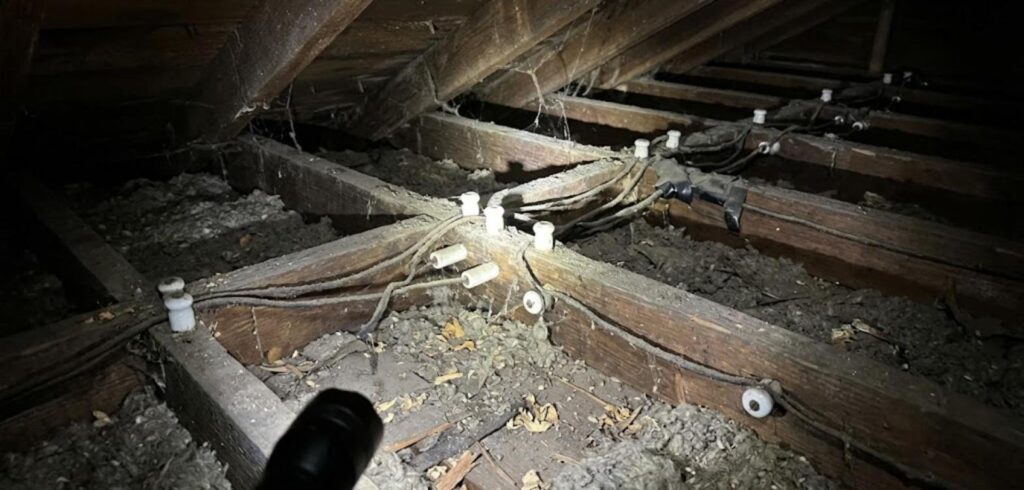
Pricing and Marketing a Home With Older Electrical
Price starts with comparable sales of similar homes, adjusted for condition. An updated electrical service belongs in the same category as a new roof or furnace: it is not glamorous, but buyers notice when it is done and discount when it is not.
If you upgrade, say so in the listing with the year and the service size, and include the ESA Certificate of Acceptance in the documents shared with buyers’ agents. If you do not upgrade, price with the cost of the work in mind and share the contractor’s quote with serious buyers early. A careful home value assessment should show how condition adjustments were made, not just a single figure.
Disclosure and honesty
Answer questions about the panel and service truthfully, and do not describe the electrical system as updated unless the work was completed and inspected. Ontario’s regulator, RECO, encourages sellers to understand their obligations, and the guide to what to disclose when selling in Ottawa explains how disclosure plays out in practice. If you have any doubt about your legal obligations, ask a real estate lawyer.
Negotiating after the inspection
If a buyer’s inspector flags the panel and you have not upgraded, respond with facts rather than a reflexive discount. A contractor’s assessment and quote let you offer a credit that matches the real cost, or agree to complete the work before closing with an ESA certificate as proof. The guide to what happens when a home fails inspection walks through those negotiations.
Mistakes to Avoid When Selling With an Old Panel
- Hiring unlicensed help. Work done without an ESA notification, or by someone who is not a Licensed Electrical Contractor, can create insurance and legal problems that surface during the sale.
- Upgrading without the paperwork. A new panel with no Certificate of Acceptance leaves buyers and insurers with the same question.
- Replacing fuses with a breaker panel but leaving a fuse sub-panel. Inspectors check the whole house.
- Starting work too close to closing. Utility coordination and inspection scheduling take time, so give the project a buffer.
- Treating the panel in isolation. If the house also has original wiring, plan the electrical work together so you are not paying for two visits.
Older electrical systems usually travel with other age-related items. Working through them together, in the order buyers care about most, is the approach laid out in the guide to selling an older home in Ottawa.
When the panel is not worth upgrading
If the house is likely to be bought for a major renovation or a rebuild, buyers may prefer a lower price over a new panel they will replace again. That is common on some larger infill lots in established neighbourhoods. In those cases, disclosure and pricing usually matter more than upgrading.


Posted on Google 

Jennifer Clark
10 days ago
 Trustindex verifies that the original source of the review is Google.
His availability to communicate was incredible which is so important when selling a house. Great at everything else too.
Posted on Google

Aarushi Govil
21 days ago
Trustindex verifies that the original source of the review is Google. Working with Jason has been an absolute privilege from start to finish. Finding the right realtor can be daunting, but Jason exceeded every expectation. He is remarkably knowledgeable and was extremely punctual and responsive to every question or request we had, no matter the time or the day. What stood out most was his complete sincerity and zero-pressure approach. When we walked through houses, he was transparent, pointing out both the pros and potential red flags instead of trying to make a quick sale. His honest feedback gave us complete confidence in our decision. If you want a dedicated, honest, and highly skilled agent in your corner, look no further than Jason!
Posted on Google

Joe Ireland
35 days ago
Trustindex verifies that the original source of the review is Google. Jason helped me buy my first home.
He was extremely responsive and available from our very first call, and assisted with booking multiple viewings across Ottawa.
He was punctual to every viewing and honest with his feedback with the homes we saw, and when it came time to go from viewing to buying, he had an impressive array of contacts from brokers to inspectors to lawyers, all with excellent reviews and who were great to work with in their own right.
As a first-time home buyer, his responsiveness and patience with many questions were extremely reassuring and really streamlined the process, and I signed an offer on my home within just 2 weeks of meeting him.
I would strongly recommend Jason to anyone buying a home in Ottawa, especially to those who are strangers to the process like I was.
Thank you again, Jason!
Posted on Google

Marina
65 days ago
Trustindex verifies that the original source of the review is Google. We had a wonderful experience working with our realtor - Jason Polonski. He is a professional, knowledgeable, responsive, and truly attentive to our needs. Jason guided us through every step of the process, answered all of our questions. My family are very grateful for his work and would absolutely recommend him to anyone looking for a reliable and trustworthy realtor in Ottawa and around !
Posted on Google

Vatrul “Vatrul”
69 days ago
Trustindex verifies that the original source of the review is Google. First time home seller. Every process of the journey was explained and laid out perfectly.. Very highly recommended.. thank you Jason..
Posted on Google

Olga V.
70 days ago
Trustindex verifies that the original source of the review is Google. Jason is very knowledgeable realtor in Kanata. He’s been always good beyond to help his clients. We had a place experience buying a house in Kanata. I highly recommend him.
Posted on Google

Yuri Tsouker
77 days ago
Trustindex verifies that the original source of the review is Google. Working with Jason on the sale of my property was genuinely one of the smoothest professional experiences I've had. He was responsive at every step, patient with every question (and I had many), and he clearly knew the local market inside and out.
My sale wasn't a simple one — there was a tenant, a rental water heater, a plumber to coordinate, and plenty of complications that made this a genuinely difficult case. Jason handled all of it with calm, practical advice and always got back to me quickly, often with a solution before I even finished asking about the problem.
What stood out most was his honesty. He didn't push, he didn't overpromise, and every recommendation he made turned out to be exactly right. I felt like I had a professional in my corner from day one.
If you're looking for a realtor who is knowledgeable, responsive, and genuinely trustworthy, I can't recommend Jason highly enough. Thank you, Jason — much appreciated!
Posted on Google

Denis Pepin
101 days ago
Trustindex verifies that the original source of the review is Google. Outstanding Experience with Jason Polonski!
Last May, my wife and I sold our home in Stittsville with Jason Polonski, and we couldn't be happier with our decision. Jason made the entire process remarkably smooth and stress-free.
From day one, Jason stood out for his exceptional communication. He was always prompt and available to answer our queries—often within minutes—no matter the time of day. Whenever we had questions regarding paperwork, listing strategies, or handling property details, he addressed every concern with a truly genuine, human touch.
What impressed us most was how proactive and reassuring he was at every step. When we had to coordinate the buyout of our water heater rental, Jason handled the reimbursement seamlessly, reassuring us with, "We should have a smooth sale now. :)"—and it truly was! Even post-closing, when we needed to arrange delivery for mailbox keys or track down final funds from head office, Jason stayed on top of every detail, putting a rush on things and constantly keeping us updated.
Jason is a dedicated, attentive, and highly professional realtor who genuinely cares about his clients. It has been an absolute pleasure working with him, and we highly recommend Jason Polonski to anyone looking to buy or sell a home in the Ottawa region.
Posted on Google

Tammy Puhakka
110 days ago
Trustindex verifies that the original source of the review is Google. I highly recommend Jason Polonski, a realtor in Kanata, Ottawa. He truly went above and beyond for me. During a long weekend, he called me and, within just two hours, had an offer to purchase prepared and sent so I could secure the home I had found and fallen in love with.
Jason was professional, efficient, knowledgeable, and incredibly pleasant to work with. His rates are very reasonable, and his dedication to his clients is outstanding. If you’re looking for fast, reliable, and friendly service, I would absolutely recommend contacting him.❤️
Posted on Google

Joe Melindy
115 days ago
Trustindex verifies that the original source of the review is Google. Everything went smoothly. Jason is very good at what he does. Would highly recommend. Thanks Jason 😊
Selling a House With an Old Electrical Panel With Jason Polonski
Jason Polonski is a full-time REALTOR® with Right at Home Realty and has worked in Ottawa real estate for more than 15 years, helping hundreds of buyers and sellers across Kanata, Nepean, Barrhaven, Stittsville and the rest of the city. Before real estate, he worked in the construction and electrical trades and holds a technical diploma in construction electricity, so he recognizes the panel and service issues that inspectors and insurers raise and helps sellers decide, with a licensed electrical contractor, whether to upgrade, document or price around them. He also earned a Bachelor of Commerce from Concordia University with a double major in Marketing and Finance, which shapes how he compares the cost of an upgrade with what it returns at sale. His 1% Listing Commission keeps more of your equity in your hands without cutting service. Call or text Jason at (613) 601-9333, or read his Google reviews.
For the full selling process, see the guide to selling your house in Ottawa.
Selling a House With an Old Electrical Panel (FAQs)
Yes. There is no rule against selling a home with fuses, but many insurers ask about them and some will not write a new policy until they are replaced. That can affect the buyer’s financing, so plan to replace the fuses or price for the work before listing.
It often is. A 60-amp service is small for modern loads, and buyers and insurers commonly treat it as due for an upgrade. Upgrading before listing, or providing a licensed contractor’s quote, keeps it from becoming an open-ended negotiation.
Usually. Many Ottawa homes still have 100-amp service and sell without issue. Buyers planning a heat pump or electric vehicle charger may ask whether there is enough capacity, and a load calculation from a licensed electrician answers that clearly.
In Ontario, almost all electrical work requires a notification filed with the Electrical Safety Authority, and panel and service changes are inspected. When the work passes, ESA issues a Certificate of Acceptance, which is the best proof to give buyers and insurers.
If you have a fuse panel, a flagged panel or a 60-amp service and several weeks before listing, upgrading usually makes the sale smoother. If the home is likely to be renovated heavily or rebuilt, disclosing the panel and pricing for it may make more sense.
It can, mainly through the buyer’s estimate of upgrade cost and insurance difficulty. A written quote keeps that estimate realistic, and an inspected upgrade usually removes the issue from negotiation entirely.
Your Licensed Electrical Contractor normally handles the ESA notification and coordinates the disconnection and reconnection with the utility. Ask about scheduling early, because utility timing can affect when the work can be completed.
