WESTBORO REAL ESTATE
Westboro vs The Glebe
By Jason Polonski, REALTOR® with Right at Home Realty · Last updated: October 2026
Westboro vs the Glebe is a choice between two of Ottawa’s most sought-after inner neighbourhoods: the Glebe is older, more central and built around Bank Street, Lansdowne Park and the Rideau Canal, while Westboro is a former village in the west end built around Richmond Road, the Ottawa River and Westboro Beach, with more new infill and condo options. Both are walkable, family-friendly and priced at the upper end of the city.
Buyers who shortlist both usually care about the same things: character homes, good schools, a real main street and being able to leave the car at home. The differences are in housing age, pace, commute and what you do on a Saturday. This guide compares them side by side. For each neighbourhood on its own, see the Westboro neighbourhood guide and The Glebe neighbourhood guide.
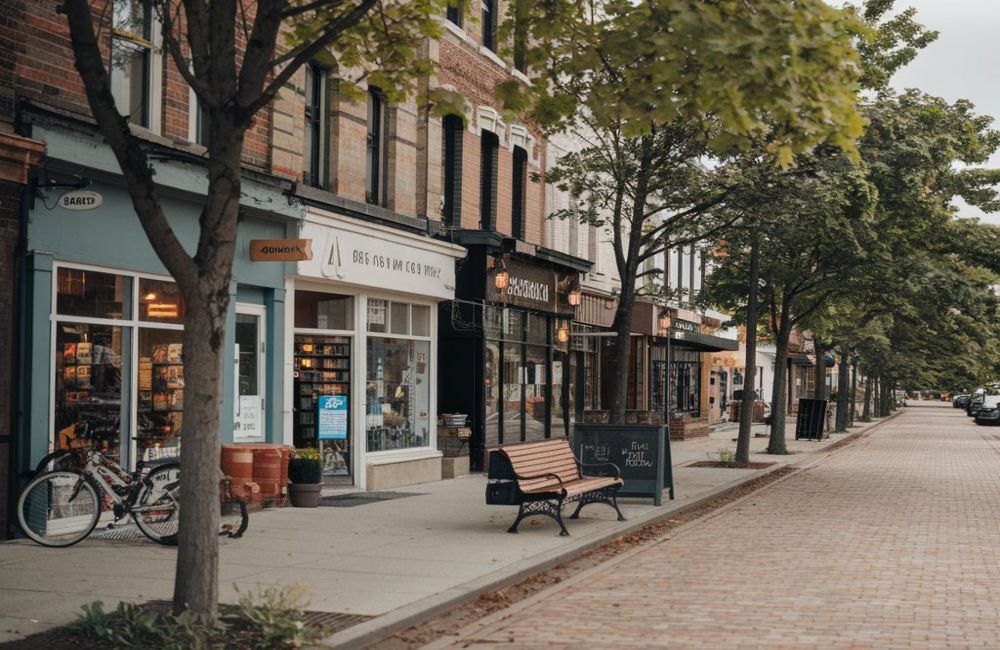
Westboro vs The Glebe at a Glance
| Factor | Westboro | The Glebe |
|---|---|---|
| Location | Inner west end | Just south of downtown |
| Main street | Richmond Road | Bank Street |
| Signature landmark | Ottawa River and Westboro Beach | Rideau Canal and Lansdowne Park |
| Housing age | Mostly 1900 to 1960, plus modern infill | Mostly built before 1914 |
| Housing mix | Detached homes, infill semis, newer condos | Detached and semi-detached homes, some converted to apartments |
| High schools | Nepean High School, Notre Dame | Glebe Collegiate Institute |
| Pace | Calmer, village feel | Busier, with stadium and event crowds |
| Best for | Families, river lovers, west-end commuters | Urban professionals, canal lovers, downtown commuters |
History and Character
The Glebe began as church lands granted in 1837, opened for development around 1870 and was annexed by Ottawa in 1889, according to its neighbourhood history. It was one of Ottawa’s first suburbs, and the first electric streetcar ran down Bank Street in 1891. Today it is dense, leafy and unmistakably urban, with Bank Street’s shops and restaurants at its centre.
Westboro was a separate village until 1949 and grew mainly between 1900 and 1960. It feels more suburban in scale on its side streets, with Richmond Road’s outdoor retailers, boutiques and cafés giving it a village main street. The Westboro Village BIA keeps a steady calendar of community events.
Homes and Housing Stock
Glebe housing
Most Glebe homes were built before 1914. Expect brick and frame houses on tight urban lots, often with porches and original details. Some large homes were divided into apartments over the years, and postwar buildings filled in the remaining land. Lots are generally smaller than in Westboro, and new construction is limited.
Westboro housing
Westboro’s housing is younger and more varied: early brick homes near Richmond Road, storey-and-a-half cottages, post-war bungalows, and a steady supply of modern infill semis and rebuilds. Condos are far more common, concentrated along Richmond Road. See Westboro infill homes and Westboro condos.
What this means for buyers
If you want a genuine century home, the Glebe has more of them. If you want new construction or a condo in a walkable inner neighbourhood, Westboro gives you more choice. Both have plenty of older houses where wiring, plumbing, sewer laterals and foundations need careful inspection; our guide to buying a character home applies in both. Prices in both neighbourhoods sit at the higher end of the Ottawa market and vary sharply by street, so compare recent sales on the specific blocks you like.
Sell Your Ottawa Home for Just 1% Listing Commission
Why pay 2.5% listing commission to sell your home when you don't have to? Jason Polonski lists Ottawa homes for a simple 1% listing commission. Full MLS® and REALTOR.ca exposure, professional photography, powerful online marketing, expert pricing, and a skilled negotiator fighting for every dollar of your sale price. Top-tier service — you just keep thousands more when your home sells. Smart sellers are already making the switch. Your home deserves the best, and your wallet deserves a break.
Lifestyle: The River vs The Canal
The Glebe is defined by the Rideau Canal, a UNESCO World Heritage Site since 2007, which wraps around its eastern and southern edges. Residents walk and cycle the canal pathways, and skate on the canal in winter when conditions allow. Patterson Creek and Brown’s Inlet bring green space into the neighbourhood, and the Flora Footbridge links it to Old Ottawa East.
Lansdowne Park is the Glebe’s other big draw, with TD Place Stadium, home to the Ottawa Redblacks, and TD Place Arena, home to the Ottawa 67’s. That brings concerts, games and a farmers’ market within walking distance, along with event-day traffic and crowds.
Westboro is defined by the Ottawa River. Westboro Beach offers supervised swimming in summer, paddleboard and kayak rentals, and the Kichi Sibi Winter Trail in winter, while the Capital Pathway runs along the river. Life is quieter, with no stadium on the doorstep. See things to do in Westboro.
Get Cash Back When You Buy a Home in Ottawa
Can you get cash back when buying a home in Ottawa? Yes. Jason Polonski, a Chairman's Club REALTOR® serving Ottawa and Kanata, shares part of his commission with buyers — up to $3,000 cash back at closing.* You still get full-service, award-winning representation: expert pricing, sharp negotiation, and hands-on guidance from first showing to keys in hand. No cut corners and no rebate-only shortcuts — just real money back in your pocket when you buy your Ottawa or Kanata home.
Schools and Family Life
Both neighbourhoods are strong for families. In the Glebe, Glebe Collegiate Institute on Glebe Avenue is the OCDSB high school, offering French Immersion, gifted and other programs. Mutchmor and First Avenue public schools have long served Glebe families, and Corpus Christi serves Catholic families.
In Westboro, Broadview Public School and Nepean High School sit side by side on Broadview Avenue, Notre Dame High School serves Catholic students in Grades 7 to 12, and Hilson Avenue Public School adds Early French Immersion in 2027. Westboro boundaries are changing in September 2027, so read Westboro schools before you buy.
In both neighbourhoods, school assignments depend on your exact address and program. Always confirm with the OCDSB school locator and the Ottawa Catholic School Board.
Commute and Getting Around
The Glebe is closer to downtown, the University of Ottawa and Carleton University. Many residents walk or cycle to work, and frequent buses run along Bank Street.
Westboro is closer to Tunney’s Pasture and the west end, including Kanata’s tech employers. Its big change is the O-Train Line 1 western extension, which adds Westboro and Kichi Zībī stations. City officials have targeted early 2027 for that service, as reported by Capital Current. Once running, it gives Westboro direct rapid transit into downtown.

Resale and Long-Term Value
Both neighbourhoods have the fundamentals that support long-term value: limited land, historic character, strong schools, walkable main streets and proximity to downtown. Neither will ever have large new subdivisions, so good homes stay scarce.
The Glebe’s supply is especially tight because so little new housing is built there, and its location next to the canal and Lansdowne gives it a distinct appeal. Westboro’s market is broader, with infill and condos adding supply, and its value is supported by the river, its schools and the coming O-Train service. Ottawa’s new zoning by-law will allow more small multi-unit buildings in both, which adds housing but can also change a street.
For a wider view of Ottawa’s high-end neighbourhoods, see luxury neighbourhoods in Ottawa.
Cost of Ownership in Westboro and the Glebe
Both neighbourhoods are in the City of Ottawa, so the residential tax rate is the same, and your bill depends on your home’s assessed value from MPAC. The bigger difference is maintenance. Century homes in the Glebe and older houses in Westboro both need ongoing investment in roofs, windows, wiring, plumbing and insulation, and older homes generally cost more to heat. Budget for that from the start rather than relying on the purchase price alone.
Parking is another practical cost. Many Glebe homes have little or no driveway, and on-street parking is busier on event days near Lansdowne. Westboro homes more often have a driveway or garage, especially newer infill homes. If you are buying a condo in either area, compare fees and what they include. Catholic families should also confirm school options with the Ottawa Catholic School Board, since its boundaries differ from the public board’s.
Which Is Right for You: Westboro or The Glebe?
Choose the Glebe if you want a true century home, love the canal, want to walk to downtown, the universities and Lansdowne events, and are comfortable with a busier, more urban pace.
Choose Westboro if you want the river and the beach, a calmer village feel, more choice of newer infill homes and condos, or a commute toward Tunney’s Pasture or the west end.
Still undecided? Spend a Saturday in each. Walk Bank Street and the canal in the morning and Richmond Road and Westboro Beach in the afternoon. Most buyers know which one fits by the end of the day. You can also compare Westboro vs Hintonburg and our guide to Westboro’s neighbourhoods.
Compare Westboro and the Glebe With Jason Polonski
Jason Polonski has helped hundreds of buyers and sellers across Ottawa over more than 15 years, including in both Westboro and the Glebe. His background in construction and the electrical trades is particularly valuable in these neighbourhoods, where many homes are 60 to more than 100 years old and the real cost of a purchase often depends on wiring, plumbing and foundations.
He will help you compare specific homes in both areas on condition and price, not just on listing photos, and coordinate your sale and purchase if you are moving up from elsewhere in Ottawa. Learn more about Jason, read reviews on his Google Business Profile, or visit his Westboro and Glebe REALTOR® pages. Browse current listings on Westboro homes for sale and Glebe homes for sale.
Call or text (613) 601-9333 to tour both neighbourhoods.
See also: our Westboro homes and neighbourhood guide.

Posted on Google 

Jennifer Clark
13 days ago
 Trustindex verifies that the original source of the review is Google.
His availability to communicate was incredible which is so important when selling a house. Great at everything else too.
Posted on Google

Aarushi Govil
24 days ago
Trustindex verifies that the original source of the review is Google. Working with Jason has been an absolute privilege from start to finish. Finding the right realtor can be daunting, but Jason exceeded every expectation. He is remarkably knowledgeable and was extremely punctual and responsive to every question or request we had, no matter the time or the day. What stood out most was his complete sincerity and zero-pressure approach. When we walked through houses, he was transparent, pointing out both the pros and potential red flags instead of trying to make a quick sale. His honest feedback gave us complete confidence in our decision. If you want a dedicated, honest, and highly skilled agent in your corner, look no further than Jason!
Posted on Google

Joe Ireland
38 days ago
Trustindex verifies that the original source of the review is Google. Jason helped me buy my first home.
He was extremely responsive and available from our very first call, and assisted with booking multiple viewings across Ottawa.
He was punctual to every viewing and honest with his feedback with the homes we saw, and when it came time to go from viewing to buying, he had an impressive array of contacts from brokers to inspectors to lawyers, all with excellent reviews and who were great to work with in their own right.
As a first-time home buyer, his responsiveness and patience with many questions were extremely reassuring and really streamlined the process, and I signed an offer on my home within just 2 weeks of meeting him.
I would strongly recommend Jason to anyone buying a home in Ottawa, especially to those who are strangers to the process like I was.
Thank you again, Jason!
Posted on Google

Marina
68 days ago
Trustindex verifies that the original source of the review is Google. We had a wonderful experience working with our realtor - Jason Polonski. He is a professional, knowledgeable, responsive, and truly attentive to our needs. Jason guided us through every step of the process, answered all of our questions. My family are very grateful for his work and would absolutely recommend him to anyone looking for a reliable and trustworthy realtor in Ottawa and around !
Posted on Google

Vatrul “Vatrul”
72 days ago
Trustindex verifies that the original source of the review is Google. First time home seller. Every process of the journey was explained and laid out perfectly.. Very highly recommended.. thank you Jason..
Posted on Google

Olga V.
73 days ago
Trustindex verifies that the original source of the review is Google. Jason is very knowledgeable realtor in Kanata. He’s been always good beyond to help his clients. We had a place experience buying a house in Kanata. I highly recommend him.
Posted on Google

Yuri Tsouker
80 days ago
Trustindex verifies that the original source of the review is Google. Working with Jason on the sale of my property was genuinely one of the smoothest professional experiences I've had. He was responsive at every step, patient with every question (and I had many), and he clearly knew the local market inside and out.
My sale wasn't a simple one — there was a tenant, a rental water heater, a plumber to coordinate, and plenty of complications that made this a genuinely difficult case. Jason handled all of it with calm, practical advice and always got back to me quickly, often with a solution before I even finished asking about the problem.
What stood out most was his honesty. He didn't push, he didn't overpromise, and every recommendation he made turned out to be exactly right. I felt like I had a professional in my corner from day one.
If you're looking for a realtor who is knowledgeable, responsive, and genuinely trustworthy, I can't recommend Jason highly enough. Thank you, Jason — much appreciated!
Posted on Google

Denis Pepin
104 days ago
Trustindex verifies that the original source of the review is Google. Outstanding Experience with Jason Polonski!
Last May, my wife and I sold our home in Stittsville with Jason Polonski, and we couldn't be happier with our decision. Jason made the entire process remarkably smooth and stress-free.
From day one, Jason stood out for his exceptional communication. He was always prompt and available to answer our queries—often within minutes—no matter the time of day. Whenever we had questions regarding paperwork, listing strategies, or handling property details, he addressed every concern with a truly genuine, human touch.
What impressed us most was how proactive and reassuring he was at every step. When we had to coordinate the buyout of our water heater rental, Jason handled the reimbursement seamlessly, reassuring us with, "We should have a smooth sale now. :)"—and it truly was! Even post-closing, when we needed to arrange delivery for mailbox keys or track down final funds from head office, Jason stayed on top of every detail, putting a rush on things and constantly keeping us updated.
Jason is a dedicated, attentive, and highly professional realtor who genuinely cares about his clients. It has been an absolute pleasure working with him, and we highly recommend Jason Polonski to anyone looking to buy or sell a home in the Ottawa region.
Posted on Google

Tammy Puhakka
113 days ago
Trustindex verifies that the original source of the review is Google. I highly recommend Jason Polonski, a realtor in Kanata, Ottawa. He truly went above and beyond for me. During a long weekend, he called me and, within just two hours, had an offer to purchase prepared and sent so I could secure the home I had found and fallen in love with.
Jason was professional, efficient, knowledgeable, and incredibly pleasant to work with. His rates are very reasonable, and his dedication to his clients is outstanding. If you’re looking for fast, reliable, and friendly service, I would absolutely recommend contacting him.❤️
Posted on Google

Joe Melindy
118 days ago
Trustindex verifies that the original source of the review is Google. Everything went smoothly. Jason is very good at what he does. Would highly recommend. Thanks Jason 😊
Westboro vs The Glebe FAQs
Both are among Ottawa’s higher-priced inner neighbourhoods, and prices vary sharply by street and home type. Compare recent sales of similar homes on the specific blocks you are considering.
Both are strong family neighbourhoods. Westboro offers the river, Westboro Beach and schools on Broadview Avenue, while the Glebe offers Glebe Collegiate, established elementary schools and the canal.
The Glebe has older housing overall, with most homes built before 1914. Westboro’s homes were mostly built between 1900 and 1960, with many newer infill homes and condos.
Yes. The Glebe sits just south of downtown, while Westboro is in the inner west end. Westboro will gain O-Train Line 1 stations, with service targeted for early 2027.
Lansdowne brings games, concerts and a farmers’ market within walking distance, along with event-day traffic and crowds on nearby streets.
Westboro has far more new infill homes and condos. The Glebe has limited new construction because so much of its housing is historic and lots are small.
