WESTBORO REAL ESTATE
Westboro Infill Homes and New Builds
By Jason Polonski, REALTOR® with Right at Home Realty · Last updated: October 2026
Westboro infill homes are newly built houses on lots where an older home was torn down or a lot was split, and Westboro is one of the most active infill areas in Ottawa. Most are modern semi-detached pairs, single detached rebuilds and small multi-unit buildings set between the neighbourhood’s original 1900s to 1960s houses. They suit buyers who want Westboro’s location with new-build systems, open layouts and finished basements, and who are prepared to pay a premium for both.
Buying infill is not the same as buying in a suburban subdivision. Every house is different, the builder may be a small firm, and the quality range is wide. This guide covers what you are buying, how warranties work, what to inspect, and what to know if you plan to build yourself. For the neighbourhood overview, see the Westboro real estate and neighbourhood guide.

What Types of Infill Homes Are Built in Westboro?
Westboro’s original lots were laid out for modest houses, so most infill is about fitting more modern living space onto those lots.
Semi-detached pairs on split lots
The most common pattern is a wide lot severed into two narrower lots, each with one half of a semi-detached house or a narrow detached home. These are usually three storeys with a rooftop or upper-floor terrace, an attached or front garage, and a finished basement. They offer the most new-build space for the money in the neighbourhood.
Single detached rebuilds
On wider lots, an older bungalow is replaced by one larger detached house. These tend to be the highest-priced infill homes, often custom built for an owner and later resold. Finishes and construction quality vary the most here. Single rebuilds are especially common just west and south of Westboro, in McKellar Park and Glabar Park, where original 1950s homes sit on generous lots.
Small multi-unit buildings
Ottawa’s new Zoning By-law 2026-50 is designed to allow more homes on residential lots, including low-rise buildings with several units. Expect to see more triplexes, fourplexes and small apartment buildings in Westboro, which matters both to buyers of those units and to anyone buying next door.
If you want new construction with less maintenance and a lower price point, compare these options with Westboro condos.
Buying a Finished Westboro Infill Home From a Builder
Many infill homes are built on speculation and sold when finished or near completion. Before you sign, confirm three things.
Is the builder licensed?
Anyone who builds or sells a new home in Ontario must be licensed by the Home Construction Regulatory Authority. The HCRA advises buyers to confirm the licence and the builder’s record in the Ontario Builder Directory before signing.
Is the home enrolled with Tarion?
New homes from licensed builders carry statutory warranty coverage through Tarion, including longer coverage for major structural defects. Read our guide to the Tarion warranty in Ottawa so you know what is covered, what is not, and the deadlines for submitting claims.
What does the agreement say?
Builder agreements are written for the builder. Look closely at the closing date and how it can move, what finishes are included, deposit protection, and how HST and any rebates are handled. Our guide to the GST/HST new home rebate explains how pricing usually works.
A home that is a few years old is a resale purchase, but if it is still within its Tarion warranty period, the remaining coverage stays with the house. Ask the seller for the warranty records and any outstanding claims.
Sell Your Ottawa Home for Just 1% Listing Commission
Why pay 2.5% listing commission to sell your home when you don't have to? Jason Polonski lists Ottawa homes for a simple 1% listing commission. Full MLS® and REALTOR.ca exposure, professional photography, powerful online marketing, expert pricing, and a skilled negotiator fighting for every dollar of your sale price. Top-tier service — you just keep thousands more when your home sells. Smart sellers are already making the switch. Your home deserves the best, and your wallet deserves a break.
What to Inspect in a Westboro Infill Home
New does not mean problem-free. Infill homes are built on tight urban lots, often quickly, and the issues that show up years later tend to be the same few. A professional home inspection is just as important on a new infill home as on a 1940s bungalow.
Grading and drainage
With two houses on a lot that once held one, there is little room for water to drain away. Check that the ground slopes away from the foundation, that downspouts discharge well clear of both houses, and that side-yard drainage does not send water toward a neighbour’s wall or into your window wells.
Basement waterproofing and sump systems
Most infill homes have deep, fully finished basements. Ask what waterproofing was used, whether there is a sump pump and backwater valve, and whether there have been any water claims. Finished walls hide problems, so look for staining at baseboards and around the mechanical room.
Building envelope and mechanicals
Window and terrace-door flashing, rooftop terrace membranes, and attic ventilation are common trouble spots on three-storey designs. Confirm the heating and cooling system is sized for three floors, not just installed. Health Canada recommends testing every home for radon, new builds included; see our guide to radon in Ottawa homes.
Get Cash Back When You Buy a Home in Ottawa
Can you get cash back when buying a home in Ottawa? Yes. Jason Polonski, a Chairman's Club REALTOR® serving Ottawa and Kanata, shares part of his commission with buyers — up to $3,000 cash back at closing.* You still get full-service, award-winning representation: expert pricing, sharp negotiation, and hands-on guidance from first showing to keys in hand. No cut corners and no rebate-only shortcuts — just real money back in your pocket when you buy your Ottawa or Kanata home.
Buying a Westboro Lot or Tear-Down to Build
Some buyers skip the builder and buy an older house to replace. This can produce the exact home you want on the street you want, but the rules and costs need to be checked before you make an offer, not after.
Check the zoning first
Ottawa City Council enacted the new Zoning By-law 2026-50 on March 11, 2026. After an Ontario Land Tribunal decision in July 2026, most of it is in force, but provisions under appeal still default to the more restrictive of the old and new rules, according to the City’s zoning project page. Look up the specific lot on geoOttawa and confirm with a planner what you can build.
Severances and minor variances
Splitting a lot or building outside the zoning rules requires approval from the Committee of Adjustment. Neighbours can comment and appeal, and the process adds months. Our guide to land severance in Ottawa walks through the steps.
Trees
Westboro’s mature trees are part of its value, and the City protects them. Under the Tree Protection By-law, trees 30 cm or more in diameter on urban lots of one hectare or less are distinctive trees that need a permit to remove. Infill removals carry higher permit fees and require two or three replacement trees for each one removed, depending on its size. A large tree in the wrong spot can change your whole design.
Build with a licensed builder
If you own the land and hire a builder, the home can still be covered by Tarion as a contract home, provided the builder is licensed and you do not take control of the construction yourself, as Tarion explains. Owner-built homes are not covered. Plan for a realistic schedule with our new home building timeline.
Budget for more than the lot
The price of the house you plan to replace is only the starting point. Budget for demolition and permit fees, design and engineering, tree permits and replacement trees, new water and sewer connections, development charges if you are adding units, HST on new construction, and the cost of carrying the property while you wait for approvals. Ask your builder for a written estimate of these items before you commit, and keep a contingency for surprises in the ground. A careful budget is the difference between a dream build and a project that runs out of money halfway through.
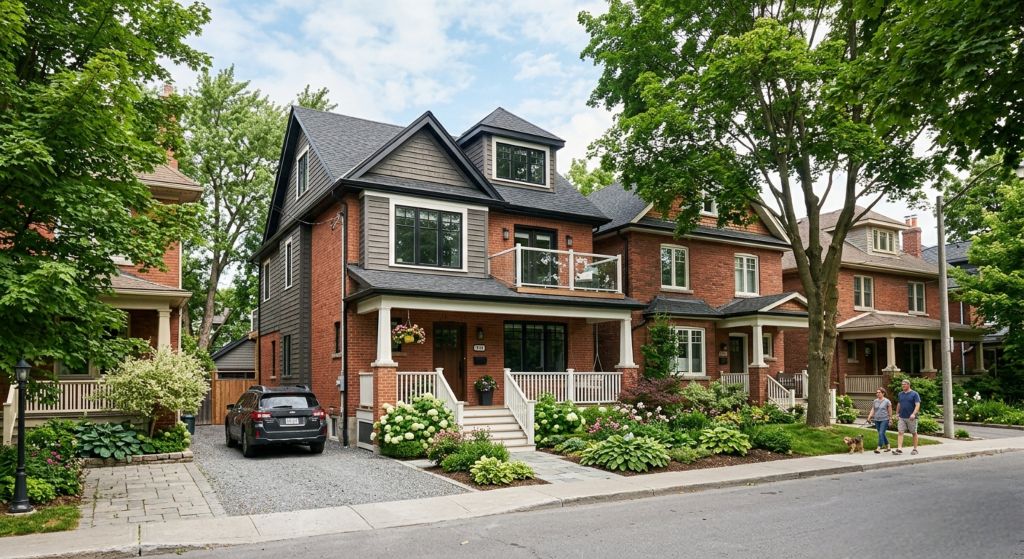
Infill vs Character Home vs Condo in Westboro
Most Westboro buyers end up comparing three paths. An infill home gives you new systems, modern space and warranty coverage at the top of the price range. A character home gives you a bigger lot, mature trees and charm, with more maintenance and some older-home risks; see buying a character home in Westboro. A condo gives you the location at a lower entry price with shared maintenance.
For a wider look at the trade-offs, read new build vs resale.
Do Infill Homes Hold Their Value in Westboro?
Well-built infill homes in good locations are consistently in demand in Westboro, because they offer something the older housing stock cannot: a new house within walking distance of Richmond Road and the river. Resale value depends heavily on build quality and design, though. Buyers notice cheap finishes, cramped stairs and dark middle floors.
The homes that resell best tend to have sensible layouts, quality windows and mechanicals, real outdoor space, and parking that works on a narrow lot. If you own an older home on a good lot, what’s my Westboro home worth? explains how builders value land. When pricing an infill purchase, compare against recent sales of similar homes on similar streets, not against the neighbourhood average. You can watch current inventory on Westboro homes for sale, and CMHC publishes useful market and housing-supply research.
Why Westboro Infill Buyers Work With Jason Polonski
Jason Polonski is a REALTOR® with more than 15 years of experience and a background in construction and the electrical trades. On an infill showing, he looks at what most buyers cannot see from the finishes: how the lot drains, how the mechanical room was put together, whether the electrical panel and wiring match the size of the house, and where a three-storey design is likely to leak first.
He helps you check builder licensing and warranty status, reviews builder agreements with you before you sign, and prices offers against genuinely comparable sales. If you are selling a home to move into infill, he coordinates both sides so you are not carrying two properties. Learn more about Jason, see reviews on his Google Business Profile, or visit the Westboro REALTOR® page.
Jason has helped hundreds of buyers and sellers across Ottawa and is a Chairman’s Club award winner (2025, 2021). Call or text (613) 601-9333 to talk about a Westboro infill home or lot.
See also: our Westboro real estate guide.

Posted on Google 

Jennifer Clark
13 days ago
 Trustindex verifies that the original source of the review is Google.
His availability to communicate was incredible which is so important when selling a house. Great at everything else too.
Posted on Google

Aarushi Govil
24 days ago
Trustindex verifies that the original source of the review is Google. Working with Jason has been an absolute privilege from start to finish. Finding the right realtor can be daunting, but Jason exceeded every expectation. He is remarkably knowledgeable and was extremely punctual and responsive to every question or request we had, no matter the time or the day. What stood out most was his complete sincerity and zero-pressure approach. When we walked through houses, he was transparent, pointing out both the pros and potential red flags instead of trying to make a quick sale. His honest feedback gave us complete confidence in our decision. If you want a dedicated, honest, and highly skilled agent in your corner, look no further than Jason!
Posted on Google

Joe Ireland
38 days ago
Trustindex verifies that the original source of the review is Google. Jason helped me buy my first home.
He was extremely responsive and available from our very first call, and assisted with booking multiple viewings across Ottawa.
He was punctual to every viewing and honest with his feedback with the homes we saw, and when it came time to go from viewing to buying, he had an impressive array of contacts from brokers to inspectors to lawyers, all with excellent reviews and who were great to work with in their own right.
As a first-time home buyer, his responsiveness and patience with many questions were extremely reassuring and really streamlined the process, and I signed an offer on my home within just 2 weeks of meeting him.
I would strongly recommend Jason to anyone buying a home in Ottawa, especially to those who are strangers to the process like I was.
Thank you again, Jason!
Posted on Google

Marina
68 days ago
Trustindex verifies that the original source of the review is Google. We had a wonderful experience working with our realtor - Jason Polonski. He is a professional, knowledgeable, responsive, and truly attentive to our needs. Jason guided us through every step of the process, answered all of our questions. My family are very grateful for his work and would absolutely recommend him to anyone looking for a reliable and trustworthy realtor in Ottawa and around !
Posted on Google

Vatrul “Vatrul”
72 days ago
Trustindex verifies that the original source of the review is Google. First time home seller. Every process of the journey was explained and laid out perfectly.. Very highly recommended.. thank you Jason..
Posted on Google

Olga V.
73 days ago
Trustindex verifies that the original source of the review is Google. Jason is very knowledgeable realtor in Kanata. He’s been always good beyond to help his clients. We had a place experience buying a house in Kanata. I highly recommend him.
Posted on Google

Yuri Tsouker
80 days ago
Trustindex verifies that the original source of the review is Google. Working with Jason on the sale of my property was genuinely one of the smoothest professional experiences I've had. He was responsive at every step, patient with every question (and I had many), and he clearly knew the local market inside and out.
My sale wasn't a simple one — there was a tenant, a rental water heater, a plumber to coordinate, and plenty of complications that made this a genuinely difficult case. Jason handled all of it with calm, practical advice and always got back to me quickly, often with a solution before I even finished asking about the problem.
What stood out most was his honesty. He didn't push, he didn't overpromise, and every recommendation he made turned out to be exactly right. I felt like I had a professional in my corner from day one.
If you're looking for a realtor who is knowledgeable, responsive, and genuinely trustworthy, I can't recommend Jason highly enough. Thank you, Jason — much appreciated!
Posted on Google

Denis Pepin
104 days ago
Trustindex verifies that the original source of the review is Google. Outstanding Experience with Jason Polonski!
Last May, my wife and I sold our home in Stittsville with Jason Polonski, and we couldn't be happier with our decision. Jason made the entire process remarkably smooth and stress-free.
From day one, Jason stood out for his exceptional communication. He was always prompt and available to answer our queries—often within minutes—no matter the time of day. Whenever we had questions regarding paperwork, listing strategies, or handling property details, he addressed every concern with a truly genuine, human touch.
What impressed us most was how proactive and reassuring he was at every step. When we had to coordinate the buyout of our water heater rental, Jason handled the reimbursement seamlessly, reassuring us with, "We should have a smooth sale now. :)"—and it truly was! Even post-closing, when we needed to arrange delivery for mailbox keys or track down final funds from head office, Jason stayed on top of every detail, putting a rush on things and constantly keeping us updated.
Jason is a dedicated, attentive, and highly professional realtor who genuinely cares about his clients. It has been an absolute pleasure working with him, and we highly recommend Jason Polonski to anyone looking to buy or sell a home in the Ottawa region.
Posted on Google

Tammy Puhakka
113 days ago
Trustindex verifies that the original source of the review is Google. I highly recommend Jason Polonski, a realtor in Kanata, Ottawa. He truly went above and beyond for me. During a long weekend, he called me and, within just two hours, had an offer to purchase prepared and sent so I could secure the home I had found and fallen in love with.
Jason was professional, efficient, knowledgeable, and incredibly pleasant to work with. His rates are very reasonable, and his dedication to his clients is outstanding. If you’re looking for fast, reliable, and friendly service, I would absolutely recommend contacting him.❤️
Posted on Google

Joe Melindy
118 days ago
Trustindex verifies that the original source of the review is Google. Everything went smoothly. Jason is very good at what he does. Would highly recommend. Thanks Jason 😊
Considering building instead of buying? Compare luxury custom home builders in Ottawa and where each one works.
Westboro Infill Homes FAQs
An infill home is a new house built on an existing urban lot, usually after an older home is demolished or the lot is split. In Westboro, most infill is modern semi-detached pairs, single detached rebuilds and small multi-unit buildings.
New homes from HCRA-licensed builders are covered by Tarion. If you buy a resale infill home that is still within its warranty period, the remaining coverage stays with the house.
Possibly, but it depends on the lot’s zoning, frontage and depth. Splitting a lot needs a severance from the Committee of Adjustment, so check the zoning on geoOttawa and speak with a planner before buying.
Zoning By-law 2026-50 is designed to allow more homes on residential lots, including small multi-unit buildings. Most of it is in force, but some provisions remain under appeal, so confirm the rules for a specific lot.
Trees 30 cm or more in diameter on urban lots need a City permit to remove. Infill removals carry higher fees and require replacement trees, so plan around large trees early.
Focus on lot grading and drainage, basement waterproofing, window and terrace flashing, attic ventilation and how the heating and cooling system is sized. Get a professional inspection even on a brand-new home.
Well-designed, well-built infill homes tend to stay in demand because they combine new construction with a walkable location. Build quality and layout drive resale value more than size alone.
