MANOTICK REAL ESTATE
Manotick Floodplain and Shoreline Rules for Home Buyers
Before you act: Flood plain mapping and insurance options change. Confirm a specific property with the City of Ottawa, the local conservation authority and your insurer.
By Jason Polonski, REALTOR® with Right at Home Realty · Last updated: October 2026 · Client reviews
If a Manotick home is near the Rideau River or a creek, three authorities can control what you build there: the Rideau Valley Conservation Authority for floodplains and shorelines, Parks Canada for work in or along the Rideau Canal, and the City of Ottawa for zoning and building permits. Before you buy, find out whether the property is regulated, because it can limit additions, docks, pools and even a rebuild.
These rules protect people and property from flooding and erosion, and they protect the river. For buyers, they also affect what a property is worth and what it will cost to insure. This guide explains each set of rules, how to check a specific property and how the rules show up in value.
For buying on the river generally, see our guide to Manotick waterfront homes. This guide doesn’t replace legal or planning advice. Confirm the rules for any property with the agencies named here.
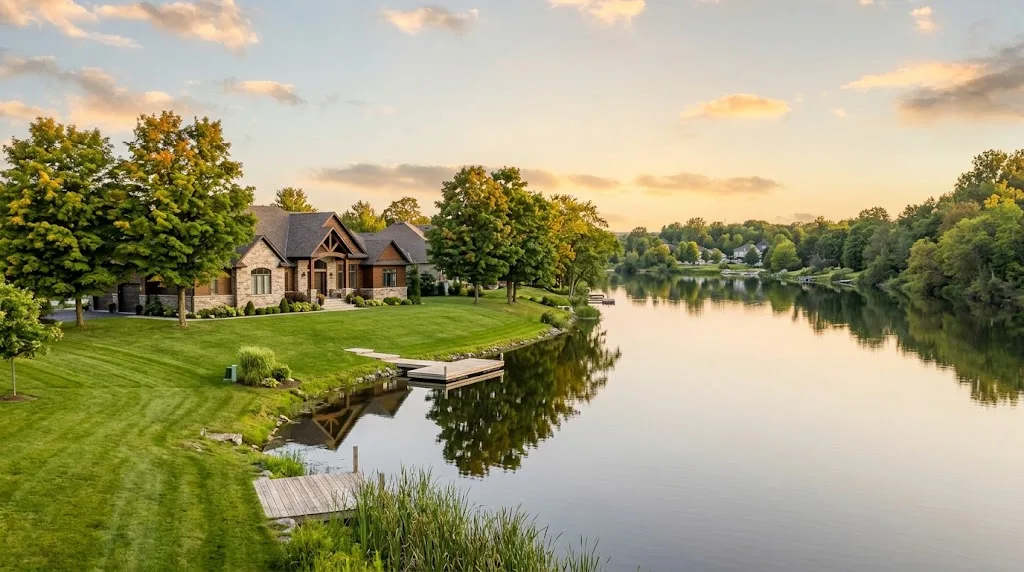
Conservation Authority Rules: Floodplains, Shorelines and Wetlands
The Rideau Valley Conservation Authority regulates development in and along floodplains, steep slopes, wetlands, shorelines and watercourses across the Rideau watershed, including Manotick. The rules are under Ontario Regulation 41/24, which took effect on April 1, 2024 and replaced the RVCA’s earlier regulation.
In a regulated area, you usually need an RVCA permit before you build, add on, place fill, grade or change the shoreline. Some work isn’t allowed at all, especially new habitable space below the flood level.
For buyers, the key questions are:
- Is any part of the lot regulated, and where is the floodplain line?
- Is the house itself inside the floodplain?
- Were past additions, docks and shoreline walls approved?
- What could you add later, and where?
Parks Canada Rules on the Rideau Canal
The Rideau River through Manotick is part of the Rideau Canal, a National Historic Site and UNESCO World Heritage Site managed by Parks Canada. That adds federal rules most buyers don’t expect.
Docks, boathouses, boat lifts, shoreline walls and other work in the water or along the shore can need Parks Canada approval, in addition to any RVCA permit. Older structures may predate today’s rules, but replacing or expanding them usually brings them under review.
When you buy, ask the seller for any Parks Canada approvals for existing docks and boathouses. If there are none, factor in the possibility that you can’t keep, replace or expand them as they are. The same applies on Long Island and Nicholls Island, where the river surrounds the lots.
Sell Your Ottawa Home for Just 1% Listing Commission
Why pay 2.5% listing commission to sell your home when you don't have to? Jason Polonski lists Ottawa homes for a simple 1% listing commission. Full MLS® and REALTOR.ca exposure, professional photography, powerful online marketing, expert pricing, and a skilled negotiator fighting for every dollar of your sale price. Top-tier service — you just keep thousands more when your home sells. Smart sellers are already making the switch. Your home deserves the best, and your wallet deserves a break.
City of Ottawa Rules: Zoning, Setbacks and Septic
The City sets zoning, including minimum setbacks from the river and watercourses, and issues building permits. A property can satisfy the conservation authority and still need a City permit, or the other way around.
On private services, the septic system is part of the picture. Septic approvals in Ottawa are handled by the Ottawa Septic System Office, and new systems near water must meet setback and design rules. Adding a bedroom can require a larger system, which can be hard to fit on a small river lot. See the City’s septic permit guidance.
Servicing varies across Manotick. Our Manotick water and septic guide explains which areas have city water and sewer.
Get Cash Back When You Buy a Home in Ottawa
Can you get cash back when buying a home in Ottawa? Yes. Jason Polonski, a Chairman's Club REALTOR® serving Ottawa and Kanata, shares part of his commission with buyers — up to $3,000 cash back at closing.* You still get full-service, award-winning representation: expert pricing, sharp negotiation, and hands-on guidance from first showing to keys in hand. No cut corners and no rebate-only shortcuts — just real money back in your pocket when you buy your Ottawa or Kanata home.
How to Check a Property Before You Buy
- Ask the seller. Request permits and approvals for the house, additions, docks, boathouses and shoreline work, plus any history of high water.
- Request an RVCA property file search. The RVCA offers a Property Inquiry File Search with floodplain, slope, shoreline and wetland mapping and the policies that apply. Fees run from about $280 to $740, and it takes about two weeks, or five business days for an expedited request.
- Check with Parks Canada on any existing or planned in-water structures.
- Check zoning and permits with the City. Confirm the zoning, setbacks and permit history.
- Get an insurance quote. Ask specifically about overland flood coverage before your conditions expire. The Insurance Bureau of Canada explains how it works.
- Write the right conditions. Give yourself enough time to complete these checks. Two weeks for an RVCA search is longer than a typical condition period, so plan for it.
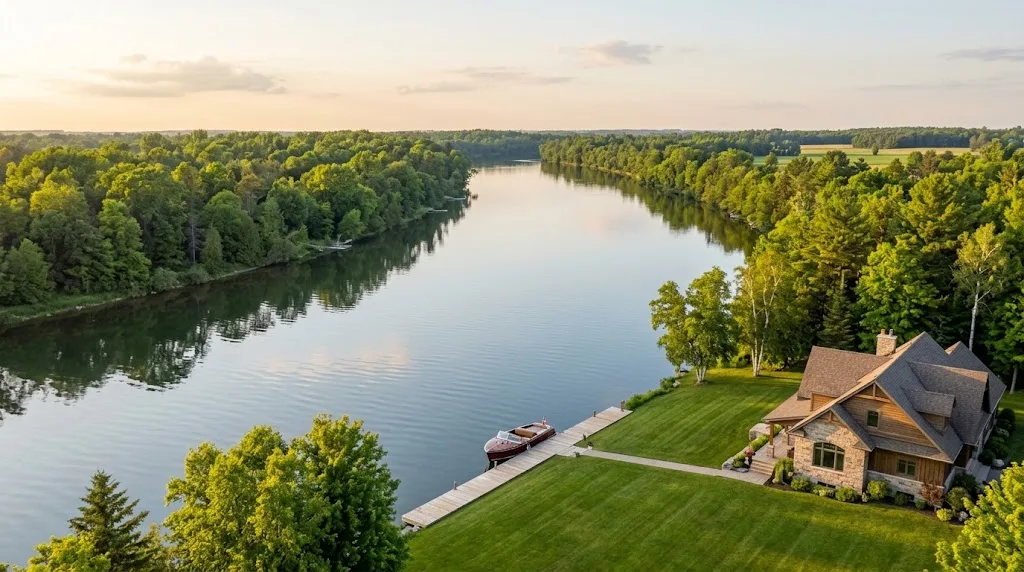
How Floodplain Status Affects Value
Two river lots that look the same can be worth very different amounts if one is inside the floodplain and the other isn’t. A regulated lot can limit additions, pools, garages and rebuild options, and it can raise insurance costs.
Properly permitted docks and boathouses add value; unpermitted ones can become a cost or a liability. A home already built above the flood level, with approvals in place, is often worth more than a similar home that would need approvals to update.
That’s why a comparative market analysis for a river property adjusts for floodplain status and permitted structures, not just size and condition. If you’re selling, our guide to selling a waterfront home in Manotick explains what to prepare. For other Ottawa waterfront, see Constance Bay waterfront regulations.
Common Scenarios Buyers Ask About
- “Can I add a family room on the river side?” Possibly, but additions toward the water in a regulated area need RVCA approval, and new living space below the flood level is usually not allowed. Check before you offer.
- “Can I replace the old dock?” Replacing or enlarging a dock on the Rideau Canal can need Parks Canada approval. Existing structures may not meet today’s rules.
- “Can I put in a pool?” Pools near the water may need conservation authority review, and on private services the pool must stay clear of the septic bed.
- “Can I tear down and rebuild?” A rebuild may have to meet today’s floodplain and setback rules, which could change the footprint or the floor height.
- “The listing says no flooding. Is that enough?” No. Ask for the RVCA property file search and confirm insurance before your conditions expire.
Insurance and Spring High Water
Spring runoff raises the Rideau every year, and the level varies with snowpack and rain. Most years it’s routine; occasionally it isn’t. That’s why insurers look closely at river properties.
Standard home insurance doesn’t always include overland flooding. Ask for overland flood coverage, sewer backup coverage and the deductible for each, and compare quotes. The Insurance Bureau of Canada explains the coverage types. Electrical equipment that has been exposed to flood water should be checked by a licensed electrician, following Electrical Safety Authority guidance, before it’s used again.
A home with a sump pump, backwater valve, good grading and approvals for past work will be easier to insure and to sell.
Questions to Ask the Seller of a River Property
- Has the property ever flooded, or had water in the basement? When, and what was done?
- Which structures have permits: additions, dock, boathouse, shoreline wall?
- Have you had any correspondence with the RVCA, Parks Canada or the City about the property?
- Is there a survey that shows the shoreline and structures?
- What does your home insurance cost, and does it include overland flood coverage?
- Has the sump pump ever failed, and is there a backup?
Ask these early and in writing. A seller’s answers, and their records, tell you a great deal about how the property has been looked after.
The Real Estate Council of Ontario has consumer information on what sellers and their agents must disclose, and your lawyer can advise on what protections apply to your purchase.
Selling a River Property With Regulatory History
If you’re selling a Manotick home near the river, the same rules affect your buyers, so prepare for their questions before you list.
- Gather approvals. Permits for additions, docks, boathouses and shoreline work, plus any correspondence with the RVCA, Parks Canada or the City.
- Get your own property file search. Knowing what the RVCA mapping shows lets you describe the lot accurately and answer questions quickly.
- Be clear about past water. Talk to your lawyer about disclosing any flooding or water in the basement.
- Document improvements. Sump pumps, backwater valves, grading work and shoreline restoration all reassure buyers and insurers.
Buyers of river homes expect these questions to be part of the process. A seller who has the answers ready usually gets cleaner offers with shorter conditions, and avoids last-minute surprises that can derail a deal. Our guide to selling a waterfront home in Manotick covers the rest of the preparation, from photography to timing.
None of these rules make river property a bad buy. They simply mean the due diligence takes longer and matters more. Buyers who understand the rules before they offer, and price the property with its limits in mind, usually end up with a home they enjoy for many years.
Buying on the River With Jason Polonski
I’m Jason Polonski, a REALTOR® with Right at Home Realty and more than 15 years in Ottawa real estate. Before real estate, I worked in construction and the electrical trades, so I know what it takes to add on, rewire a boathouse or replace a septic bed, and how permits can stand in the way.
I also hold a Bachelor of Commerce from Concordia University with a double major in Marketing and Finance. I’ll help you structure conditions that give you time to check the rules, and price a river home with its limits in mind.
Qualifying buyers can get up to $3,000 cash back at closing, and sellers can list with a 1% Listing Commission. Learn more about your Manotick REALTOR®, browse Manotick homes for sale, or call or text (613) 601-9333.
See also: our Manotick homes and village guide.


Posted on Google 

Jennifer Clark
13 days ago
 Trustindex verifies that the original source of the review is Google.
His availability to communicate was incredible which is so important when selling a house. Great at everything else too.
Posted on Google

Aarushi Govil
24 days ago
Trustindex verifies that the original source of the review is Google. Working with Jason has been an absolute privilege from start to finish. Finding the right realtor can be daunting, but Jason exceeded every expectation. He is remarkably knowledgeable and was extremely punctual and responsive to every question or request we had, no matter the time or the day. What stood out most was his complete sincerity and zero-pressure approach. When we walked through houses, he was transparent, pointing out both the pros and potential red flags instead of trying to make a quick sale. His honest feedback gave us complete confidence in our decision. If you want a dedicated, honest, and highly skilled agent in your corner, look no further than Jason!
Posted on Google

Joe Ireland
38 days ago
Trustindex verifies that the original source of the review is Google. Jason helped me buy my first home.
He was extremely responsive and available from our very first call, and assisted with booking multiple viewings across Ottawa.
He was punctual to every viewing and honest with his feedback with the homes we saw, and when it came time to go from viewing to buying, he had an impressive array of contacts from brokers to inspectors to lawyers, all with excellent reviews and who were great to work with in their own right.
As a first-time home buyer, his responsiveness and patience with many questions were extremely reassuring and really streamlined the process, and I signed an offer on my home within just 2 weeks of meeting him.
I would strongly recommend Jason to anyone buying a home in Ottawa, especially to those who are strangers to the process like I was.
Thank you again, Jason!
Posted on Google

Marina
68 days ago
Trustindex verifies that the original source of the review is Google. We had a wonderful experience working with our realtor - Jason Polonski. He is a professional, knowledgeable, responsive, and truly attentive to our needs. Jason guided us through every step of the process, answered all of our questions. My family are very grateful for his work and would absolutely recommend him to anyone looking for a reliable and trustworthy realtor in Ottawa and around !
Posted on Google

Vatrul “Vatrul”
72 days ago
Trustindex verifies that the original source of the review is Google. First time home seller. Every process of the journey was explained and laid out perfectly.. Very highly recommended.. thank you Jason..
Posted on Google

Olga V.
73 days ago
Trustindex verifies that the original source of the review is Google. Jason is very knowledgeable realtor in Kanata. He’s been always good beyond to help his clients. We had a place experience buying a house in Kanata. I highly recommend him.
Posted on Google

Yuri Tsouker
80 days ago
Trustindex verifies that the original source of the review is Google. Working with Jason on the sale of my property was genuinely one of the smoothest professional experiences I've had. He was responsive at every step, patient with every question (and I had many), and he clearly knew the local market inside and out.
My sale wasn't a simple one — there was a tenant, a rental water heater, a plumber to coordinate, and plenty of complications that made this a genuinely difficult case. Jason handled all of it with calm, practical advice and always got back to me quickly, often with a solution before I even finished asking about the problem.
What stood out most was his honesty. He didn't push, he didn't overpromise, and every recommendation he made turned out to be exactly right. I felt like I had a professional in my corner from day one.
If you're looking for a realtor who is knowledgeable, responsive, and genuinely trustworthy, I can't recommend Jason highly enough. Thank you, Jason — much appreciated!
Posted on Google

Denis Pepin
104 days ago
Trustindex verifies that the original source of the review is Google. Outstanding Experience with Jason Polonski!
Last May, my wife and I sold our home in Stittsville with Jason Polonski, and we couldn't be happier with our decision. Jason made the entire process remarkably smooth and stress-free.
From day one, Jason stood out for his exceptional communication. He was always prompt and available to answer our queries—often within minutes—no matter the time of day. Whenever we had questions regarding paperwork, listing strategies, or handling property details, he addressed every concern with a truly genuine, human touch.
What impressed us most was how proactive and reassuring he was at every step. When we had to coordinate the buyout of our water heater rental, Jason handled the reimbursement seamlessly, reassuring us with, "We should have a smooth sale now. :)"—and it truly was! Even post-closing, when we needed to arrange delivery for mailbox keys or track down final funds from head office, Jason stayed on top of every detail, putting a rush on things and constantly keeping us updated.
Jason is a dedicated, attentive, and highly professional realtor who genuinely cares about his clients. It has been an absolute pleasure working with him, and we highly recommend Jason Polonski to anyone looking to buy or sell a home in the Ottawa region.
Posted on Google

Tammy Puhakka
113 days ago
Trustindex verifies that the original source of the review is Google. I highly recommend Jason Polonski, a realtor in Kanata, Ottawa. He truly went above and beyond for me. During a long weekend, he called me and, within just two hours, had an offer to purchase prepared and sent so I could secure the home I had found and fallen in love with.
Jason was professional, efficient, knowledgeable, and incredibly pleasant to work with. His rates are very reasonable, and his dedication to his clients is outstanding. If you’re looking for fast, reliable, and friendly service, I would absolutely recommend contacting him.❤️
Posted on Google

Joe Melindy
118 days ago
Trustindex verifies that the original source of the review is Google. Everything went smoothly. Jason is very good at what he does. Would highly recommend. Thanks Jason 😊
Manotick Floodplain and Shoreline FAQs
The Rideau Valley Conservation Authority, under Ontario Regulation 41/24, which took effect on April 1, 2024. You usually need an RVCA permit to build, add fill or change the shoreline in a regulated area.
Often, yes. The Rideau River through Manotick is part of the Rideau Canal, and docks, boathouses and other in-water work can need Parks Canada approval as well as an RVCA permit.
Request a Property Inquiry File Search from the RVCA. It provides floodplain and shoreline mapping and the policies that apply. Allow about two weeks.
Possibly, but it’s restricted. Additions in regulated areas need RVCA approval, and new living space below the flood level is usually not allowed.
It can. Ask insurers about overland flood coverage and cost before your conditions expire.
It can, because it can limit additions, pools and rebuilds and can raise insurance costs. Properly permitted structures and homes built above flood levels hold value better.
