MANOTICK REAL ESTATE
Selling a Waterfront Home in Manotick
By Jason Polonski, REALTOR® with Right at Home Realty · Last updated: October 2026 · Client reviews
Selling a waterfront home in Manotick means pricing a rare property with few true comparables, documenting the permits and systems buyers will ask about, and timing the listing so buyers can see the river at its best. Get those three right and you protect your price. Get them wrong and a waterfront listing can sit, which costs more on the river than anywhere else.
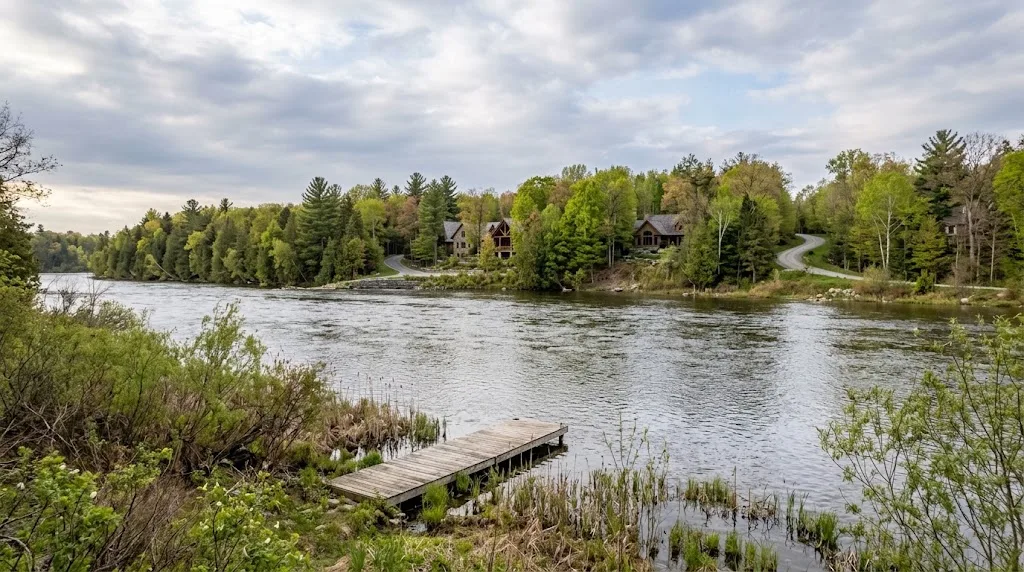
Manotick’s river lots, on Long Island, Nicholls Island and along the Rideau to the south and east, sit on the Rideau Canal. That brings questions about docks, shoreline and floodplain that a suburban sale never raises. This guide covers how to prepare, price, time and market a Manotick waterfront home.
For the buyer’s side, see our guide to Manotick waterfront homes. For selling anywhere in the village, see selling a home in Manotick.

How Is a Manotick Waterfront Home Priced?
Only a handful of Manotick waterfront homes sell in a typical year, and no two have the same frontage, depth, slope or exposure. That makes pricing the most important decision you’ll make.
A sound comparative market analysis for a river home:
- Looks back further than usual, often 12 to 24 months, and sometimes to comparable river properties outside Manotick
- Adjusts each sale for usable frontage, water depth, slope to the shore, exposure and view
- Accounts for floodplain status, permitted docks and boathouses, and servicing
- Separates the value of the land and shoreline from the value of the house, since many buyers plan to renovate or rebuild
Overpricing is especially costly. The pool of waterfront buyers is small, and once they’ve seen a listing sit, they wait. See why overpricing your home costs you.
The Documents Waterfront Buyers Will Ask For
River buyers and their lawyers ask more questions than suburban buyers. Having the answers ready keeps conditions short and protects your price.
- Dock and shoreline permits. Approvals for docks, boathouses and shoreline walls. On the Rideau Canal, in-water work can need Parks Canada approval, and shoreline work can need a Rideau Valley Conservation Authority permit.
- Floodplain information. What the RVCA mapping shows for your lot, and any history of high water.
- A survey. Ideally one that shows the shoreline, lot lines and structures.
- Well and septic reports. If you’re on private services, a recent water test and septic inspection. See the Ottawa Septic System Office for permit records.
- Building permits and electrical certificates. For additions and for dock or boathouse wiring, with Electrical Safety Authority sign-off.
See documents you need when selling for the full list.
Sell Your Ottawa Home for Just 1% Listing Commission
Why pay 2.5% listing commission to sell your home when you don't have to? Jason Polonski lists Ottawa homes for a simple 1% listing commission. Full MLS® and REALTOR.ca exposure, professional photography, powerful online marketing, expert pricing, and a skilled negotiator fighting for every dollar of your sale price. Top-tier service — you just keep thousands more when your home sells. Smart sellers are already making the switch. Your home deserves the best, and your wallet deserves a break.
What You Must Disclose About Water and Flooding
Water-related issues are where waterfront sales most often go wrong. If you know about past flooding, basement water, shoreline erosion or an unpermitted structure, speak to your lawyer and your REALTOR® about disclosure before you list.
Being upfront protects you. Problems a buyer discovers on their own, or after closing, cost far more than problems disclosed and priced in from the start. Our guide to what to disclose when selling a home in Ottawa explains the principles. It isn’t legal advice, so confirm your situation with your lawyer.
A pre-listing inspection can also help you find issues on your own terms. See is a pre-listing home inspection worth it.
Get Cash Back When You Buy a Home in Ottawa
Can you get cash back when buying a home in Ottawa? Yes. Jason Polonski, a Chairman's Club REALTOR® serving Ottawa and Kanata, shares part of his commission with buyers — up to $3,000 cash back at closing.* You still get full-service, award-winning representation: expert pricing, sharp negotiation, and hands-on guidance from first showing to keys in hand. No cut corners and no rebate-only shortcuts — just real money back in your pocket when you buy your Ottawa or Kanata home.
When to List and How to Market a River Home
Waterfront homes sell on the setting, so timing matters. Listing from spring to early fall lets buyers see open water, a green lawn, the dock in use and the view from the house.
If you must sell in winter, have photos and video from the summer ready, and be prepared for buyers who want to inspect the shoreline before their conditions expire.
Marketing a Manotick river home should show what buyers are really paying for:
- Aerial and on-water photography that shows frontage, depth and the river view
- Video that walks from the house to the dock. See video marketing for your home
- A 3D virtual tour for out-of-town buyers
- Clear information on servicing, permits and floodplain status, so buyers don’t have to guess
Many Manotick waterfront buyers come from outside the village, including Ottawa move-up buyers and people relocating to the city, so your marketing has to reach them. See our home marketing guide.
What It Costs to Sell a Waterfront Home
On a high-value property, selling costs add up fast. Commission is usually the largest, followed by legal fees and any mortgage prepayment penalty.
On a $1.5 million sale, every half-point of commission is $7,500 before HST. Run your own numbers with our home sale net proceeds calculator, and see our guide to the cost of selling a home in Ottawa.
If you’re buying your next home at the same time, see selling and buying at the same time. For selling river property elsewhere in the city, see selling waterfront property in Ottawa.
Preparing a River Property for Market
Waterfront buyers notice the shoreline as much as the kitchen. Before photos, put the outdoor spaces in order.
- Dock and boathouse. Repair loose boards, railings and ladders, and make sure any dock wiring is safe and certified.
- Shoreline. Clear debris and address erosion. Work at or near the water may need a Rideau Valley Conservation Authority permit, so don’t start shoreline projects without checking.
- Landscaping. Trim trees to open the view from the house, and tidy paths down to the water.
- The home’s systems. Have the furnace serviced, test for radon using Health Canada’s guidance and gather your well and septic reports.
- Insurance information. Buyers will ask about premiums and flood coverage. The Insurance Bureau of Canada explains how overland flood coverage works.
Who Buys Manotick Waterfront, and How to Reach Them
Manotick river buyers usually come from three groups: Ottawa move-up buyers looking for their long-term home, boaters drawn by the Rideau Canal, and people relocating to Ottawa who want waterfront within half an hour of downtown.
Reaching them takes more than a sign on the lawn. Strong photography and video, detailed property information and wide exposure on MLS® and REALTOR.ca put the listing in front of buyers across the city and beyond. National context from the Canadian Real Estate Association helps out-of-town buyers understand the Ottawa market.
Because the buyer pool is small, the first two weeks on the market matter most. Launch with complete information, accurate pricing and the property looking its best.
Negotiating Offers on a Waterfront Home
Waterfront offers tend to come with more conditions than suburban ones. Knowing what to expect helps you negotiate from a strong position.
- Longer conditions. Buyers may ask for extra time to complete well, septic, insurance and conservation authority checks. Having your documents ready lets you push for shorter conditions.
- Inspection requests. Expect questions about the dock, shoreline, foundation and electrical. Decide in advance which items you’d repair and which you’d price in.
- Appraisal gaps. With few comparable river sales, a buyer’s lender may appraise below the agreed price. A well-documented price makes this less likely.
- Closing dates. Waterfront buyers often want possession in time for summer. A flexible closing can be worth money.
- Chattels. Be clear about what’s included: dock sections, boat lifts, water toys and outdoor furniture.
When an offer arrives, look at the whole package, not just the price: deposit, conditions, closing date and financing strength. A clean offer at a slightly lower price can be the better deal. Our guide to reviewing and negotiating offers explains how to compare them.
If you’d like to understand the regulator’s rules on how offers are handled, RECO, the Real Estate Council of Ontario, publishes consumer information for sellers.
Common Mistakes When Selling Waterfront
- Pricing from the heart. Owners understandably value their view highly. Buyers price from comparable sales and condition.
- Listing without paperwork. Missing permits, surveys or septic reports invite longer conditions and lower offers.
- Listing in the wrong season. A river home shown in late November rarely looks its best.
- Weak photography. Waterfront buyers decide from photos and video first. Professional aerial and on-water shots are essential.
- Starting shoreline work without approval. Unapproved work can become a problem in the sale.
- Ignoring the next move. Many waterfront sellers are downsizing or relocating. Plan the purchase and sale together.
Avoiding these is mostly about preparation. Start planning a few months before you want to list, so you have time to gather documents, address small repairs and launch at the right time of year.
The waterfront sellers who do best are the ones who treat the sale as a project with a timeline: documents gathered, repairs finished and marketing ready before the first showing. That preparation shows in the offers they receive, and in how smoothly the deal closes once it’s firm.
Sell Your Manotick Waterfront Home With Jason Polonski
I’m Jason Polonski, a REALTOR® with Right at Home Realty and more than 15 years in Ottawa real estate. Before real estate, I worked in construction and the electrical trades, so I can spot the foundation, wiring and septic questions a buyer’s inspector will raise and help you deal with them before you list.
I also hold a Bachelor of Commerce from Concordia University with a double major in Marketing and Finance, which shapes how I price and market a property with few comparables. My recognition includes the Chairman’s Club (2025, 2021) and Best in Ottawa Top REALTOR® seven years running.
I offer a 1% Listing Commission. Request a free home evaluation, learn more about your Manotick REALTOR®, read client reviews, or call or text (613) 601-9333.
See also: our guide to Manotick real estate.


Posted on Google 

Jennifer Clark
13 days ago
 Trustindex verifies that the original source of the review is Google.
His availability to communicate was incredible which is so important when selling a house. Great at everything else too.
Posted on Google

Aarushi Govil
24 days ago
Trustindex verifies that the original source of the review is Google. Working with Jason has been an absolute privilege from start to finish. Finding the right realtor can be daunting, but Jason exceeded every expectation. He is remarkably knowledgeable and was extremely punctual and responsive to every question or request we had, no matter the time or the day. What stood out most was his complete sincerity and zero-pressure approach. When we walked through houses, he was transparent, pointing out both the pros and potential red flags instead of trying to make a quick sale. His honest feedback gave us complete confidence in our decision. If you want a dedicated, honest, and highly skilled agent in your corner, look no further than Jason!
Posted on Google

Joe Ireland
38 days ago
Trustindex verifies that the original source of the review is Google. Jason helped me buy my first home.
He was extremely responsive and available from our very first call, and assisted with booking multiple viewings across Ottawa.
He was punctual to every viewing and honest with his feedback with the homes we saw, and when it came time to go from viewing to buying, he had an impressive array of contacts from brokers to inspectors to lawyers, all with excellent reviews and who were great to work with in their own right.
As a first-time home buyer, his responsiveness and patience with many questions were extremely reassuring and really streamlined the process, and I signed an offer on my home within just 2 weeks of meeting him.
I would strongly recommend Jason to anyone buying a home in Ottawa, especially to those who are strangers to the process like I was.
Thank you again, Jason!
Posted on Google

Marina
68 days ago
Trustindex verifies that the original source of the review is Google. We had a wonderful experience working with our realtor - Jason Polonski. He is a professional, knowledgeable, responsive, and truly attentive to our needs. Jason guided us through every step of the process, answered all of our questions. My family are very grateful for his work and would absolutely recommend him to anyone looking for a reliable and trustworthy realtor in Ottawa and around !
Posted on Google

Vatrul “Vatrul”
72 days ago
Trustindex verifies that the original source of the review is Google. First time home seller. Every process of the journey was explained and laid out perfectly.. Very highly recommended.. thank you Jason..
Posted on Google

Olga V.
73 days ago
Trustindex verifies that the original source of the review is Google. Jason is very knowledgeable realtor in Kanata. He’s been always good beyond to help his clients. We had a place experience buying a house in Kanata. I highly recommend him.
Posted on Google

Yuri Tsouker
80 days ago
Trustindex verifies that the original source of the review is Google. Working with Jason on the sale of my property was genuinely one of the smoothest professional experiences I've had. He was responsive at every step, patient with every question (and I had many), and he clearly knew the local market inside and out.
My sale wasn't a simple one — there was a tenant, a rental water heater, a plumber to coordinate, and plenty of complications that made this a genuinely difficult case. Jason handled all of it with calm, practical advice and always got back to me quickly, often with a solution before I even finished asking about the problem.
What stood out most was his honesty. He didn't push, he didn't overpromise, and every recommendation he made turned out to be exactly right. I felt like I had a professional in my corner from day one.
If you're looking for a realtor who is knowledgeable, responsive, and genuinely trustworthy, I can't recommend Jason highly enough. Thank you, Jason — much appreciated!
Posted on Google

Denis Pepin
104 days ago
Trustindex verifies that the original source of the review is Google. Outstanding Experience with Jason Polonski!
Last May, my wife and I sold our home in Stittsville with Jason Polonski, and we couldn't be happier with our decision. Jason made the entire process remarkably smooth and stress-free.
From day one, Jason stood out for his exceptional communication. He was always prompt and available to answer our queries—often within minutes—no matter the time of day. Whenever we had questions regarding paperwork, listing strategies, or handling property details, he addressed every concern with a truly genuine, human touch.
What impressed us most was how proactive and reassuring he was at every step. When we had to coordinate the buyout of our water heater rental, Jason handled the reimbursement seamlessly, reassuring us with, "We should have a smooth sale now. :)"—and it truly was! Even post-closing, when we needed to arrange delivery for mailbox keys or track down final funds from head office, Jason stayed on top of every detail, putting a rush on things and constantly keeping us updated.
Jason is a dedicated, attentive, and highly professional realtor who genuinely cares about his clients. It has been an absolute pleasure working with him, and we highly recommend Jason Polonski to anyone looking to buy or sell a home in the Ottawa region.
Posted on Google

Tammy Puhakka
113 days ago
Trustindex verifies that the original source of the review is Google. I highly recommend Jason Polonski, a realtor in Kanata, Ottawa. He truly went above and beyond for me. During a long weekend, he called me and, within just two hours, had an offer to purchase prepared and sent so I could secure the home I had found and fallen in love with.
Jason was professional, efficient, knowledgeable, and incredibly pleasant to work with. His rates are very reasonable, and his dedication to his clients is outstanding. If you’re looking for fast, reliable, and friendly service, I would absolutely recommend contacting him.❤️
Posted on Google

Joe Melindy
118 days ago
Trustindex verifies that the original source of the review is Google. Everything went smoothly. Jason is very good at what he does. Would highly recommend. Thanks Jason 😊
Selling Manotick Waterfront FAQs
With a comparative market analysis that looks back 12 to 24 months and adjusts each sale for frontage, water depth, slope, exposure, floodplain status, permitted structures and servicing.
Dock, boathouse and shoreline permits, floodplain information, a survey, well and septic reports if you’re on private services, and building permits and electrical certificates.
Usually spring to early fall, when buyers can see open water, the dock and the view. In winter, have summer photos and video ready.
Speak with your lawyer. Known water issues are a common source of disputes, and disclosing them up front usually protects you better than leaving a buyer to find them.
Buyers will ask. On the Rideau Canal, docks and in-water work can need Parks Canada approval and shoreline work an RVCA permit. Gather what you have before listing.
Commission is usually the largest cost. On a $1.5 million sale, each half-point of commission is $7,500 before HST, plus legal fees and any mortgage penalty.
