MANOTICK REAL ESTATE
Cost of Living in Manotick
By Jason Polonski, REALTOR® with Right at Home Realty · Last updated: October 2026 · Client reviews
The cost of living in Manotick is higher than in most of Ottawa, mainly because of housing. The average home sale price has been above $1 million every year since 2020, compared with an Ottawa-wide composite benchmark of $637,700 in August 2026. Day-to-day costs are similar to the rest of the city, but most households need two cars, and homes on a private well and septic have running costs that city homes don’t.
This guide breaks down the main costs of living in Manotick: housing, property tax, utilities, transportation and everyday spending. It’s built for move-up buyers comparing Manotick with Barrhaven, Riverside South or Kanata.
For the village overview, see the Manotick village guide. For the citywide picture, see our cost of living in Ottawa guide.
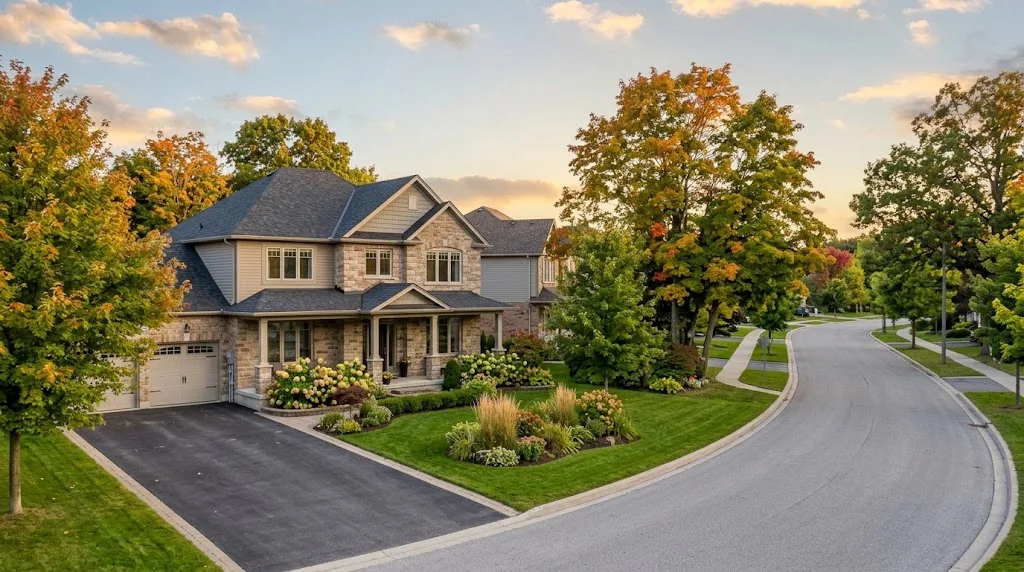
Housing: The Biggest Cost in Manotick
Housing is what sets Manotick apart. Based on historical MLS® sales data, the average sale price in Manotick has held just above $1 million since 2022, after peaking near $1.28 million in 2021. For comparison, the Ottawa Real Estate Board’s August 2026 report put the city-wide composite benchmark at $637,700.
Prices vary widely by area. Mahogany bungalow townhomes and village bungalows sit at the lower end, while Long Island waterfront and estate homes sit at the top. See the Manotick real estate market guide for each area.
To put the average in monthly terms: on a $1,076,155 purchase with 20% down, a 25-year mortgage at an assumed 4.5% rate costs about $4,765 a month. Your rate, down payment and amortization will change that, so run your own numbers with our mortgage calculator and affordability calculator.
Property Tax in Manotick
Manotick is part of the City of Ottawa, so property tax is set by the City and based on the home’s MPAC assessment. For the 2026 tax year, assessments are still based on a January 1, 2016 valuation date, so your assessed value is usually well below what you paid.
Ottawa’s tax bill is made up of several levies, and some, such as transit and fire, can differ between urban and rural areas. That means a Manotick home may not pay exactly the same rate as an identically assessed home in the urban core. Use our Ottawa property tax calculator for an estimate, and ask for the seller’s latest tax bill.
Buyers also pay Ontario land transfer tax on closing. Ottawa has no municipal land transfer tax. Estimate yours with our land transfer tax calculator and see Ontario’s land transfer tax rules.
Sell Your Ottawa Home for Just 1% Listing Commission
Why pay 2.5% listing commission to sell your home when you don't have to? Jason Polonski lists Ottawa homes for a simple 1% listing commission. Full MLS® and REALTOR.ca exposure, professional photography, powerful online marketing, expert pricing, and a skilled negotiator fighting for every dollar of your sale price. Top-tier service — you just keep thousands more when your home sells. Smart sellers are already making the switch. Your home deserves the best, and your wallet deserves a break.
Utilities: City Services vs Well and Septic
What you pay for water depends on how the home is serviced, and in Manotick that varies by area. Our Manotick water and septic guide explains which areas have city water and sewer.
- On city services. You pay a regular City water and sewer bill, as in the rest of Ottawa.
- On a private well and septic. No water bill, but you pay for regular septic pumping, water testing, treatment equipment servicing and, eventually, septic bed replacement, which can run into five figures.
- Heating. Many village and Mahogany homes heat with natural gas. Some rural and estate homes heat with propane, oil, wood or a heat pump, which can cost more. Ask the seller for a year of bills.
- Hydro and internet. Large homes, pools and workshops raise electricity costs. In rural areas, check internet options for the exact address.
Get Cash Back When You Buy a Home in Ottawa
Can you get cash back when buying a home in Ottawa? Yes. Jason Polonski, a Chairman's Club REALTOR® serving Ottawa and Kanata, shares part of his commission with buyers — up to $3,000 cash back at closing.* You still get full-service, award-winning representation: expert pricing, sharp negotiation, and hands-on guidance from first showing to keys in hand. No cut corners and no rebate-only shortcuts — just real money back in your pocket when you buy your Ottawa or Kanata home.
Transportation: Plan for Two Cars
Manotick is a driving community. Downtown Ottawa is about 25 kilometres away, and most households need two vehicles. OC Transpo service is limited, and many commuters drive to park-and-ride lots.
When you compare Manotick with a suburb closer to work, add the cost of a second car, fuel, insurance and maintenance, plus time. Test your commute at rush hour before you buy. The Ottawa International Airport is a short drive north, a plus for frequent travellers.
For a comparison with nearby communities, see the Barrhaven and Riverside South guides.

Everyday Costs and What You Get for Them
Groceries, restaurants and services in Manotick cost about the same as elsewhere in Ottawa, and the village core covers most daily needs. For big-box shopping, residents drive to Barrhaven.
Some of Manotick’s best amenities cost little or nothing: walking the village and the riverfront, Watson’s Mill, the library branch and community events like Dickinson Days each June. Families should also budget for childcare and activities, which are similar in price to the rest of the city.
For the full picture of what a home costs to run month to month, see our monthly cost of owning a home in Ottawa guide, and for what income you’d need, what salary you need to buy a home in Ottawa.
How Manotick Compares With Other Ottawa Communities
For most buyers, Manotick costs more to buy into than nearby suburbs, and about the same to live in day to day. Here’s how the main costs compare.
- Versus Barrhaven and Riverside South. Higher purchase prices on average and, for many homes, the added cost of a well and septic, but similar everyday spending. See Manotick vs Barrhaven and Manotick vs Riverside South.
- Versus other estate markets. Similar running costs to Greely, Dunrobin and Carp, where most estate homes are also on private services. See Manotick vs Greely.
- Versus central neighbourhoods. Often more house and land for the money, but higher transportation costs.
Statistics Canada publishes household spending data, and the Canada Mortgage and Housing Corporation publishes housing cost research, which are useful for comparing Ottawa with other cities if you’re relocating.
Ways to Lower Your Costs in Manotick
- Choose servicing carefully. A home on city water and sewer avoids septic replacement risk. See our water and septic guide.
- Look at energy efficiency. Insulation, windows and heating systems make a big difference in a cold climate. A heat pump can lower costs in homes without natural gas.
- Shop your insurance. Rates can vary widely for rural homes, wood stoves and older wiring.
- Watch your rate. At Manotick prices, a small change in the Bank of Canada’s policy rate moves your payment by hundreds of dollars. Plan your renewal early.
- Keep selling costs down. When you eventually sell, commission is usually the biggest cost. A 1% Listing Commission keeps more of your equity.
Questions to Ask a Seller About Running Costs
The listing price tells you what a Manotick home costs to buy. These questions tell you what it costs to live in.
- What were the last twelve months of hydro, heating and water bills?
- What’s the current property tax bill?
- Is the home on city water and sewer, or a well and septic? When was the septic last pumped and inspected?
- How old are the roof, furnace, air conditioner and water heater, and are any rented?
- What’s the internet provider and speed?
- Who clears the driveway in winter, and what does it cost?
- Are there any service contracts, such as water treatment, that transfer with the home?
Rented equipment like water heaters or furnaces can add a monthly charge that stays with the home. Ask about it before your conditions expire, and have your lawyer confirm what’s being assumed. The Financial Consumer Agency of Canada has guidance on budgeting for homeownership.
Manotick vs Living Closer to the City: A Simple Comparison
For many households, the real choice is between Manotick and a home closer to work. A simple way to compare is to look at the full monthly cost of each option, not just the mortgage.
- Mortgage and tax. Usually higher in Manotick because of higher purchase prices.
- Utilities and upkeep. Similar on city services; higher for homes on a well and septic or heating with propane or oil.
- Transportation. Usually higher in Manotick, because most households need two cars and drive further.
- Everyday spending. Similar, since groceries and services cost about the same across Ottawa.
What you get for the difference is the deciding factor: more land, a village community, the river and, for many families, a home they’ll stay in for decades. Some buyers find that worth paying for; others prefer the shorter commute and lower costs closer to the city. Running both scenarios with real numbers before you choose makes the decision much easier.
Your lender can help you compare payments, and our mortgage and affordability calculators give a quick starting point. Add your realistic commuting and utility costs to each scenario, and the gap between them becomes clear.
Whichever way the numbers fall, it’s worth revisiting them every few years. Mortgage renewals, changes in heating fuel, children leaving home and new work arrangements all change the real cost of living in Manotick over time.
Planning a Move to Manotick With Jason Polonski
For most buyers, Manotick is a move up from a smaller home elsewhere in Ottawa, so the purchase depends on a sale. The biggest risk is timing, not price. My job is to help you avoid a timing mistake first, then get you the best price. See selling and buying at the same time.
I’m Jason Polonski, a REALTOR® with Right at Home Realty and more than 15 years in Ottawa real estate. My background in construction and the electrical trades helps buyers understand a home’s running costs, from septic to heating, before they commit. I also hold a Bachelor of Commerce from Concordia University with a double major in Marketing and Finance.
Qualifying buyers can get up to $3,000 cash back at closing, and sellers can list with a 1% Listing Commission. Learn more about your Manotick REALTOR®, browse Manotick homes for sale, or call or text (613) 601-9333.


Posted on Google 

Jennifer Clark
13 days ago
 Trustindex verifies that the original source of the review is Google.
His availability to communicate was incredible which is so important when selling a house. Great at everything else too.
Posted on Google

Aarushi Govil
24 days ago
Trustindex verifies that the original source of the review is Google. Working with Jason has been an absolute privilege from start to finish. Finding the right realtor can be daunting, but Jason exceeded every expectation. He is remarkably knowledgeable and was extremely punctual and responsive to every question or request we had, no matter the time or the day. What stood out most was his complete sincerity and zero-pressure approach. When we walked through houses, he was transparent, pointing out both the pros and potential red flags instead of trying to make a quick sale. His honest feedback gave us complete confidence in our decision. If you want a dedicated, honest, and highly skilled agent in your corner, look no further than Jason!
Posted on Google

Joe Ireland
38 days ago
Trustindex verifies that the original source of the review is Google. Jason helped me buy my first home.
He was extremely responsive and available from our very first call, and assisted with booking multiple viewings across Ottawa.
He was punctual to every viewing and honest with his feedback with the homes we saw, and when it came time to go from viewing to buying, he had an impressive array of contacts from brokers to inspectors to lawyers, all with excellent reviews and who were great to work with in their own right.
As a first-time home buyer, his responsiveness and patience with many questions were extremely reassuring and really streamlined the process, and I signed an offer on my home within just 2 weeks of meeting him.
I would strongly recommend Jason to anyone buying a home in Ottawa, especially to those who are strangers to the process like I was.
Thank you again, Jason!
Posted on Google

Marina
68 days ago
Trustindex verifies that the original source of the review is Google. We had a wonderful experience working with our realtor - Jason Polonski. He is a professional, knowledgeable, responsive, and truly attentive to our needs. Jason guided us through every step of the process, answered all of our questions. My family are very grateful for his work and would absolutely recommend him to anyone looking for a reliable and trustworthy realtor in Ottawa and around !
Posted on Google

Vatrul “Vatrul”
72 days ago
Trustindex verifies that the original source of the review is Google. First time home seller. Every process of the journey was explained and laid out perfectly.. Very highly recommended.. thank you Jason..
Posted on Google

Olga V.
73 days ago
Trustindex verifies that the original source of the review is Google. Jason is very knowledgeable realtor in Kanata. He’s been always good beyond to help his clients. We had a place experience buying a house in Kanata. I highly recommend him.
Posted on Google

Yuri Tsouker
80 days ago
Trustindex verifies that the original source of the review is Google. Working with Jason on the sale of my property was genuinely one of the smoothest professional experiences I've had. He was responsive at every step, patient with every question (and I had many), and he clearly knew the local market inside and out.
My sale wasn't a simple one — there was a tenant, a rental water heater, a plumber to coordinate, and plenty of complications that made this a genuinely difficult case. Jason handled all of it with calm, practical advice and always got back to me quickly, often with a solution before I even finished asking about the problem.
What stood out most was his honesty. He didn't push, he didn't overpromise, and every recommendation he made turned out to be exactly right. I felt like I had a professional in my corner from day one.
If you're looking for a realtor who is knowledgeable, responsive, and genuinely trustworthy, I can't recommend Jason highly enough. Thank you, Jason — much appreciated!
Posted on Google

Denis Pepin
104 days ago
Trustindex verifies that the original source of the review is Google. Outstanding Experience with Jason Polonski!
Last May, my wife and I sold our home in Stittsville with Jason Polonski, and we couldn't be happier with our decision. Jason made the entire process remarkably smooth and stress-free.
From day one, Jason stood out for his exceptional communication. He was always prompt and available to answer our queries—often within minutes—no matter the time of day. Whenever we had questions regarding paperwork, listing strategies, or handling property details, he addressed every concern with a truly genuine, human touch.
What impressed us most was how proactive and reassuring he was at every step. When we had to coordinate the buyout of our water heater rental, Jason handled the reimbursement seamlessly, reassuring us with, "We should have a smooth sale now. :)"—and it truly was! Even post-closing, when we needed to arrange delivery for mailbox keys or track down final funds from head office, Jason stayed on top of every detail, putting a rush on things and constantly keeping us updated.
Jason is a dedicated, attentive, and highly professional realtor who genuinely cares about his clients. It has been an absolute pleasure working with him, and we highly recommend Jason Polonski to anyone looking to buy or sell a home in the Ottawa region.
Posted on Google

Tammy Puhakka
113 days ago
Trustindex verifies that the original source of the review is Google. I highly recommend Jason Polonski, a realtor in Kanata, Ottawa. He truly went above and beyond for me. During a long weekend, he called me and, within just two hours, had an offer to purchase prepared and sent so I could secure the home I had found and fallen in love with.
Jason was professional, efficient, knowledgeable, and incredibly pleasant to work with. His rates are very reasonable, and his dedication to his clients is outstanding. If you’re looking for fast, reliable, and friendly service, I would absolutely recommend contacting him.❤️
Posted on Google

Joe Melindy
118 days ago
Trustindex verifies that the original source of the review is Google. Everything went smoothly. Jason is very good at what he does. Would highly recommend. Thanks Jason 😊
Cost of Living in Manotick FAQs
Housing makes Manotick one of Ottawa’s more expensive communities: the average sale price has been above $1 million every year since 2020. Everyday costs are similar to the rest of the city.
It depends on the home’s MPAC assessment and the City’s tax rates, which can differ between urban and rural areas. Use a property tax calculator and ask for the seller’s latest tax bill.
Homes on city services pay a regular water and sewer bill. Homes on a private well and septic don’t, but they pay for pumping, testing and eventual septic replacement.
Yes, for most households. Transit is limited, and most residents drive to work, to Barrhaven for big-box shopping and to park-and-ride lots.
Buyers pay Ontario’s land transfer tax. Ottawa doesn’t charge a municipal land transfer tax.
A village bungalow or a Mahogany bungalow townhome is usually the lowest-cost way into Manotick, especially on city services.
