By Jason Polonski, REALTOR® with Right at Home Realty · Last updated: November 2026
How much does a townhouse cost in Ottawa? Townhouses for sale in Ottawa had a benchmark price of $539,800 in October 2026, down 4.3% from a year earlier, according to the Ottawa Real Estate Board. That benchmark describes a typical row townhouse; real prices run from older condominium townhomes inside the Greenbelt to new freehold end units in Barrhaven, Kanata, Riverside South and Orléans. With prices softer than a year ago and 3.6 months of townhouse inventory, buyers have more choice and more room to negotiate than they did during the last few years.
This page shows current townhouse listings across Ottawa, then explains the difference between freehold, condominium and stacked townhouses, where townhouses are concentrated, what drives the price, the monthly fees to budget for, and the checks that matter before you buy. To ask about any listing, call or text Jason Polonski at (613) 601-9333.
The listings below show freehold and condominium townhouses for sale across Ottawa through the MLS® System, including end units, back-to-back townhomes and stacked townhouses. Listings update daily. If you are looking in one community, the area pages linked further down show only that area’s townhomes.

Ottawa, Ontario
Ottawa, Ontario
Ottawa, Ontario
Ottawa, Ontario
Ottawa, Ontario
Ottawa, Ontario
Ottawa, Ontario
Ottawa, Ontario
Ottawa, Ontario
Ottawa, Ontario
Be first to know about new Ottawa townhouse listings. Tell Jason the communities, budget and features you want, freehold or condo, and he will set up a custom MLS® search that emails you new townhouses the day they list. Call or text (613) 601-9333 or request townhouse alerts. Buyers working with Jason can also get up to $3,000 cash back at closing.
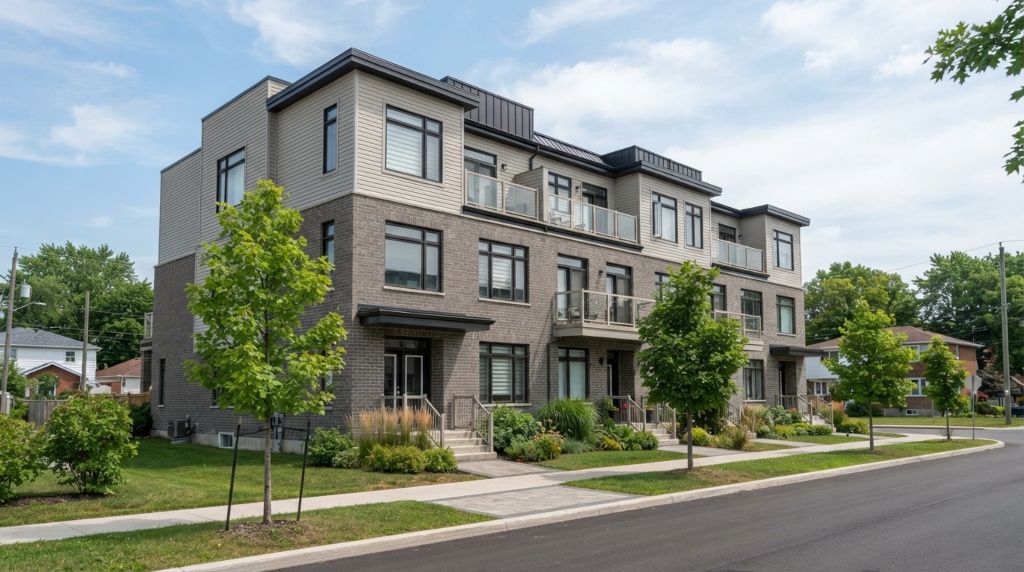
Two townhouses can look identical from the street and be owned in completely different ways. The type of ownership decides your monthly costs, who repairs the roof and the driveway, and which documents your lawyer needs to review.
| Type | What you own | Monthly fee | Who maintains the exterior | Key document |
|---|---|---|---|---|
| Freehold townhouse | The unit and the land under it, like a detached home | None | You do | Survey and title search |
| Freehold with a common-elements fee (POTL) | Your unit and lot, tied to a common elements condominium that owns shared roads, parking or green space | Usually modest | You maintain your unit; the corporation maintains the shared areas | Status certificate |
| Condominium townhouse | Your unit, plus a share of the common elements | Yes, often covering roofs, windows, landscaping and snow removal | The condominium corporation, funded by fees and the reserve fund | Status certificate |
| Stacked townhouse | A condominium unit above or below another, each with its own entrance | Yes | The condominium corporation | Status certificate |
| Back-to-back townhouse | A unit sharing a rear wall as well as side walls; freehold or condo | Depends on ownership | Depends on ownership | Survey or status certificate |
| Bungalow townhome | A single-level unit in a row, freehold or condo | Often | Depends on ownership | Survey or status certificate |
“POTL” stands for parcel of tied land: you own your townhouse outright, but it is legally tied to a common elements condominium that owns the private road, visitor parking or mailboxes your street shares. You pay a monthly fee for those shared elements and cannot sell the townhouse separately from that interest. Condominiums in Ontario are governed by the Condominium Act, 1998. For a deeper comparison, see condo vs freehold and what a stacked townhouse is.
Townhouses are concentrated in the suburbs built from the 1990s onward, where builders used them to bring ground-oriented homes within reach of first-time buyers. They are much rarer inside the Greenbelt.
Kanata’s busiest townhouse markets are Morgan’s Grant and South March, Emerald Meadows and Trailwest, Katimavik, Kanata Lakes and Beaverbrook. Kanata North puts many townhomes within reach of the technology park, and newer phases in the south and west add modern designs. Stittsville’s north and south ends have a steady supply of newer freehold townhomes. See townhomes for sale in Kanata and townhomes for sale in Stittsville.
Barrhaven has one of the deepest townhouse markets in the city, especially in Half Moon Bay, Longfields, Stonebridge, Strandherd and Heritage Park. Many are freehold, with a growing number of back-to-back and stacked units in newer phases. See Barrhaven townhomes for sale.
Riverside South and the Findlay Creek area offer newer townhomes close to the O-Train’s Trillium Line, while Hunt Club Park and Greenboro have established condominium townhouse communities at lower price points. See Riverside South homes for sale.
Avalon, Mer Bleue and Bradley Estates, Fallingbrook, Convent Glen and Pineview all have plenty of townhouses, from 1980s condo townhomes to new freehold rows. Closer in, Wateridge Village on the former CFB Rockcliffe lands adds new townhomes and stacked units a short drive from downtown.
Inside the Greenbelt, townhouses are mostly older condominium communities in areas such as Carson Meadows and parts of Nepean, including the Westcliffe Estates area near Bells Corners. Prices are often lower than in the newer suburbs, but fees and the condition of shared components need a careful look. See Nepean condos and townhomes.
In October 2026, the benchmark price for a townhouse in Ottawa was $539,800, down 4.3% over 12 months, with 350 townhouse sales that month and 3.6 months of inventory, according to the Ottawa Real Estate Board. The benchmark for a detached home was $699,200, so the gap between a typical townhouse and a typical detached home was about $159,400. The benchmark comes from the MLS® Home Price Index, which prices a typical home with consistent features, so it is a better gauge of value than the average sale price.
Within that range, these factors move a townhouse’s price the most:
For prices across every property type, see Ottawa home prices, and for the month-by-month picture see the latest Ottawa housing market update.
Neither is better in every case. It depends on how much maintenance you want to handle and how you weigh price against monthly costs.
A freehold townhouse gives you full control: no fees, no board, and no rules beyond the City’s by-laws. You also pay for every repair yourself, from shingles to the driveway, so you need a maintenance budget.
A condominium townhouse usually costs less to buy, and the corporation handles exterior work, often including roofs, windows and snow removal. In exchange you pay a monthly fee, follow the corporation’s rules and share in any special assessment if the reserve fund falls short. Lenders also count condo fees when they assess how much you can borrow, so a higher fee can reduce your maximum mortgage.
The best answer often comes down to the specific building: a well-run condominium with a healthy reserve fund can be a better buy than a neglected freehold, and the reverse is just as true.
Townhouses share walls, roofs and sometimes driveways, so the inspection goes beyond the unit itself. Jason worked in the construction and electrical trades before real estate, and these are the points he pays attention to:
For any condominium or POTL townhouse, make your offer conditional on your lawyer reviewing the status certificate. It shows the monthly fee, whether the corporation is planning increases or special assessments, the reserve fund balance, legal disputes and the rules on pets, rentals and renovations. The Condominium Authority of Ontario explains what a status certificate contains, and the guide to status certificates in Ontario covers what to look for.
Units in a row must be separated by fire-rated walls that continue through the attic. During renovations, holes are sometimes cut through those separations for wiring, plumbing or ductwork and never properly sealed. Ask the inspector to look into the attic where possible. Ontario’s Building Code sets the requirements.
On a freehold row, each owner usually replaces the roof over their own unit, which can leave a patchwork of old and new shingles and leaks where they meet. Find out the roof’s age and whether neighbours have replaced theirs. In a condominium, the reserve fund study shows when the roof is due.
Visit at different times of day, and listen at the shared walls and stairs. Back-to-back and stacked units share more surfaces, so sound matters more.
Rear yards in townhouse rows are narrow and often slope toward each other. Look for water staining in the basement, the condition of the window wells and whether downspouts drain away from the foundation.
Many townhouses have a 100-amp service, which can be tight if you plan to add an EV charger, a heat pump or a basement suite. Check the panel’s capacity and age, and whether there is room for a dedicated circuit. A licensed electrical contractor can confirm what an upgrade would take.
Confirm how many spaces come with the unit, whether visitor parking has time limits, and whether the corporation restricts rentals, short-term rentals or exterior changes such as solar panels, fences or EV chargers.
Every purchase should also include a professional home inspection. See home inspections in Ottawa for what to expect.
For many buyers, yes. A townhouse is usually the most affordable way into a ground-oriented home with a yard, a basement and room to grow. It also builds equity that can fund a move-up purchase later. First-time buyers should look at the programs that can lower the upfront cost:
Program rules and limits change, so confirm current details before you plan around them. The guide for Ottawa first-time home buyers covers the full process.
The choice usually comes down to budget, space and maintenance. A townhouse costs less and is easier to look after; a detached home offers more privacy, a bigger lot and no shared walls. With detached values holding up better than townhouse values over the past year, the gap a future move-up buyer has to bridge has widened, so think about how long you plan to stay. The comparison of a townhouse vs a detached home lays out the numbers, and the move-up buyer guide explains how to plan the next step.
Builders across Kanata, Stittsville, Barrhaven, Riverside South and Orléans sell new freehold, back-to-back and stacked townhomes. A new home comes with statutory warranty coverage through Tarion, and every builder must be licensed by the Home Construction Regulatory Authority. Before you sign, compare the deposit schedule, what is standard versus an upgrade, closing cost adjustments and the occupancy date. The guide to new construction homes in Ottawa covers the communities and builders, and Jason can represent you at the sales office as your new construction REALTOR®.
Townhouses are popular with investors because they rent well to families and young professionals and cost less than detached homes. Before you buy, check the condominium’s rules on rentals, budget for vacancy and maintenance, and understand your obligations as a landlord under Ontario’s residential tenancy rules. CMHC’s rental market reports track vacancy and rents in Ottawa.
Townhouse buyers compare listings closely, often within the same row, so preparation and pricing decide how fast you sell. Have the status certificate ordered early if you are in a condominium, gather receipts for the roof, furnace and windows, and price against the most recent sales of your model. Jason lists homes for a 1% listing commission, charged on the final sold price, with full MLS® and REALTOR.ca exposure and professional marketing. Start with a home value estimate or read about the 1% listing commission.
Jason Polonski is a full-time REALTOR® with Right at Home Realty with more than 15 years of experience across Ottawa, focused on the west end, and hundreds of buyers and sellers helped, including many first-time buyers stepping into a townhouse and many townhouse owners moving up to a detached home. His recognition includes the Chairman’s Club (2025 and 2021) and Best in Ottawa Top REALTOR® seven years running.
Before real estate, Jason worked in the construction and electrical trades and holds a technical diploma in construction electricity, so he looks at a townhouse the way a tradesperson would: the panel, the attic separations, the roof line shared with the neighbours and the grading out back. He also holds a Bachelor of Commerce from Concordia University with a double major in Marketing and Finance, which he uses to read condo budgets and reserve fund studies and to price offers from real comparables. Buyers working with Jason can get up to $3,000 cash back at closing. Learn more about Jason, read client reviews on his Google Business Profile, or call or text (613) 601-9333.
Townhomes for sale in Kanata · Townhomes for sale in Stittsville · Barrhaven townhomes · Nepean condos and townhomes
See all Ottawa real estate listings, compare with bungalows for sale in Ottawa, or read about buying a condo in Ottawa.
The benchmark price for a townhouse in Ottawa was $539,800 in October 2026, down 4.3% from a year earlier, according to the Ottawa Real Estate Board. Individual prices depend on ownership type, location, age, size and whether the unit is an end unit.
POTL means parcel of tied land. You own the townhouse and its lot, but it is tied to a common elements condominium that owns shared features such as a private road or visitor parking, and you pay a monthly fee for them. Your lawyer reviews a status certificate, just as with a condominium.
A true freehold townhouse has no monthly fee. A freehold townhouse on a POTL pays a common-elements fee for shared roads or amenities, and condominium and stacked townhouses pay condo fees.
Barrhaven, Kanata, Stittsville, Riverside South, Findlay Creek and Orléans have the largest supply, particularly in communities built from the 1990s onward. Inside the Greenbelt, townhouses are mostly older condominium communities.
A townhouse is a full-height unit from the basement to the roof, attached to its neighbours at the sides. A stacked townhouse places one condominium unit above another, each with its own entrance, and is almost always owned as a condominium with monthly fees.
Often. An end unit has more windows and natural light, a side yard and only one shared wall, which means less noise. It usually sells for more, and it tends to resell faster.
Townhouses rent well to families and professionals and cost less than detached homes, which makes them popular with investors. Returns depend on the purchase price, financing, condo fees, rental rules and vacancy, so run the numbers on each property.