NEPEAN REAL ESTATE
Nepean Infill and Teardown Lots: Buying, Selling and Valuing the Land
By Jason Polonski, REALTOR® with Right at Home Realty · 15+ years in Ottawa real estate · Updated November 2026 · Client reviews
Last updated: November 2026
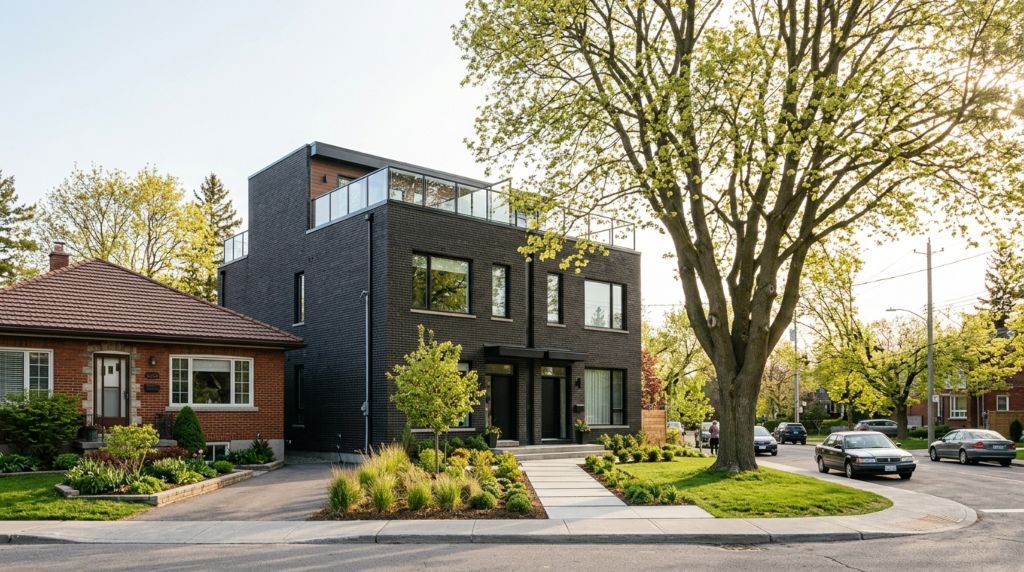
Nepean infill and teardown lots are where much of the area’s new housing now comes from. Most of Nepean inside the Greenbelt was built between the 1940s and the 1970s on lots that were generous by today’s standards. As those original homes age, many are bought for the land and replaced with a larger house, a semi-detached pair or a small multi-unit building. Ottawa’s new zoning by-law, in force for most of the city since 2026, has added to that trend.
This guide is about the property itself: where the infill lots are, how land value is priced, what to check before you buy, and how to sell a home that a builder may want. If you’re choosing a builder for your project, see Jason’s companion guide to Nepean home builders.
Where Infill Happens in Nepean
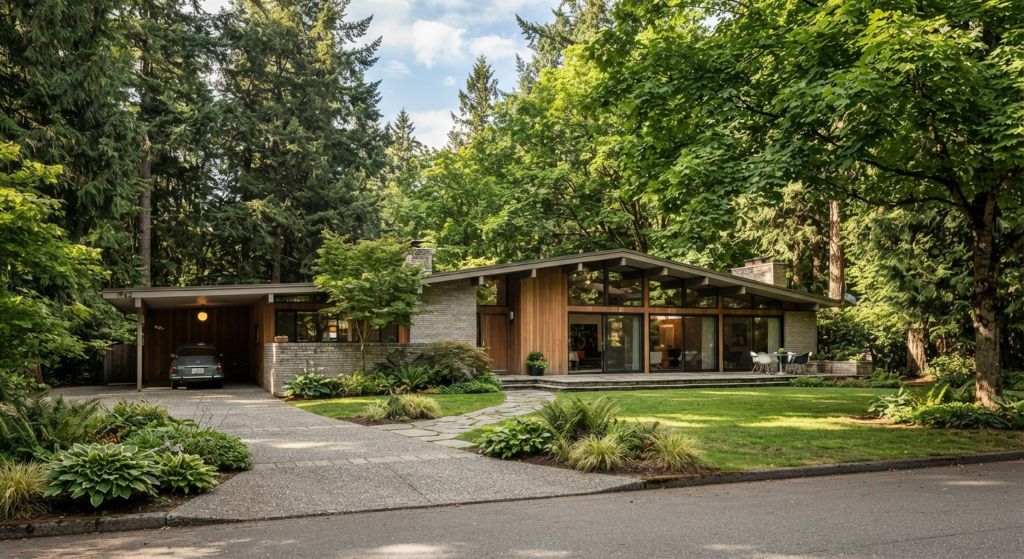
Builders look for lots that are wide or deep, close to transit and amenities, and in neighbourhoods where new homes sell well. In Nepean, that usually means:
- Qualicum, Graham Park and Bellands: some of the largest lots in Nepean, with original bungalows on deep, treed properties.
- Crystal Beach and Lakeview Park: close to the Ottawa River and Andrew Haydon Park, with a long history of custom rebuilds.
- City View and Fisher Heights: 1930s to 1960s homes on grid streets close to Algonquin College, transit and Merivale Road.
- Bells Corners: Lynwood Village’s 1950s and 1960s bungalows on generous lots, at a lower land cost than closer-in pockets.
- Briargreen, Leslie Park and Manordale: 1960s lots where some owners rebuild instead of renovating.
Not every older home is a teardown. A well-kept bungalow on a standard lot is usually worth more as a home than as land. The distinction matters for both buyers and sellers.
What Ottawa’s 2026 Zoning By-law Changed
Ottawa City Council approved a new comprehensive Zoning By-law 2026-50 on January 28, 2026, and enacted it on March 11, 2026. After an Ontario Land Tribunal decision in July 2026, most of the by-law is in force, backdated to March 11. Parts under specific appeals are still being resolved. The by-law is intended to allow more housing in established neighbourhoods. In general, it allows more units on many serviced residential lots and more height and density near transit and along main roads.
What that means for a specific Nepean lot depends on:
- The zone and any site-specific exceptions on the property.
- Lot width, depth and area, which affect setbacks, lot coverage and how many units fit.
- Servicing: water and sewer capacity, and the condition of the existing lateral.
- Trees: Ottawa’s tree protection rules can limit what you remove on urban lots.
- Parking and access requirements for multiple units.
Because some provisions are still under appeal and exceptions vary by property, confirm the rules for any lot with the City or a planner before you buy. Splitting one lot into two, or getting relief from a rule, goes through the Committee of Adjustment. Jason’s guide to severing land in Ottawa explains that process.
Sell Your Ottawa Home for Just 1% Listing Commission
Why pay 2.5% listing commission to sell your home when you don't have to? Jason Polonski lists Ottawa homes for a simple 1% listing commission. Full MLS® and REALTOR.ca exposure, professional photography, powerful online marketing, expert pricing, and a skilled negotiator fighting for every dollar of your sale price. Top-tier service — you just keep thousands more when your home sells. Smart sellers are already making the switch. Your home deserves the best, and your wallet deserves a break.
How Land Value Is Priced
When a builder looks at a Nepean house, they work backward from the finished product:
- What will the new home (or homes) sell for when finished?
- What will it cost to demolish, design, get approvals and permits, pay development charges and build?
- What profit and risk margin do they need?
What’s left is what they can pay for the lot. That’s why two similar bungalows on the same street can attract very different offers. A wider lot, a corner, a better position or fewer trees to protect can change the numbers a lot.
For sellers, the useful comparison is often recent sales of other teardown properties, not renovated homes. Jason pulls both, so you can see whether your home is worth more to a family or to a builder. See recently sold homes in Nepean for how he reads the data.
Get Cash Back When You Buy a Home in Ottawa
Can you get cash back when buying a home in Ottawa? Yes. Jason Polonski, a Chairman's Club REALTOR® serving Ottawa and Kanata, shares part of his commission with buyers — up to $3,000 cash back at closing.* You still get full-service, award-winning representation: expert pricing, sharp negotiation, and hands-on guidance from first showing to keys in hand. No cut corners and no rebate-only shortcuts — just real money back in your pocket when you buy your Ottawa or Kanata home.
Permits, Licensing and Warranty for a New Build
Once you own the lot, a few more approvals and checks come before construction:
- Demolition and building permits from the City of Ottawa. You’ll also need to arrange utility disconnections and, often, new water and sewer connections.
- Designated substances: under Ontario’s asbestos on construction projects regulation, asbestos must be identified and handled properly before demolition.
- Builder licensing: builders of new homes in Ontario must be licensed by the Home Construction Regulatory Authority. Check the Ontario Builder Directory before you sign.
- New home warranty: most new homes built for an owner must be enrolled with Tarion, which provides statutory warranty coverage. Owner-builders have different rules, so confirm what applies to you.
- Conservation authority approval: lots near the Ottawa or Rideau rivers may need a permit from the Rideau Valley Conservation Authority or the Mississippi Valley Conservation Authority, depending on location.
These steps take time, so build them into your purchase closing date and your financing. Builders often ask for longer closings for exactly this reason.
Due Diligence Before You Buy a Teardown
Buying a lot to rebuild carries risks a normal purchase doesn’t. Before your offer is firm, check:
- Zoning and exceptions: a zoning confirmation from the City, or a planner’s opinion, for what you plan to build.
- Survey: an up-to-date survey showing lot lines, easements and encroachments.
- Servicing: water and sewer connections and their capacity, including the cost of new services if needed.
- Trees: large trees on urban lots may need a permit to remove, and removal may be refused or require compensation.
- Designated substances: older homes may contain asbestos in insulation, flooring or plaster. Demolition requires a survey and proper removal. See asbestos in Ottawa homes.
- Flood plain and soils: near the Ottawa or Rideau rivers, check flood mapping with the conservation authority. Some areas have soil or rock conditions that affect foundation costs. See buying in an Ottawa flood plain.
- Financing: lenders treat land and construction loans differently from regular mortgages. Talk to yours early.
Write these as conditions in your offer, with enough time to complete them. Jason’s cost to build a custom home in Ottawa and custom home vs new build guides help with the rest of the budget.
A Simple Way to Test a Teardown’s Numbers
Before you make an offer on a lot to rebuild, put rough numbers on paper:
- Finished value: what a home like the one you plan to build would sell for on that street today, based on recent new-build and infill sales.
- Land cost: your purchase price plus land transfer tax and legal fees.
- Soft costs: design, surveys, engineering, permits, development charges and financing during construction.
- Hard costs: demolition, abatement, foundation, construction and servicing. Use current quotes, not old rules of thumb.
- Contingency: older urban lots surprise people. Budget for it.
If land cost plus soft and hard costs come close to the finished value, the project only makes sense if you plan to live in the home long term, not as an investment. If you’re building for yourself, that may be fine. You get a new home in a location you can’t otherwise buy new. Jason can pull the comparable infill sales for step one and connect you with builders for the rest.
Selling a Home a Builder Might Want
If your Nepean home sits on a large or well-located lot, you may have two buyer pools: families who want the house, and builders who want the land. To get the best result:
- Price with both in mind. Ask for comparables for renovated homes and for teardown sales.
- Don’t over-renovate before selling. If the likely buyer is a builder, a new kitchen adds nothing to their price.
- Have the paperwork ready. A survey, tax bill, zoning information and any known lot details let builders decide faster and with fewer conditions.
- Market to both groups. Jason presents the home to end buyers and reaches active infill builders directly.
- Think about timing. Builders may want a longer closing to finish their approvals. That can suit sellers who are buying next. See selling and buying at the same time.
Jason’s 1% Listing Commission is charged on the final sold price, and on a land sale that saving goes straight to you.
What Infill Means for Neighbours
If you own a home next to an infill project, you’ll usually be notified of any Committee of Adjustment application and can comment on it. For projects that conform to zoning and only need a building permit, there may be no public notice. Construction brings a few months of noise and activity, and the new building may be larger than what was there before. Over time, though, new construction on a street often supports the value of the surrounding homes. If you’re buying next to a vacant or original lot, it’s worth assuming it could be redeveloped and checking what the zoning would allow.


Posted on Google 

Jennifer Clark
11 days ago
 Trustindex verifies that the original source of the review is Google.
His availability to communicate was incredible which is so important when selling a house. Great at everything else too.
Posted on Google

Aarushi Govil
22 days ago
Trustindex verifies that the original source of the review is Google. Working with Jason has been an absolute privilege from start to finish. Finding the right realtor can be daunting, but Jason exceeded every expectation. He is remarkably knowledgeable and was extremely punctual and responsive to every question or request we had, no matter the time or the day. What stood out most was his complete sincerity and zero-pressure approach. When we walked through houses, he was transparent, pointing out both the pros and potential red flags instead of trying to make a quick sale. His honest feedback gave us complete confidence in our decision. If you want a dedicated, honest, and highly skilled agent in your corner, look no further than Jason!
Posted on Google

Joe Ireland
36 days ago
Trustindex verifies that the original source of the review is Google. Jason helped me buy my first home.
He was extremely responsive and available from our very first call, and assisted with booking multiple viewings across Ottawa.
He was punctual to every viewing and honest with his feedback with the homes we saw, and when it came time to go from viewing to buying, he had an impressive array of contacts from brokers to inspectors to lawyers, all with excellent reviews and who were great to work with in their own right.
As a first-time home buyer, his responsiveness and patience with many questions were extremely reassuring and really streamlined the process, and I signed an offer on my home within just 2 weeks of meeting him.
I would strongly recommend Jason to anyone buying a home in Ottawa, especially to those who are strangers to the process like I was.
Thank you again, Jason!
Posted on Google

Marina
66 days ago
Trustindex verifies that the original source of the review is Google. We had a wonderful experience working with our realtor - Jason Polonski. He is a professional, knowledgeable, responsive, and truly attentive to our needs. Jason guided us through every step of the process, answered all of our questions. My family are very grateful for his work and would absolutely recommend him to anyone looking for a reliable and trustworthy realtor in Ottawa and around !
Posted on Google

Vatrul “Vatrul”
70 days ago
Trustindex verifies that the original source of the review is Google. First time home seller. Every process of the journey was explained and laid out perfectly.. Very highly recommended.. thank you Jason..
Posted on Google

Olga V.
71 days ago
Trustindex verifies that the original source of the review is Google. Jason is very knowledgeable realtor in Kanata. He’s been always good beyond to help his clients. We had a place experience buying a house in Kanata. I highly recommend him.
Posted on Google

Yuri Tsouker
78 days ago
Trustindex verifies that the original source of the review is Google. Working with Jason on the sale of my property was genuinely one of the smoothest professional experiences I've had. He was responsive at every step, patient with every question (and I had many), and he clearly knew the local market inside and out.
My sale wasn't a simple one — there was a tenant, a rental water heater, a plumber to coordinate, and plenty of complications that made this a genuinely difficult case. Jason handled all of it with calm, practical advice and always got back to me quickly, often with a solution before I even finished asking about the problem.
What stood out most was his honesty. He didn't push, he didn't overpromise, and every recommendation he made turned out to be exactly right. I felt like I had a professional in my corner from day one.
If you're looking for a realtor who is knowledgeable, responsive, and genuinely trustworthy, I can't recommend Jason highly enough. Thank you, Jason — much appreciated!
Posted on Google

Denis Pepin
102 days ago
Trustindex verifies that the original source of the review is Google. Outstanding Experience with Jason Polonski!
Last May, my wife and I sold our home in Stittsville with Jason Polonski, and we couldn't be happier with our decision. Jason made the entire process remarkably smooth and stress-free.
From day one, Jason stood out for his exceptional communication. He was always prompt and available to answer our queries—often within minutes—no matter the time of day. Whenever we had questions regarding paperwork, listing strategies, or handling property details, he addressed every concern with a truly genuine, human touch.
What impressed us most was how proactive and reassuring he was at every step. When we had to coordinate the buyout of our water heater rental, Jason handled the reimbursement seamlessly, reassuring us with, "We should have a smooth sale now. :)"—and it truly was! Even post-closing, when we needed to arrange delivery for mailbox keys or track down final funds from head office, Jason stayed on top of every detail, putting a rush on things and constantly keeping us updated.
Jason is a dedicated, attentive, and highly professional realtor who genuinely cares about his clients. It has been an absolute pleasure working with him, and we highly recommend Jason Polonski to anyone looking to buy or sell a home in the Ottawa region.
Posted on Google

Tammy Puhakka
111 days ago
Trustindex verifies that the original source of the review is Google. I highly recommend Jason Polonski, a realtor in Kanata, Ottawa. He truly went above and beyond for me. During a long weekend, he called me and, within just two hours, had an offer to purchase prepared and sent so I could secure the home I had found and fallen in love with.
Jason was professional, efficient, knowledgeable, and incredibly pleasant to work with. His rates are very reasonable, and his dedication to his clients is outstanding. If you’re looking for fast, reliable, and friendly service, I would absolutely recommend contacting him.❤️
Posted on Google

Joe Melindy
116 days ago
Trustindex verifies that the original source of the review is Google. Everything went smoothly. Jason is very good at what he does. Would highly recommend. Thanks Jason 😊
How Jason Polonski Helps With Nepean Infill and Teardown Properties
Jason Polonski is a REALTOR® with Right at Home Realty with more than 15 years of experience in Ottawa’s west end. He holds a Bachelor of Commerce with a double major in Marketing and Finance from Concordia University and has a construction and electrical trades background, so he can talk through a lot’s potential with a builder and also tell a homeowner honestly whether the house is worth saving.
He offers a 1% Listing Commission, charged on the final sold price, and buyers can get up to $3,000 cash back at closing. Learn more about Jason, read his reviews on Google, or call or text (613) 601-9333.
Frequently Asked Questions
Builders are most active in Qualicum, Graham Park and Bellands, Crystal Beach and Lakeview Park, City View and Fisher Heights, and parts of Bells Corners, where older homes sit on generous lots close to amenities and transit.
Ottawa’s Zoning By-law 2026-50 generally allows more units on many serviced residential lots than the old rules did, but the number depends on the zone, any site-specific exceptions, lot size, servicing, parking and trees. Some provisions are still under appeal, so confirm with the City for your lot.
Sometimes. If your lot is large or well located and the house needs major work, builders may pay more for the land than families will for the house. Compare recent teardown sales with renovated-home sales to see which is higher.
Zoning and exceptions, an up-to-date survey, water and sewer servicing, tree protection rules, asbestos and other designated substances, flood plain mapping near the rivers, and your financing for land and construction.
Only if you’re splitting the lot (a severance) or need relief from a zoning rule (a minor variance). Building what the zoning already allows only needs the usual permits.
No. Builders value the land, not the finishes. Spend on paperwork such as a survey and zoning information instead, and price against teardown comparables.
