OTTAWA BUYERS
Buying a Home in an Ottawa Flood Plain: What to Check Before You Offer
By Jason Polonski, REALTOR® with Right at Home Realty · Last updated: October 2026 · Client reviews
Buying a home in an Ottawa flood plain isn’t automatically a mistake, but it does change what you need to check. A flood plain designation can affect what you’re allowed to build or renovate, how easily you can insure the home, what you’ll pay for coverage and how future buyers will see the property when you sell.
Ottawa saw major spring flooding along the Ottawa River in 2017 and again in 2019, affecting communities such as Constance Bay, Britannia, Cumberland and parts of the west end. This guide explains how flood plain rules work in Ontario, how to check a specific property and what to ask before you make an offer. It’s general information, not legal or insurance advice, so confirm the details for any home with the conservation authority, your lawyer and your insurer.
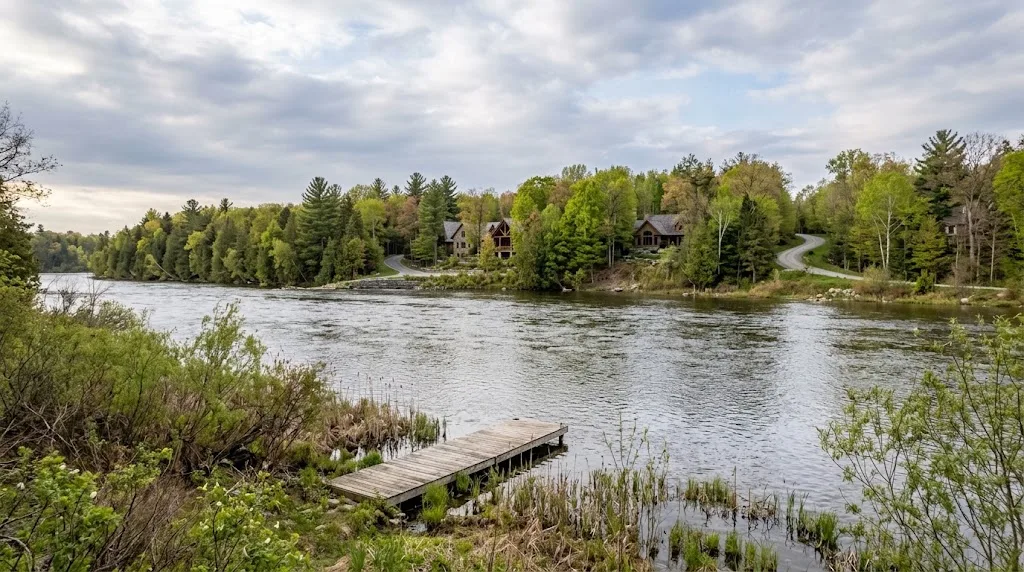
What a Flood Plain Is
A flood plain is the low land beside a river, lake or creek that can flood when water levels rise. In Ontario, flood plain mapping is usually based on a regulatory flood, typically the 1-in-100-year flood, meaning a flood with about a 1% chance of happening in any given year. Over a 25-year mortgage, that’s a meaningful risk, and recent floods on the Ottawa River went beyond some earlier expectations.
Planners often divide the flood plain into two parts:
- The floodway: the area where water flows deepest and fastest. New development there is generally not permitted.
- The flood fringe: the outer area, where water is shallower. Some development may be allowed with conditions, such as flood-proofing.
Not every river or creek has a two-zone policy, and older homes may sit in areas that would not be approved for new building today.
Spring is the main flood season on the Ottawa River, driven by snowmelt across a huge watershed and spring rain. The Ottawa River Regulation Planning Board publishes water level forecasts each spring, which are worth following if you own near the river.
Who Regulates Flood Plains in Ottawa
Conservation authorities regulate development near water under the Conservation Authorities Act. Since April 1, 2024, a single province-wide rule, Ontario Regulation 41/24, has replaced the separate regulations each authority used before. Three conservation authorities cover most of Ottawa:
| Conservation authority | Covers |
|---|---|
| Rideau Valley Conservation Authority | Much of the urban core and south, including Rideau River areas, Manotick and parts of the Ottawa River shoreline |
| Mississippi Valley Conservation Authority | West Ottawa, including Carp River areas and parts of Kanata and West Carleton |
| South Nation Conservation | East Ottawa, including parts of Cumberland and Osgoode |
Boundaries follow watersheds, not ward lines, so check which authority covers a specific address.
What Needs Permission
In a regulated area, you generally need a permit from the conservation authority before you:
- Build, add on or put in a new foundation
- Place or remove fill, or regrade the lot
- Alter a watercourse, shoreline or wetland
That matters if you’re planning an addition, a garage, a pool or a rebuild. The City may also apply its own flood plain policies through the Official Plan and zoning.
Sell Your Ottawa Home for Just 1% Listing Commission
Why pay 2.5% listing commission to sell your home when you don't have to? Jason Polonski lists Ottawa homes for a simple 1% listing commission. Full MLS® and REALTOR.ca exposure, professional photography, powerful online marketing, expert pricing, and a skilled negotiator fighting for every dollar of your sale price. Top-tier service — you just keep thousands more when your home sells. Smart sellers are already making the switch. Your home deserves the best, and your wallet deserves a break.
How to Check a Specific Property
- Look at the mapping. The RVCA’s online geoportal and the other authorities’ maps show regulated areas and flood plain limits. Ask the authority directly if the map isn’t clear.
- Ask the conservation authority. Authorities can confirm whether a property is in a regulated area and whether past permits or violations are on file. The RVCA can be reached at 613-692-3571.
- Ask the seller. Has the home flooded? Did water reach the basement? Were insurance claims made? Was any work done after the flood, and was it permitted?
- Check the City’s records. Building permits and open permits can show what work was done and whether it was closed properly.
- Look for disaster assistance history. After the 2019 flood, some owners received provincial disaster recovery assistance, and some properties carry conditions. Ask your lawyer to look into this.
Jason builds these questions into the offer process and, where it’s appropriate, makes the offer conditional on the answers.
Get Cash Back When You Buy a Home in Ottawa
Can you get cash back when buying a home in Ottawa? Yes. Jason Polonski, a Chairman's Club REALTOR® serving Ottawa and Kanata, shares part of his commission with buyers — up to $3,000 cash back at closing.* You still get full-service, award-winning representation: expert pricing, sharp negotiation, and hands-on guidance from first showing to keys in hand. No cut corners and no rebate-only shortcuts — just real money back in your pocket when you buy your Ottawa or Kanata home.
Insurance
Standard home insurance doesn’t automatically cover flooding. Overland flood coverage is usually an optional add-on, and availability and cost depend heavily on the property’s risk. Some homes in high-risk areas may struggle to get it at all. Sewer backup coverage is separate again.
- Get an insurance quote, including overland flood coverage, before you firm up your offer.
- Ask the insurer what’s covered, the deductible and any limits.
- Ask the seller about past claims, because they can affect what insurers offer.
The Insurance Bureau of Canada explains the basics of flood coverage. The federal government has also been working on a national flood insurance program for high-risk homes. Check Public Safety Canada for its status before relying on it.
Mortgages
Lenders want the home insured. If you can’t get suitable coverage, financing may become harder. Speak with your mortgage broker or lender early, not after you’ve firmed up.

Inspecting a Home in a Flood-Prone Area
A general inspection is the starting point. In flood-prone areas, Jason suggests paying extra attention to:
- The foundation and basement: water staining, efflorescence, cracks, recent drywall or flooring that may hide damage
- Mould: smell, staining or recent remediation. Ask for records
- Electrical: the panel’s location and height, and any wiring that was underwater
- Mechanical systems: furnace, water heater and well or septic systems in rural areas
- Sump pumps and backwater valves: whether they’re present, working and backed up
- Grading: whether the lot slopes away from the house
Jason’s background in the electrical and construction trades helps him spot issues worth a closer look, but it doesn’t replace a qualified home inspector or specialist.
Berms, Levies and Flood Protection
Some neighbourhoods have flood protection. In Britannia, a 1.6-kilometre berm built in 2016 protects about 120 homes, and some owners pay a local improvement charge for it. Ask whether a property pays any flood-related charge, and how long it runs.
Selling a Home in a Flood Plain
If you own a home in a flood plain, buyers will ask the same questions. Sellers who gather flood history, insurance details, permits and records of any repairs make it easier for buyers to say yes. Ontario sellers should also be careful with disclosure: if you know about a material issue such as past flooding, speak with your lawyer about how to disclose it.
Questions to Ask Your Lawyer
- Is there anything on title related to flood protection, easements or local improvement charges?
- Were any permits issued or orders made by the conservation authority or the City?
- Did the property receive disaster assistance, and does that carry any conditions?
- Should the agreement include specific conditions or seller warranties about flooding?
Flood Risk Is Changing
Flood mapping is updated over time, and some maps in Ontario are decades old. Climate change is expected to bring more intense rainfall and less predictable spring conditions. Conservation authorities and the federal government have been working on updated mapping. A property outside today’s mapped flood plain isn’t necessarily free of risk, especially for basement flooding from heavy rain or sewer backup. Ask about the home’s drainage, grading and backwater valve wherever you buy. The City of Ottawa has offered a residential protective plumbing program to help owners install backwater valves; check the City’s website for current programs.
Ottawa Areas Where Flood Plain Checks Matter
- Constance Bay, one of the communities most affected in 2017 and 2019. See also Constance Bay waterfront regulations
- Britannia and Island Park along the Ottawa River
- Crystal Beach and Lakeview
- Rideau River communities, including parts of Manotick
- Many Ottawa waterfront homes
For more seasonal checklists and home system guides, see our Ottawa home maintenance guides.


Posted on Google 

Jennifer Clark
4 days ago
 Trustindex verifies that the original source of the review is Google.
His availability to communicate was incredible which is so important when selling a house. Great at everything else too.
Posted on Google

Aarushi Govil
15 days ago
Trustindex verifies that the original source of the review is Google. Working with Jason has been an absolute privilege from start to finish. Finding the right realtor can be daunting, but Jason exceeded every expectation. He is remarkably knowledgeable and was extremely punctual and responsive to every question or request we had, no matter the time or the day. What stood out most was his complete sincerity and zero-pressure approach. When we walked through houses, he was transparent, pointing out both the pros and potential red flags instead of trying to make a quick sale. His honest feedback gave us complete confidence in our decision. If you want a dedicated, honest, and highly skilled agent in your corner, look no further than Jason!
Posted on Google

Joe Ireland
29 days ago
Trustindex verifies that the original source of the review is Google. Jason helped me buy my first home.
He was extremely responsive and available from our very first call, and assisted with booking multiple viewings across Ottawa.
He was punctual to every viewing and honest with his feedback with the homes we saw, and when it came time to go from viewing to buying, he had an impressive array of contacts from brokers to inspectors to lawyers, all with excellent reviews and who were great to work with in their own right.
As a first-time home buyer, his responsiveness and patience with many questions were extremely reassuring and really streamlined the process, and I signed an offer on my home within just 2 weeks of meeting him.
I would strongly recommend Jason to anyone buying a home in Ottawa, especially to those who are strangers to the process like I was.
Thank you again, Jason!
Posted on Google

Marina
59 days ago
Trustindex verifies that the original source of the review is Google. We had a wonderful experience working with our realtor - Jason Polonski. He is a professional, knowledgeable, responsive, and truly attentive to our needs. Jason guided us through every step of the process, answered all of our questions. My family are very grateful for his work and would absolutely recommend him to anyone looking for a reliable and trustworthy realtor in Ottawa and around !
Posted on Google

Vatrul “Vatrul”
63 days ago
Trustindex verifies that the original source of the review is Google. First time home seller. Every process of the journey was explained and laid out perfectly.. Very highly recommended.. thank you Jason..
Posted on Google

Olga V.
64 days ago
Trustindex verifies that the original source of the review is Google. Jason is very knowledgeable realtor in Kanata. He’s been always good beyond to help his clients. We had a place experience buying a house in Kanata. I highly recommend him.
Posted on Google

Yuri Tsouker
71 days ago
Trustindex verifies that the original source of the review is Google. Working with Jason on the sale of my property was genuinely one of the smoothest professional experiences I've had. He was responsive at every step, patient with every question (and I had many), and he clearly knew the local market inside and out.
My sale wasn't a simple one — there was a tenant, a rental water heater, a plumber to coordinate, and plenty of complications that made this a genuinely difficult case. Jason handled all of it with calm, practical advice and always got back to me quickly, often with a solution before I even finished asking about the problem.
What stood out most was his honesty. He didn't push, he didn't overpromise, and every recommendation he made turned out to be exactly right. I felt like I had a professional in my corner from day one.
If you're looking for a realtor who is knowledgeable, responsive, and genuinely trustworthy, I can't recommend Jason highly enough. Thank you, Jason — much appreciated!
Posted on Google

Denis Pepin
95 days ago
Trustindex verifies that the original source of the review is Google. Outstanding Experience with Jason Polonski!
Last May, my wife and I sold our home in Stittsville with Jason Polonski, and we couldn't be happier with our decision. Jason made the entire process remarkably smooth and stress-free.
From day one, Jason stood out for his exceptional communication. He was always prompt and available to answer our queries—often within minutes—no matter the time of day. Whenever we had questions regarding paperwork, listing strategies, or handling property details, he addressed every concern with a truly genuine, human touch.
What impressed us most was how proactive and reassuring he was at every step. When we had to coordinate the buyout of our water heater rental, Jason handled the reimbursement seamlessly, reassuring us with, "We should have a smooth sale now. :)"—and it truly was! Even post-closing, when we needed to arrange delivery for mailbox keys or track down final funds from head office, Jason stayed on top of every detail, putting a rush on things and constantly keeping us updated.
Jason is a dedicated, attentive, and highly professional realtor who genuinely cares about his clients. It has been an absolute pleasure working with him, and we highly recommend Jason Polonski to anyone looking to buy or sell a home in the Ottawa region.
Posted on Google

Tammy Puhakka
104 days ago
Trustindex verifies that the original source of the review is Google. I highly recommend Jason Polonski, a realtor in Kanata, Ottawa. He truly went above and beyond for me. During a long weekend, he called me and, within just two hours, had an offer to purchase prepared and sent so I could secure the home I had found and fallen in love with.
Jason was professional, efficient, knowledgeable, and incredibly pleasant to work with. His rates are very reasonable, and his dedication to his clients is outstanding. If you’re looking for fast, reliable, and friendly service, I would absolutely recommend contacting him.❤️
Posted on Google

Joe Melindy
109 days ago
Trustindex verifies that the original source of the review is Google. Everything went smoothly. Jason is very good at what he does. Would highly recommend. Thanks Jason 😊
Buy Near the Water With Your Eyes Open
Jason Polonski is a REALTOR® with Right at Home Realty and more than 15 years of experience in Ottawa real estate. His background in the construction and electrical trades means he can help you judge a home’s foundation, electrical and drainage before you commit. He also holds a Bachelor of Commerce from Concordia University with a double major in Marketing and Finance, which guides how he prices and markets every home he lists.
If you are thinking about buying or selling in Ottawa, call or text Jason at (613) 601-9333, or send him a message.
See also: our guide to buying a rural property in Ottawa.
Flood Plain Buying FAQs
Check the local conservation authority’s mapping, such as the Rideau Valley Conservation Authority geoportal, and ask the authority to confirm whether the property is in a regulated area.
New development in the floodway is generally not permitted. Some work in the flood fringe may be allowed with a conservation authority permit and conditions. Any building, fill or grading in a regulated area usually needs permission under Ontario Regulation 41/24.
Many insurers offer overland flood coverage as an add-on, but availability and cost depend on the property’s risk. Get a quote before you firm up an offer.
Sellers should not hide or misrepresent material issues they know about. Speak with a real estate lawyer about disclosure obligations for a specific sale.
Usually, but lenders require insurance. If suitable coverage is hard to get, financing can be harder too. Talk to your lender early.
It’s the province-wide regulation, in effect since April 1, 2024, that sets out where conservation authorities regulate development near water and what activities need their permission.
Not necessarily. Many homes in mapped areas have never flooded or have protection. The key is to understand the risk, insurance and rules before you buy.
