OTTAWA HOME BUYERS
Coach Houses and Garden Suites in Ottawa: Rules, Costs and Choosing the Right Lot
By Jason Polonski, REALTOR® with Right at Home Realty · Last updated: November 2026
A coach house is a small, self-contained home built in its own building on the same lot as a house, usually in the backyard or over a detached garage. Ottawa allows coach houses on most lots with a detached, semi-detached, linked or townhouse dwelling, subject to limits on size, height, setbacks and servicing. A garden suite is different: in Ontario, the term usually means a temporary, portable unit approved for a set number of years.
This guide from west-end REALTOR® Jason Polonski covers how coach houses work in Ottawa, what the rules allow, what drives the cost and how to tell whether a lot you are thinking of buying can take one. It is part of Jason’s Ottawa home buyer’s guide. If you are looking at a house that already has a basement or in-law apartment, see buying a home with a secondary unit in Ottawa.

Coach House vs. Garden Suite: What’s the Difference?
People use these terms loosely, but they mean different things in Ottawa.
| Coach house | Garden suite | |
|---|---|---|
| What it is | A permanent, self-contained unit in its own building on the same lot as the main home | A temporary, portable unit, usually for a family member |
| How it’s approved | Allowed by the Zoning By-law, with a building permit | Usually approved through a temporary use by-law under Ontario’s Planning Act, for up to 20 years |
| Foundation and services | Permanent foundation, served from the main home’s water and sewer (or well and septic in rural areas) | Designed to be removed when the approval ends |
| Long-term value | Stays with the property | Ends with the approval |
Because coach houses are now allowed in most residential zones, most Ottawa owners build a coach house rather than seek approval for a garden suite. You will also hear “laneway house,” “backyard suite” and “granny flat.” Those are informal names, and the City’s rules for coach houses are the ones that apply.
Ottawa’s Coach House Rules
The City’s coach house page lists who can build one, and Section 133 of Zoning By-law 2008-250 sets the dimensions. Here is a summary of the main limits as they stood in November 2026:
- Eligible homes. Lots with a detached, semi-detached, linked-detached, townhouse or duplex dwelling.
- Unit count. A lot can have up to two additional units: two apartments in the main house, or one apartment plus one coach house. Only one coach house is allowed per lot. Lots on private well or septic are limited to one additional unit or one coach house.
- Location. On lots under 0.4 hectares, the coach house goes in the rear yard. If the lot backs onto a public lane, it goes in the yard beside the lane.
- Footprint. The smallest of: 40% of the main home’s footprint (or 50 m² if the main home is 125 m² or smaller), 40% of the yard it sits in, and 80 m² in the urban areas (95 m² in Area D, which covers much of the rural area).
- Height. In most urban zones, no taller than the main home or 3.6 m, whichever is lower, and 3.2 m for a flat roof. In rural and village zones the limit is 4.5 m, or 6.1 m if the building includes a garage.
- Setbacks. A minimum of 4 m from rear and interior side lot lines in most cases, or as little as 1 m where the lot line abuts a lane or no window or door faces it. At least 1.2 m from any other building on the lot.
- Servicing. In urban areas, the coach house must be served from the main home’s municipal water and sewer connection. A walkway 1.2 m to 1.5 m wide must connect it to the street, driveway or lane.
- Parking. No additional parking space is required. A space for the coach house can be in tandem in the existing driveway, but a new one can’t go in the front yard.
- No severance. A coach house can’t be split off and sold as a separate lot.
Ottawa’s new Zoning By-law 2026-50 changes how many units are allowed in many neighbourhoods, but parts of it are still under appeal at the Ontario Land Tribunal. Until those appeals are resolved, the City applies the more restrictive provisions of the old and new by-laws. Check your lot on geoOttawa, read the City’s coach house page, and follow the new Zoning By-law updates. If a design doesn’t fit the rules, a minor variance from the Committee of Adjustment may be possible. These numbers change. Confirm them with the City before you buy or design.
Sell Your Ottawa Home for Just 1% Listing Commission
Why pay 2.5% listing commission to sell your home when you don't have to? Jason Polonski lists Ottawa homes for a simple 1% listing commission. Full MLS® and REALTOR.ca exposure, professional photography, powerful online marketing, expert pricing, and a skilled negotiator fighting for every dollar of your sale price. Top-tier service — you just keep thousands more when your home sells. Smart sellers are already making the switch. Your home deserves the best, and your wallet deserves a break.
Can the Lot You’re Buying Take a Coach House?
Most buyers who want a coach house are really shopping for the right lot. A house with a perfect kitchen does not help if the backyard can’t fit a unit. Before you make an offer, look at:
- Rear yard size and shape. The 40%-of-the-yard limit and the setbacks shrink the buildable area quickly on a shallow lot. A deep, rectangular backyard gives you the most room.
- Lane access. Lots that back onto a public lane, common in older central neighbourhoods, can place a coach house closer to the lot line and often have an easier route for construction.
- Where the water and sewer lines run. In urban areas the coach house connects through the main house. A long run, or one that has to go under a driveway or mature trees, adds cost.
- Trees, easements and slopes. Protected trees, hydro or drainage easements and steep grades all limit where you can build.
- Flood plains. Lots near the Rideau, Jock and Carp rivers may fall within a conservation authority’s regulated area. Jason’s guide to buying a home in an Ottawa flood plain explains how to check.
- Existing units. If the house already has two apartments, there is no room left in the unit count for a coach house.
Older lots in neighbourhoods like Westboro, Alta Vista and Nepean, where many homes sit on wider, deeper lots, are often the best candidates in the urban area. Jason’s guides to Westboro and the Nepean neighbourhoods describe the lot sizes you can expect. Newer suburban lots in Kanata, Stittsville and Barrhaven are often too narrow or shallow, although corner lots and pie-shaped lots are worth a look.
Jason’s take: Fall in love with the backyard, not the kitchen. When a buyer tells me they want to build a coach house, I look at the depth of the yard, where the sewer line leaves the house and the size of the electrical service before anything else. A beautiful house on a shallow lot can’t take the project you are buying it for.
Get Cash Back When You Buy a Home in Ottawa
Can you get cash back when buying a home in Ottawa? Yes. Jason Polonski, a Chairman's Club REALTOR® serving Ottawa and Kanata, shares part of his commission with buyers — up to $3,000 cash back at closing.* You still get full-service, award-winning representation: expert pricing, sharp negotiation, and hands-on guidance from first showing to keys in hand. No cut corners and no rebate-only shortcuts — just real money back in your pocket when you buy your Ottawa or Kanata home.
Coach Houses on Rural Lots
Coach houses are also allowed in Ottawa’s rural area, where many lots are large enough to fit one easily. The main limit is servicing. A rural coach house usually shares the main home’s well and septic system or has its own, and the system must be able to handle the extra load. In Ottawa, septic permits are handled by the Ottawa Septic System Office, run by the Rideau Valley Conservation Authority, so talk to them early.
From a trades point of view, Jason pays close attention to three things on rural lots:
- Septic capacity. A system sized for a three-bedroom house may not handle a second household. Ask for the original permit and the size of the tank and bed.
- Well yield and water quality. Two households use more water. A well test that only checks bacteria won’t tell you whether the well can keep up.
- Electrical service. Running power to a detached building means a properly sized feeder, often trenched, plus a sub-panel in the coach house. A 100-amp service on an older rural home may need to be upgraded first, which typically costs $3,000 to $5,000 according to HomeStars, and the work needs a permit and inspection from the Electrical Safety Authority.
For more on rural properties, see Jason’s guides to rural zoning in Ottawa, well water systems and septic systems. If you are thinking of splitting a rural property into separate lots instead, read his guide to severing land in Ottawa.
What a Coach House Costs
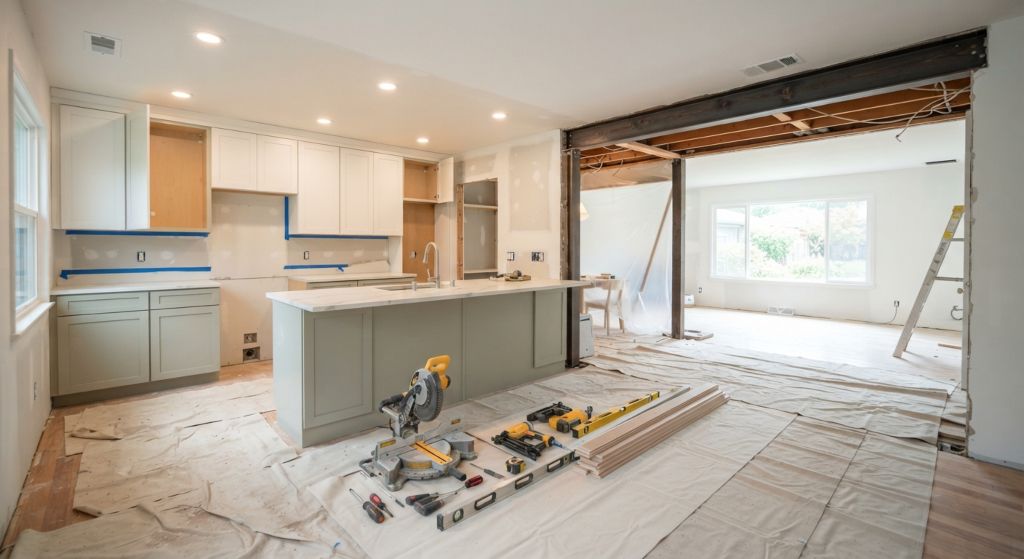
A coach house is a small house, and it costs like one. Ottawa General Contractors, which has built many of the city’s coach houses, told All Things Home in November 2024 that construction usually runs $400 to $550 per square foot. At that rate a 500-square-foot coach house starts at about $200,000, and a 700-square-foot unit could reach roughly $385,000. Most Ottawa coach houses are 500 to 700 square feet and take four to six months to build. Servicing, drainage and any electrical service upgrade are extra. When the City first allowed coach houses, the same builder quoted $200 to $300 per square foot, so costs have nearly doubled. By comparison, most basement apartment conversions cost $70,000 to $150,000. Get several quotes for your specific lot. The biggest cost drivers are:
- Servicing. Connecting water, sewer and electrical from the main house, especially over a long distance.
- Foundation. A full basement costs much more than a slab, and soil conditions vary across the city.
- Design and permits. Drawings, a site plan and the building permit. Ontario’s Building Code lets a homeowner take design responsibility for a coach house in some cases, but most people hire a designer. The Province’s guide to adding a second unit is a useful primer.
- Converting vs. building new. Converting an existing garage can look cheaper, but older garages often need a new foundation, insulation and fire protection to qualify.
- Finishes. Kitchens and bathrooms are the most expensive square feet in any home.
Two things help. Coach houses have been exempt from development charges since September 2020 under provincial legislation, according to the City. And CMHC’s insured refinance for secondary suites lets eligible owners borrow up to 90% of the home’s value after the unit is built, with up to a 30-year amortization, as long as the unit isn’t used as a short-term rental.
Who Lives in Ottawa Coach Houses
Most coach houses are built for one of three reasons:
- A parent or grandparent. A single-level coach house can be designed for aging in place, close to family but with its own front door. If the person is 65 or older, or an adult who qualifies for the disability tax credit, you may be able to claim the federal Multigenerational Home Renovation Tax Credit.
- An adult child. A first step toward independence that doesn’t require a down payment.
- A long-term tenant. Rental income that helps carry the mortgage.
Ottawa’s short-term rental rules allow a short-term rental in a coach house only when it is the principal residence of the person running it. That generally rules out using a coach house as a full-time short-term rental. Rental income is also taxable, and the City advises owners to tell their insurer early in the planning.
Does a coach house add value?
A well-built, permitted coach house adds rental income or family space, which most buyers will pay for. How much it adds depends on the neighbourhood, the quality of the build and how many buyers in that price range want a second unit. Because so few have been built in Ottawa, there isn’t much sales data yet. Jason prices them by looking at what comparable two-unit properties have sold for and what the unit could rent for. His guide to what your home is worth explains how a comparative market analysis works.


Posted on Google 

Jennifer Clark
3 days ago
 Trustindex verifies that the original source of the review is Google.
His availability to communicate was incredible which is so important when selling a house. Great at everything else too.
Posted on Google

Aarushi Govil
14 days ago
Trustindex verifies that the original source of the review is Google. Working with Jason has been an absolute privilege from start to finish. Finding the right realtor can be daunting, but Jason exceeded every expectation. He is remarkably knowledgeable and was extremely punctual and responsive to every question or request we had, no matter the time or the day. What stood out most was his complete sincerity and zero-pressure approach. When we walked through houses, he was transparent, pointing out both the pros and potential red flags instead of trying to make a quick sale. His honest feedback gave us complete confidence in our decision. If you want a dedicated, honest, and highly skilled agent in your corner, look no further than Jason!
Posted on Google

Joe Ireland
28 days ago
Trustindex verifies that the original source of the review is Google. Jason helped me buy my first home.
He was extremely responsive and available from our very first call, and assisted with booking multiple viewings across Ottawa.
He was punctual to every viewing and honest with his feedback with the homes we saw, and when it came time to go from viewing to buying, he had an impressive array of contacts from brokers to inspectors to lawyers, all with excellent reviews and who were great to work with in their own right.
As a first-time home buyer, his responsiveness and patience with many questions were extremely reassuring and really streamlined the process, and I signed an offer on my home within just 2 weeks of meeting him.
I would strongly recommend Jason to anyone buying a home in Ottawa, especially to those who are strangers to the process like I was.
Thank you again, Jason!
Posted on Google

Marina
58 days ago
Trustindex verifies that the original source of the review is Google. We had a wonderful experience working with our realtor - Jason Polonski. He is a professional, knowledgeable, responsive, and truly attentive to our needs. Jason guided us through every step of the process, answered all of our questions. My family are very grateful for his work and would absolutely recommend him to anyone looking for a reliable and trustworthy realtor in Ottawa and around !
Posted on Google

Vatrul “Vatrul”
62 days ago
Trustindex verifies that the original source of the review is Google. First time home seller. Every process of the journey was explained and laid out perfectly.. Very highly recommended.. thank you Jason..
Posted on Google

Olga V.
63 days ago
Trustindex verifies that the original source of the review is Google. Jason is very knowledgeable realtor in Kanata. He’s been always good beyond to help his clients. We had a place experience buying a house in Kanata. I highly recommend him.
Posted on Google

Yuri Tsouker
70 days ago
Trustindex verifies that the original source of the review is Google. Working with Jason on the sale of my property was genuinely one of the smoothest professional experiences I've had. He was responsive at every step, patient with every question (and I had many), and he clearly knew the local market inside and out.
My sale wasn't a simple one — there was a tenant, a rental water heater, a plumber to coordinate, and plenty of complications that made this a genuinely difficult case. Jason handled all of it with calm, practical advice and always got back to me quickly, often with a solution before I even finished asking about the problem.
What stood out most was his honesty. He didn't push, he didn't overpromise, and every recommendation he made turned out to be exactly right. I felt like I had a professional in my corner from day one.
If you're looking for a realtor who is knowledgeable, responsive, and genuinely trustworthy, I can't recommend Jason highly enough. Thank you, Jason — much appreciated!
Posted on Google

Denis Pepin
94 days ago
Trustindex verifies that the original source of the review is Google. Outstanding Experience with Jason Polonski!
Last May, my wife and I sold our home in Stittsville with Jason Polonski, and we couldn't be happier with our decision. Jason made the entire process remarkably smooth and stress-free.
From day one, Jason stood out for his exceptional communication. He was always prompt and available to answer our queries—often within minutes—no matter the time of day. Whenever we had questions regarding paperwork, listing strategies, or handling property details, he addressed every concern with a truly genuine, human touch.
What impressed us most was how proactive and reassuring he was at every step. When we had to coordinate the buyout of our water heater rental, Jason handled the reimbursement seamlessly, reassuring us with, "We should have a smooth sale now. :)"—and it truly was! Even post-closing, when we needed to arrange delivery for mailbox keys or track down final funds from head office, Jason stayed on top of every detail, putting a rush on things and constantly keeping us updated.
Jason is a dedicated, attentive, and highly professional realtor who genuinely cares about his clients. It has been an absolute pleasure working with him, and we highly recommend Jason Polonski to anyone looking to buy or sell a home in the Ottawa region.
Posted on Google

Tammy Puhakka
103 days ago
Trustindex verifies that the original source of the review is Google. I highly recommend Jason Polonski, a realtor in Kanata, Ottawa. He truly went above and beyond for me. During a long weekend, he called me and, within just two hours, had an offer to purchase prepared and sent so I could secure the home I had found and fallen in love with.
Jason was professional, efficient, knowledgeable, and incredibly pleasant to work with. His rates are very reasonable, and his dedication to his clients is outstanding. If you’re looking for fast, reliable, and friendly service, I would absolutely recommend contacting him.❤️
Posted on Google

Joe Melindy
108 days ago
Trustindex verifies that the original source of the review is Google. Everything went smoothly. Jason is very good at what he does. Would highly recommend. Thanks Jason 😊
Coach Houses for Multigenerational Families
If you are planning to build a coach house for a parent or adult child, read Jason’s guide to multigenerational homes in Ottawa. It covers how families share ownership, which layouts work and how to plan for aging in place.
Buy the Right Lot With an Agent Who Knows Construction
Jason Polonski has helped hundreds of Ottawa buyers and sellers over more than 15 years. Before real estate, he worked in construction and the electrical trades, so when a buyer tells him they want a coach house, he looks at the yard, the service lines and the electrical panel before he looks at the kitchen. That saves his clients from falling for a house on a lot that can’t take the project they have in mind. He also holds a Bachelor of Commerce from Concordia University with a double major in Marketing and Finance, which helps when it is time to weigh build costs against rent or family savings. To talk about a property you are considering, contact Jason.
Frequently Asked Questions: Coach Houses and Garden Suites in Ottawa
On most lots with a detached, semi-detached, linked or townhouse dwelling, yes, as long as you meet the City’s rules on size, height, setbacks and servicing and get a building permit. Lots that already have two apartments, or one apartment on a private well or septic system, can’t add one.
Under Section 133 of Zoning By-law 2008-250, the footprint is the smallest of 40% of the main home’s footprint (or 50 m² for smaller homes), 40% of the yard it sits in, and 80 m² in urban areas (95 m² in Area D). Confirm current limits with the City, because Zoning By-law 2026-50 is being phased in.
A coach house is a permanent unit allowed by the Zoning By-law. In Ontario, a garden suite is usually a temporary, portable unit approved through a temporary use by-law for up to 20 years.
Yes. The City requires a building permit to build a coach house or to convert an existing accessory building into one. Electrical work also needs a permit from the Electrical Safety Authority.
According to the City of Ottawa, coach houses have been exempt from development charges since September 18, 2020, under provincial legislation.
Generally not as a full-time short-term rental. Ottawa allows a short-term rental in a coach house only when it is the principal residence of the person operating it. CMHC’s suite refinancing also excludes short-term rentals.
No. A coach house must stay on the same lot as the main home and can’t be severed and sold on its own.
An Ottawa builder quoted $400 to $550 per square foot in late 2024, so a typical 500- to 700-square-foot coach house costs roughly $200,000 to $385,000 before servicing, drainage and any electrical upgrade. Get quotes for your specific lot.
