Ottawa Home Buyers
How to Prepare Your Home for a Home Inspection in Ottawa
By Jason Polonski, REALTOR® with Right at Home Realty · 15+ years in Ottawa real estate · Updated October 2026 · Client reviews
A buyer’s home inspection is one of the most influential moments in an Ottawa sale, and proper preparation puts a seller in control of that outcome rather than leaving it to chance. A well-prepared home inspects better, raises fewer questions, and gives a buyer confidence to move forward without renegotiating.
This guide covers what actually matters to an inspector, from access and small repairs to documentation, and a realistic timeline for getting ready.
Jason Polonski is a full-time Ottawa and Kanata REALTOR® with Right at Home Realty and more than 15 years of experience guiding sellers across Kanata, Stittsville, Barrhaven and the broader Ottawa region. Sellers can reach him by phone at (613) 601-9333 or by email at polonskiottawa@gmail.com.

Why the Home Inspection Matters in an Ottawa Sale
Most Ontario purchase offers include a home inspection condition, giving the buyer a window to have the property professionally examined before the sale becomes firm. The inspector reviews the structure, roof, electrical, plumbing, HVAC and insulation, then issues a written report the buyer relies on to finalize their decision, often working from standards similar to those published by the Ontario Association of Home Inspectors.
A clean report reassures a buyer and keeps momentum toward closing. A report full of avoidable red flags- dripping faucets, blocked access, undocumented work- can trigger a request to renegotiate price, demand repairs, or, in some cases,s walk away entirely, even when the underlying issues are minor.
What a Home Inspection Does Not Cover
A standard home inspection is a visual, non-invasive review, not a full diagnostic of every system. Inspectors do not move furniture or stored belongings, dismantle equipment, test systems that are shut off or inaccessible, or offer a guarantee that a system will not fail shortly after the sale.
Understanding these limits helps a seller focus preparation on what an inspector can actually assess, rather than on things outside the inspection’s scope.
Start With Access: The Single Biggest Factor
Blocked access is the most common and most preventable problem sellers create for themselves. An inspector who cannot get a clear, safe look at the furnace, water heater, electrical panel, attic hatch or crawl space either notes it as a limitation in the report or reschedules, and both outcomes work against the seller.
Clearing roughly a metre of open space around the furnace, water heater and electrical panel, along with a clear path to the attic hatch and any crawl space access, removes this risk entirely. It costs nothing but a bit of tidying and makes a meaningful difference to how thorough and favourable the report is
Sell Your Ottawa Home for Just 1% Listing Commission
Why pay 2.5% listing commission to sell your home when you don't have to? Jason Polonski lists Ottawa homes for a simple 1% listing commission. Full MLS® and REALTOR.ca exposure, professional photography, powerful online marketing, expert pricing, and a skilled negotiator fighting for every dollar of your sale price. Top-tier service — you just keep thousands more when your home sells. Smart sellers are already making the switch. Your home deserves the best, and your wallet deserves a break.
Address the Small Repairs That Signal Bigger Problems
Inspectors read small, neglected details as a signal of how the whole home has been maintained. The table below covers the most common ones worth fixing before an inspection.
| Issue | Why it matters | Fix |
|---|---|---|
| Dripping faucets or running toilets | Suggests plumbing has been neglected | Replace washers or flappers |
| Burnt-out light bulbs | May be flagged as a faulty fixture | Replace all bulbs beforehand |
| Loose or missing GFCI outlets, per Electrical Safety Authority guidance | Reads as an electrical safety concern | Test and replace as needed |
| Sticking or squeaky doors | Reads as general poor upkeep | Lubricate hinges, adjust strikes |
| Gaps in caulking around tubs and sinks | Hints at a water intrusion risk | Re-caulk cleanly |
None of these are individually significant, but together they shape a buyer’s confidence in the home far more than most sellers expect.
Get Cash Back When You Buy a Home in Ottawa
Can you get cash back when buying a home in Ottawa? Yes. Jason Polonski, a Chairman's Club REALTOR® serving Ottawa and Kanata, shares part of his commission with buyers — up to $3,000 cash back at closing.* You still get full-service, award-winning representation: expert pricing, sharp negotiation, and hands-on guidance from first showing to keys in hand. No cut corners and no rebate-only shortcuts — just real money back in your pocket when you buy your Ottawa or Kanata home.
Make Major Systems Easy to Evaluate
Beyond access and small repairs, a few systems deserve specific attention before an inspector arrives.
Heating and cooling. A recently serviced furnace and air conditioner inspect noticeably better than neglected equipment. Natural Resources Canada publishes guidance on home heating efficiency that underscores how regular maintenance extends equipment life, and a documented recent service call reassures both the inspector and the buyer.
Plumbing and water. Checking for slow leaks under sinks, testing water pressure, and confirming the shutoff valves work smoothly all help avoid last-minute surprises during the inspection.
Roof and exterior. Clearing gutters, trimming branches away from the roofline, and addressing any obvious loose shingles or flashing beforehand prevents a minor issue from reading as a major one in the report. The Canada Mortgage and Housing Corporation publishes homeowner maintenance resources that treat roof and drainage upkeep as central to protecting a home’s value through Ottawa’s freeze-thaw cycles.
Tackle Moisture, Mould and Air Quality
Moisture is one of the issues inspectors weigh most heavily, since it often points to a larger, hidden problem. Any visible mould, musty odours or signs of past water intrusion should be cleaned, and their underlying source corrected well before inspection day, not simply painted over.
Health Canada provides clear guidance on indoor mould and the importance of controlling humidity, which is a useful reference for sellers addressing a damp basement or a poorly ventilated bathroom before listing.
Gather Documentation
Paperwork does not change what an inspector finds, but it changes how a buyer interprets it. Having the following ready and easy to hand over builds confidence and can shorten a buyer’s due diligence period.
- Maintenance records for the furnace, air conditioner, roof and water heater
- Permits and final inspection sign-offs for any past renovations, searchable through the City of Ottawa’s building permit records
- Warranties still active on the roof, windows or major appliances
- Recent utility bills, which give a buyer a realistic sense of operating costs
- Receipts for any electrical, plumbing or structural work completed
For a newer build, any remaining coverage under Tarion, Ontario’s new home warranty program, is worth documenting as well, since it reassures a buyer that recent workmanship is backed by a formal warranty.
A Realistic Preparation Timeline
Spreading preparation out over a couple of weeks is far less stressful than trying to do everything the night before. The table below offers a reasonable structure.
| Timeframe | Tasks |
|---|---|
| Two weeks out | Service the furnace and air conditioner, gather documentation, schedule any needed repairs |
| One week out | Fix leaks, replace bulbs, re-caulk, clear access to major systems |
| Two days out | Deep clean, test GFCI outlets and detectors, do a final walkthrough |
| Inspection day | Remove pets, leave the home, set the thermostat to a comfortable temperature |
Safety Devices and Final Details
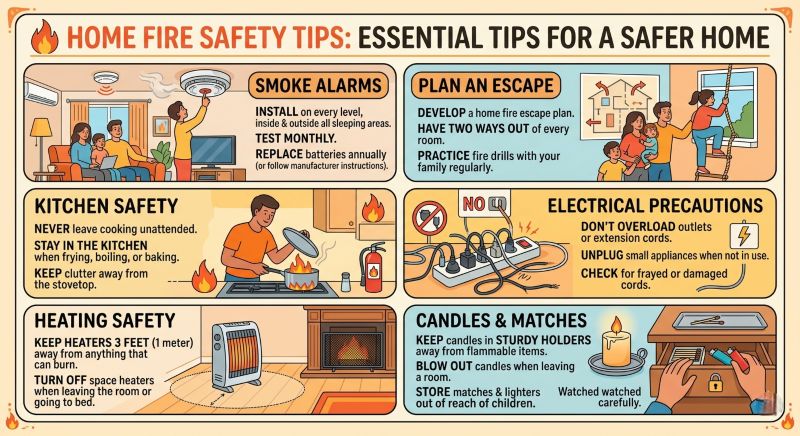
Working smoke alarms are required throughout an Ontario home, and under the Government of Ontario’s carbon monoxide safety rules, CO alarms are legally required in any residence with a fuel-burning appliance or an attached garage. Confirming both are present, functioning and not past their expiry date is a quick check that avoids an easily preventable flag on the report.
On inspection day itself, a typical visit takes about two to three hours, though larger or older homes can take longer. Leaving the home, removing pets, and setting the thermostat to a comfortable temperature allows the inspector to test heating and cooling systems properly.
The Payoff of Preparation
None of this preparation guarantees a perfect report, and it should not need to. The goal is removing the avoidable issues, blocked access, small neglected repairs, and missing documentation, so that whatever the inspector does find reflects the home’s real condition rather than a lack of care.
A well-prepared home moves through this stage of the sale with far less friction, and often protects real dollars in the final negotiated price.


Posted on Google 

Jennifer Clark
10 days ago
 Trustindex verifies that the original source of the review is Google.
His availability to communicate was incredible which is so important when selling a house. Great at everything else too.
Posted on Google

Aarushi Govil
21 days ago
Trustindex verifies that the original source of the review is Google. Working with Jason has been an absolute privilege from start to finish. Finding the right realtor can be daunting, but Jason exceeded every expectation. He is remarkably knowledgeable and was extremely punctual and responsive to every question or request we had, no matter the time or the day. What stood out most was his complete sincerity and zero-pressure approach. When we walked through houses, he was transparent, pointing out both the pros and potential red flags instead of trying to make a quick sale. His honest feedback gave us complete confidence in our decision. If you want a dedicated, honest, and highly skilled agent in your corner, look no further than Jason!
Posted on Google

Joe Ireland
35 days ago
Trustindex verifies that the original source of the review is Google. Jason helped me buy my first home.
He was extremely responsive and available from our very first call, and assisted with booking multiple viewings across Ottawa.
He was punctual to every viewing and honest with his feedback with the homes we saw, and when it came time to go from viewing to buying, he had an impressive array of contacts from brokers to inspectors to lawyers, all with excellent reviews and who were great to work with in their own right.
As a first-time home buyer, his responsiveness and patience with many questions were extremely reassuring and really streamlined the process, and I signed an offer on my home within just 2 weeks of meeting him.
I would strongly recommend Jason to anyone buying a home in Ottawa, especially to those who are strangers to the process like I was.
Thank you again, Jason!
Posted on Google

Marina
65 days ago
Trustindex verifies that the original source of the review is Google. We had a wonderful experience working with our realtor - Jason Polonski. He is a professional, knowledgeable, responsive, and truly attentive to our needs. Jason guided us through every step of the process, answered all of our questions. My family are very grateful for his work and would absolutely recommend him to anyone looking for a reliable and trustworthy realtor in Ottawa and around !
Posted on Google

Vatrul “Vatrul”
69 days ago
Trustindex verifies that the original source of the review is Google. First time home seller. Every process of the journey was explained and laid out perfectly.. Very highly recommended.. thank you Jason..
Posted on Google

Olga V.
70 days ago
Trustindex verifies that the original source of the review is Google. Jason is very knowledgeable realtor in Kanata. He’s been always good beyond to help his clients. We had a place experience buying a house in Kanata. I highly recommend him.
Posted on Google

Yuri Tsouker
77 days ago
Trustindex verifies that the original source of the review is Google. Working with Jason on the sale of my property was genuinely one of the smoothest professional experiences I've had. He was responsive at every step, patient with every question (and I had many), and he clearly knew the local market inside and out.
My sale wasn't a simple one — there was a tenant, a rental water heater, a plumber to coordinate, and plenty of complications that made this a genuinely difficult case. Jason handled all of it with calm, practical advice and always got back to me quickly, often with a solution before I even finished asking about the problem.
What stood out most was his honesty. He didn't push, he didn't overpromise, and every recommendation he made turned out to be exactly right. I felt like I had a professional in my corner from day one.
If you're looking for a realtor who is knowledgeable, responsive, and genuinely trustworthy, I can't recommend Jason highly enough. Thank you, Jason — much appreciated!
Posted on Google

Denis Pepin
101 days ago
Trustindex verifies that the original source of the review is Google. Outstanding Experience with Jason Polonski!
Last May, my wife and I sold our home in Stittsville with Jason Polonski, and we couldn't be happier with our decision. Jason made the entire process remarkably smooth and stress-free.
From day one, Jason stood out for his exceptional communication. He was always prompt and available to answer our queries—often within minutes—no matter the time of day. Whenever we had questions regarding paperwork, listing strategies, or handling property details, he addressed every concern with a truly genuine, human touch.
What impressed us most was how proactive and reassuring he was at every step. When we had to coordinate the buyout of our water heater rental, Jason handled the reimbursement seamlessly, reassuring us with, "We should have a smooth sale now. :)"—and it truly was! Even post-closing, when we needed to arrange delivery for mailbox keys or track down final funds from head office, Jason stayed on top of every detail, putting a rush on things and constantly keeping us updated.
Jason is a dedicated, attentive, and highly professional realtor who genuinely cares about his clients. It has been an absolute pleasure working with him, and we highly recommend Jason Polonski to anyone looking to buy or sell a home in the Ottawa region.
Posted on Google

Tammy Puhakka
110 days ago
Trustindex verifies that the original source of the review is Google. I highly recommend Jason Polonski, a realtor in Kanata, Ottawa. He truly went above and beyond for me. During a long weekend, he called me and, within just two hours, had an offer to purchase prepared and sent so I could secure the home I had found and fallen in love with.
Jason was professional, efficient, knowledgeable, and incredibly pleasant to work with. His rates are very reasonable, and his dedication to his clients is outstanding. If you’re looking for fast, reliable, and friendly service, I would absolutely recommend contacting him.❤️
Posted on Google

Joe Melindy
115 days ago
Trustindex verifies that the original source of the review is Google. Everything went smoothly. Jason is very good at what he does. Would highly recommend. Thanks Jason 😊
How Jason Polonski Helps Sellers Prepare
Few agents can walk a seller through inspection preparation with real technical insight. Jason’s hands-on background in construction and the electrical trades means he can flag likely problem areas before a buyer’s inspector ever arrives, giving sellers time to address them properly.
That trades background, paired with a Bachelor of Commerce in Marketing and Finance, means sellers get both a practical read on the home’s condition and sound guidance on pricing and strategy. Hundreds of buyers and sellers across Ottawa have trusted him with their transactions.
He has been recognized as Best in Ottawa Top REALTOR® for 2026, seven years running, along with Chairman’s Club honours and Top Choice REALTOR® recognition for Kanata and Stittsville. More is on the About Jason Polonski page, and current reviews are on his Google Business Profile.
Ready to List Your Home in Ottawa?
Preparing properly for a buyer’s inspection is one of the most effective ways to protect a sale price and keep a deal moving smoothly. Jason Polonski helps sellers get their home ready before it ever goes on the market.
A short, no-obligation conversation about goals, timeline and the home’s condition is the best place to begin. Sellers can reach Jason directly by phone at (613) 601-9333 or by email at polonskiottawa@gmail.com.
Thinking about selling? See how much your Ottawa home is worth.
How to Prepare Your Home for a Home Inspection (FAQs)
A typical home inspection takes about two to three hours, though larger or older properties can take longer. Sellers should plan to be away from the home for the full window.
In most Ontario transactions, the buyer arranges and pays for the home inspection, since it is conducted on their behalf to assess the property before their offer becomes firm. A seller may separately choose to pay for a pre-listing inspection.
It can be worthwhile, especially for older homes or properties with well and septic systems in areas like Carp, Dunrobin or rural Manotick. It gives the seller advance knowledge of any issues, with time to fix them or price around them.
Inspectors focus on the roof, foundation, electrical panel, plumbing, heating and cooling systems, insulation, and signs of water or moisture intrusion. Blocked access to any of these areas is one of the most common avoidable problems.
Yes, if the buyer’s offer included an inspection condition and significant deficiencies surface, they may renegotiate the price, request repairs, or, in some cases, walk away from the deal entirely.
No, a seller is not obligated to fix everything. Addressing minor, easily preventable issues like dripping faucets, burnt-out bulbs and loose outlets is worthwhile, since bigger structural matters are usually better handled through negotiation.
Ontario does not currently mandate licensing for home inspectors, though many belong to professional associations such as the Ontario Association of Home Inspectors. Confirming an inspector’s credentials and experience is worthwhile advice to pass along to a buyer.
Sellers reach out by phone at (613) 601-9333 or email at polonskiottawa@gmail.com. Jason begins with a no-obligation conversation about the home’s condition, timeline and goals before listing.
