Ottawa Home Sellers
Decluttering and Depersonalizing Your Home to Sell in Ottawa
By Jason Polonski, REALTOR® with Right at Home Realty · 15+ years in Ottawa real estate · Updated November 2026 · Client reviews
Last updated: November 2026
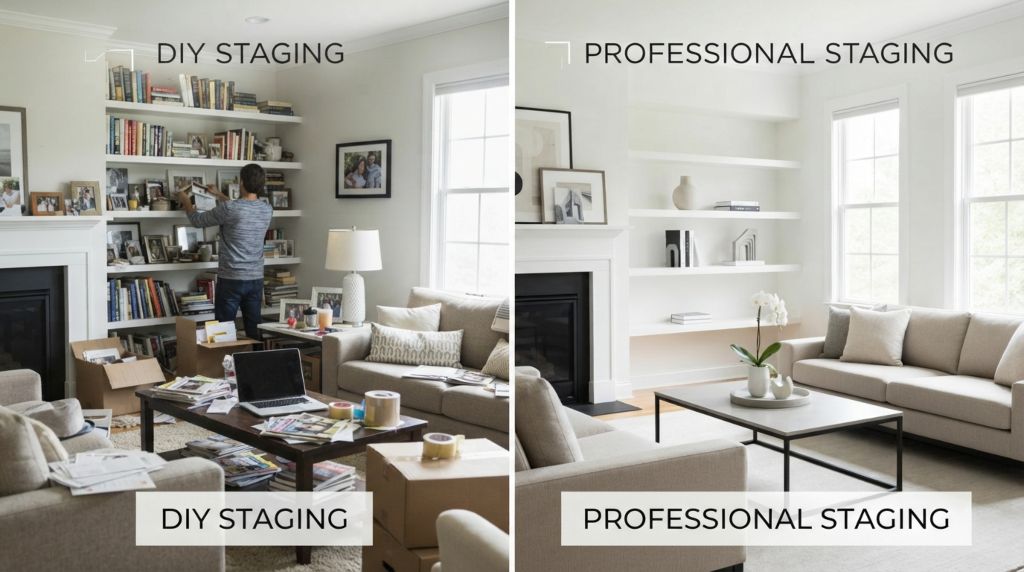
Decluttering and depersonalizing are the two highest-impact, lowest-cost things you can do before selling. Decluttering removes the excess so buyers see space instead of stuff; depersonalizing removes the personal so buyers can picture their own life in the home rather than yours. Together they make rooms feel larger and brighter and help buyers form the emotional connection that turns a showing into an offer — and they cost almost nothing but time and effort.
Here’s how to declutter and depersonalize your Ottawa home properly, room by room.
Why decluttering and depersonalizing matter so much
Buyers aren’t just assessing square footage — they’re imagining their future in the home. Two things block that. Clutter makes rooms feel smaller, busier, and less cared for, and it distracts the eye from the home’s actual features. Personal items — family photos, your kids’ artwork, your collections — subtly remind buyers that this is someone else’s home, which keeps them at emotional arm’s length.
Removing both is the cheapest lever in home preparation, and often the most powerful. It costs effort rather than money, which makes it the first thing every seller should do, before paint, repairs or staging. For where it fits in the bigger picture, see how to stage a home and how to stage your home on a budget.
Decluttering: room by room
Work through the home systematically rather than all at once.
Living areas: clear surfaces, remove excess furniture that crowds the flow, pare down decor to a few tasteful pieces, and tidy media and cords. The room should feel open and easy to move through.
Kitchen: clear the counters almost completely — appliances, mail, and clutter make kitchens feel small and dated. Buyers want to see expansive counter space.
Bedrooms: minimize furniture, clear nightstands and dressers, and make closets look spacious by removing at least a third of what’s in them — full closets signal a home short on storage.
Bathrooms: remove personal toiletries, clear counters, and keep only clean, hotel-like essentials on display.
Storage, garage, basement: these are where clutter hides, and buyers open every door. A tidy, half-empty storage space signals the home has room to spare.
Sell Your Ottawa Home for Just 1% Listing Commission
Why pay 2.5% listing commission to sell your home when you don't have to? Jason Polonski lists Ottawa homes for a simple 1% listing commission. Full MLS® and REALTOR.ca exposure, professional photography, powerful online marketing, expert pricing, and a skilled negotiator fighting for every dollar of your sale price. Top-tier service — you just keep thousands more when your home sells. Smart sellers are already making the switch. Your home deserves the best, and your wallet deserves a break.
The “pack early” mindset
The most useful reframe: you’re moving anyway, so start packing now. Everything you box up and remove before listing is both decluttering and a head start on your move. Off-season clothes, books, extra kitchenware, decor, and anything you won’t need in the coming weeks can go into boxes and out to storage.
This “pre-packing” approach makes decluttering feel productive rather than like busywork, and it’s the fastest way to empty a home of the 30% or so of belongings that make it feel full. Rooms, closets, and counters that are two-thirds full read as spacious; the same rooms packed full read as cramped. As a bonus, arriving at your new home with the sorting already done — keep, donate, sell, toss decided in advance — makes the move itself lighter and cheaper, since you’re not paying to transport things you’ll discard anyway.
Depersonalizing: helping buyers see themselves
Depersonalizing is about neutralizing the home so any buyer can imagine living there. The aim isn’t a cold, empty space — it’s a welcoming but neutral one that doesn’t broadcast whose home it is.
The reason this works is emotional. A buyer who can mentally move their own furniture in, picture their family at the table, and imagine their life in the space is a buyer forming attachment — and attachment drives offers. Your family photos and personal touches, however lovely, interrupt that imagination. Buyers browsing photos on REALTOR.ca make this judgment in seconds, so depersonalizing matters as much for the pictures as for showings.
Get Cash Back When You Buy a Home in Ottawa
Can you get cash back when buying a home in Ottawa? Yes. Jason Polonski, a Chairman's Club REALTOR® serving Ottawa and Kanata, shares part of his commission with buyers — up to $3,000 cash back at closing.* You still get full-service, award-winning representation: expert pricing, sharp negotiation, and hands-on guidance from first showing to keys in hand. No cut corners and no rebate-only shortcuts — just real money back in your pocket when you buy your Ottawa or Kanata home.
What to remove when depersonalizing
Specifically, take down and pack away: family photographs and personal portraits; children’s artwork and name decor; collections and hobby displays; strongly personal, bold, or niche decor; religious and political items, which can unintentionally alienate some buyers; and — importantly — valuables, medications, and sensitive documents, which shouldn’t be on display during showings for security reasons.
The test for each item: does it help a stranger picture their life here, or does it remind them it’s mine? If it’s the latter, box it. You’re not erasing your home’s warmth — you’re making room for the buyer’s imagination.
Where all the stuff goes
Decluttering and depersonalizing generate boxes, and where they go matters. Don’t just shift clutter into closets, the garage, or the basement — buyers open those, and stuffed storage undermines the whole effort. The options: an offsite storage unit (ideal, and often worth the modest monthly cost during a sale), a family member’s or friend’s space, or careful, tidy storage in the least-scrutinized areas as a last resort.
The principle is that the removed items should actually leave the visible home, not migrate to another part of it. A home that’s decluttered on the surface but bursting behind every door tells a buyer’s inspector — and the buyer — that storage is tight.
Where to take things in Ottawa
Furniture and household goods in good condition can be donated to Habitat for Humanity Greater Ottawa’s ReStore. For everything else, the City of Ottawa’s hazardous waste and special items page and its Waste Explorer show where electronics, batteries, old paint and bulky items can be dropped off or returned to participating retailers. Expired or unused medications cleared out of bathroom cabinets can go back to most Ontario pharmacies through the Health Products Stewardship Association take-back program.
Paperwork deserves the same care. Bills, bank statements and anything with your personal information shouldn’t be left in drawers strangers can open during showings, and the Canadian Anti-Fraud Centre explains how identity theft often starts with exactly that kind of document.

Special cases: downsizers and long-time owners
Some sellers face a bigger decluttering job than others. Downsizers and homeowners who’ve lived in the same house for decades have accumulated far more, and much of it carries memories, which makes editing both a physical and an emotional task. If that’s you, start earlier and go slower — give yourself weeks, not a weekend, and treat it as the first stage of a move you’re making anyway.
It can help to sort into four piles: keep, donate, sell, and toss, deciding each item once rather than shuffling it around. For sentimental things you’re not ready to part with, box and store them — they don’t need to be in the home during showings. Downsizing is a major life transition, and pacing the work keeps it from becoming overwhelming. Our guides to downsizing in Ottawa and downsizing in Kanata cover the move itself.
Keeping it show-ready
Decluttering once isn’t enough — the home has to stay that way through showings, which can run for days or weeks. Build simple habits: a basket to sweep loose items into before a showing, dishes done and counters clear daily, beds made, and a quick tidy routine you can run in fifteen minutes when a showing is booked on short notice. If you’re still living in the home, pare down to what you actually use day to day so upkeep is easy.
The goal is that any showing, even a last-minute one, catches the home looking its best. A home that photographs beautifully but shows cluttered on a Tuesday afternoon loses the buyer who came that Tuesday.
How far to go: neutral, not sterile
There’s a balance. Over-depersonalizing into a cold, empty box can make a home feel unloved and hard to warm to. The goal is neutral and inviting: some tasteful, universal touches — fresh flowers, neutral art, good lighting, clean linens — that make the home feel cared for without making it feel like a specific person’s home. The judgment call, warm but neutral, is what gets it right.
Err toward editing more rather than less, but keep enough warmth that the home feels like a place someone would want to live, not a vacant unit.
Decluttering, depersonalizing, and the photos
The payoff shows up first in your listing photos. A decluttered, depersonalized home photographs dramatically better — rooms look larger, surfaces cleaner, and the space more inviting — and those photos are what earn showings. Do this work before the photographer arrives, not after, because the pictures are permanent and they’re the first thing every buyer sees. Buyers scroll past dozens of listings before booking a showing, and the Ottawa Real Estate Board’s monthly figures show how much competition a new listing faces; decluttering plus depersonalizing is the cheapest way to get there.
Decluttering for Ottawa’s seasons
Ottawa’s climate adds a few decluttering jobs. In winter, the front hall fills with boots, coats, salt and shovels, so keep only what the household uses daily at the door and store the rest. In spring, pack winter gear away completely; in fall, do the same with patio furniture and summer equipment.
Basements and garages are where most Ottawa homes store seasonal gear, and they’re also where buyers and inspectors look for signs of moisture. Clear enough space along the foundation walls that they can be seen, and if anything smells musty, deal with it before listing; Health Canada’s indoor air quality guidance and our guide on how to prevent mould cover the common causes.


Posted on Google 

Jennifer Clark
10 days ago
 Trustindex verifies that the original source of the review is Google.
His availability to communicate was incredible which is so important when selling a house. Great at everything else too.
Posted on Google

Aarushi Govil
21 days ago
Trustindex verifies that the original source of the review is Google. Working with Jason has been an absolute privilege from start to finish. Finding the right realtor can be daunting, but Jason exceeded every expectation. He is remarkably knowledgeable and was extremely punctual and responsive to every question or request we had, no matter the time or the day. What stood out most was his complete sincerity and zero-pressure approach. When we walked through houses, he was transparent, pointing out both the pros and potential red flags instead of trying to make a quick sale. His honest feedback gave us complete confidence in our decision. If you want a dedicated, honest, and highly skilled agent in your corner, look no further than Jason!
Posted on Google

Joe Ireland
35 days ago
Trustindex verifies that the original source of the review is Google. Jason helped me buy my first home.
He was extremely responsive and available from our very first call, and assisted with booking multiple viewings across Ottawa.
He was punctual to every viewing and honest with his feedback with the homes we saw, and when it came time to go from viewing to buying, he had an impressive array of contacts from brokers to inspectors to lawyers, all with excellent reviews and who were great to work with in their own right.
As a first-time home buyer, his responsiveness and patience with many questions were extremely reassuring and really streamlined the process, and I signed an offer on my home within just 2 weeks of meeting him.
I would strongly recommend Jason to anyone buying a home in Ottawa, especially to those who are strangers to the process like I was.
Thank you again, Jason!
Posted on Google

Marina
65 days ago
Trustindex verifies that the original source of the review is Google. We had a wonderful experience working with our realtor - Jason Polonski. He is a professional, knowledgeable, responsive, and truly attentive to our needs. Jason guided us through every step of the process, answered all of our questions. My family are very grateful for his work and would absolutely recommend him to anyone looking for a reliable and trustworthy realtor in Ottawa and around !
Posted on Google

Vatrul “Vatrul”
69 days ago
Trustindex verifies that the original source of the review is Google. First time home seller. Every process of the journey was explained and laid out perfectly.. Very highly recommended.. thank you Jason..
Posted on Google

Olga V.
70 days ago
Trustindex verifies that the original source of the review is Google. Jason is very knowledgeable realtor in Kanata. He’s been always good beyond to help his clients. We had a place experience buying a house in Kanata. I highly recommend him.
Posted on Google

Yuri Tsouker
77 days ago
Trustindex verifies that the original source of the review is Google. Working with Jason on the sale of my property was genuinely one of the smoothest professional experiences I've had. He was responsive at every step, patient with every question (and I had many), and he clearly knew the local market inside and out.
My sale wasn't a simple one — there was a tenant, a rental water heater, a plumber to coordinate, and plenty of complications that made this a genuinely difficult case. Jason handled all of it with calm, practical advice and always got back to me quickly, often with a solution before I even finished asking about the problem.
What stood out most was his honesty. He didn't push, he didn't overpromise, and every recommendation he made turned out to be exactly right. I felt like I had a professional in my corner from day one.
If you're looking for a realtor who is knowledgeable, responsive, and genuinely trustworthy, I can't recommend Jason highly enough. Thank you, Jason — much appreciated!
Posted on Google

Denis Pepin
101 days ago
Trustindex verifies that the original source of the review is Google. Outstanding Experience with Jason Polonski!
Last May, my wife and I sold our home in Stittsville with Jason Polonski, and we couldn't be happier with our decision. Jason made the entire process remarkably smooth and stress-free.
From day one, Jason stood out for his exceptional communication. He was always prompt and available to answer our queries—often within minutes—no matter the time of day. Whenever we had questions regarding paperwork, listing strategies, or handling property details, he addressed every concern with a truly genuine, human touch.
What impressed us most was how proactive and reassuring he was at every step. When we had to coordinate the buyout of our water heater rental, Jason handled the reimbursement seamlessly, reassuring us with, "We should have a smooth sale now. :)"—and it truly was! Even post-closing, when we needed to arrange delivery for mailbox keys or track down final funds from head office, Jason stayed on top of every detail, putting a rush on things and constantly keeping us updated.
Jason is a dedicated, attentive, and highly professional realtor who genuinely cares about his clients. It has been an absolute pleasure working with him, and we highly recommend Jason Polonski to anyone looking to buy or sell a home in the Ottawa region.
Posted on Google

Tammy Puhakka
110 days ago
Trustindex verifies that the original source of the review is Google. I highly recommend Jason Polonski, a realtor in Kanata, Ottawa. He truly went above and beyond for me. During a long weekend, he called me and, within just two hours, had an offer to purchase prepared and sent so I could secure the home I had found and fallen in love with.
Jason was professional, efficient, knowledgeable, and incredibly pleasant to work with. His rates are very reasonable, and his dedication to his clients is outstanding. If you’re looking for fast, reliable, and friendly service, I would absolutely recommend contacting him.❤️
Posted on Google

Joe Melindy
115 days ago
Trustindex verifies that the original source of the review is Google. Everything went smoothly. Jason is very good at what he does. Would highly recommend. Thanks Jason 😊
Jason Polonski is a full-time Ottawa REALTOR® with Right at Home Realty who guides sellers through decluttering and depersonalizing — the highest-return, lowest-cost prep there is — seven days a week across Kanata, Stittsville, Barrhaven, Manotick, and the wider west end. His Bachelor of Commerce from Concordia University, a double major in Marketing and Finance, keeps the focus on the effort that actually returns money, and his eye for what buyers react to helps sellers know exactly how far to edit.
Working within the professional standards set by the Real Estate Council of Ontario and drawing on work with hundreds of Ottawa buyers and sellers, Jason turns a weekend of focused effort into a stronger sale. If you’re getting ready to list, decluttering and depersonalizing is where to start — and a quick walk-through together can tell you exactly what to edit first.
His client reviews are on his Google Business Profile. To plan your pre-listing prep, call or text Jason at (613) 601-9333 or request a free home evaluation.
Decluttering & Depersonalizing (FAQs)
Clutter makes rooms feel smaller, busier, and less cared for, and it distracts buyers from the home’s real features. Decluttering is the cheapest, highest-impact prep there is — it costs mainly time and makes spaces feel larger and brighter.
Remove personal items — family photos, children’s artwork, collections, bold or personal decor — so buyers can picture their own life in the home instead of yours. It helps buyers form the emotional connection that drives offers.
A useful rule is to remove roughly a third of your belongings, especially from closets, counters, and storage. Since you’re moving anyway, pack away off-season and non-essential items early — it declutters the home and gets a head start on your move.
Ideally, an offsite storage unit or a family member’s space — not stuffed into closets, the garage, or the basement, which buyers open and judge. Removed items should actually leave the visible home, not migrate to another part of it.
Yes. Stripping a home to a cold, empty box makes it feel unloved. Aim for neutral but inviting — tasteful, universal touches like fresh flowers, neutral art, and good lighting — so the home feels cared for without broadcasting whose it is.
Before your listing photos are taken and before the first showing. The photos are permanent and the first thing buyers see, so the home needs to be edited and camera-ready before the photographer arrives.
Furniture and household goods in good condition can go to Habitat for Humanity Greater Ottawa’s ReStore. The City of Ottawa’s Waste Explorer shows where electronics, batteries, paint and bulky items can be dropped off, and most pharmacies take back old medications.
