Ottawa Home Sellers
Selling in the Fall Market in Ottawa
By Jason Polonski, REALTOR® with Right at Home Realty · 15+ years in Ottawa real estate · Updated October 2026 · Client reviews
Selling in the Fall Market in Ottawa: What to Know
Fall is Ottawa’s second-strongest selling season — fewer buyers than spring, but more serious ones, and meaningfully less competition from other listings. Selling well in fall means listing early enough to close before the holiday slowdown, leaning on motivated buyers who want to be settled before winter, and using warm, cozy staging that flatters the season. For the right home and seller, fall’s lighter competition can be a genuine advantage over the crowded spring market.
Here’s how the Ottawa fall market works and how to sell into it well.

Why fall is a strong second season
After the summer lull, activity picks up again in September as buyers return from vacations and refocus. Many have a real deadline: they want to be moved and settled before winter and the holidays. That combination — renewed activity plus urgency — makes fall the year’s second-busiest stretch, and often a very efficient one for sellers.
Local activity tracked by the Ottawa Real Estate Board typically shows a fall bump after summer, and the national seasonal pattern reported by the Canadian Real Estate Association mirrors it. Fall isn’t spring, but it’s a legitimate selling season, not a fallback. In fact, sellers who missed the spring window or weren’t ready in time often find that fall gives them a strong second chance — with the bonus that the buyers who show up are rarely just browsing.
The advantages of selling in fall
Fall’s biggest advantage is the quality of buyers and the lack of competition. Fall buyers tend to be serious — people casually browsing in spring have often either bought or paused, so those looking in fall usually have a real reason and timeline. That means less foot traffic but a higher proportion of motivated, ready buyers.
Just as important, there’s less competition from other sellers. With fewer homes on the market than in spring, your listing stands out more and buyers have fewer alternatives to weigh against it. For a well-presented home, that reduced competition can translate into stronger interest and cleaner offers than the same home might get in spring.
Fewer buyers: the trade-off
The flip side is real: fall has a smaller buyer pool than spring. Fewer buyers can mean fewer showings and, in some segments, less chance of the multiple-offer dynamic that a hot spring can produce. For a home that thrives on maximum exposure and competition, spring may still edge out fall.
The right way to think about it is quality versus quantity. Spring offers the most buyers but the most competition; fall offers fewer but more serious buyers and far less competition. Which wins depends on your home and segment, and where interest rates sit — driven by the Bank of Canada — since affordability shapes how active any season’s buyers are.
Sell Your Ottawa Home for Just 1% Listing Commission
Why pay 2.5% listing commission to sell your home when you don't have to? Jason Polonski lists Ottawa homes for a simple 1% listing commission. Full MLS® and REALTOR.ca exposure, professional photography, powerful online marketing, expert pricing, and a skilled negotiator fighting for every dollar of your sale price. Top-tier service — you just keep thousands more when your home sells. Smart sellers are already making the switch. Your home deserves the best, and your wallet deserves a break.
Timing within fall
Timing matters in fall even more than in spring, because the window is shorter. Early fall — September into October — is generally the sweet spot: buyers are back and motivated, and there’s enough runway to close before the holidays. As you move into late fall and November, activity begins to taper toward the winter slowdown, and buyers increasingly wait for the new year.
The practical rule: list early in the fall season so your sale can complete before the holiday lull. A home that lingers into December often sits until the market reawakens in the new year, so hitting the early-fall window is the goal. Broader housing data from Statistics Canada can help you read how strong a given fall is shaping up to be.
How to prepare and stage for fall
Fall staging plays to the season’s mood. As the days shorten, light becomes crucial — open blinds, add warm lighting, and brighten interiors so the home never feels dim or gloomy. Lean into cozy warmth: soft textures, warm neutral tones, and a welcoming feel that makes buyers imagine settling in for the season. A tasteful touch of fall — without going overboard on seasonal decor — can make a home feel inviting.
Keep the staging warm but neutral, the same principle that governs staging year-round. The aim is a home that feels like a cozy retreat as the weather cools, which is exactly what fall buyers are picturing. General guidance on preparing a home to sell from CMHC applies, with the seasonal emphasis on light and warmth.
Get Cash Back When You Buy a Home in Ottawa
Can you get cash back when buying a home in Ottawa? Yes. Jason Polonski, a Chairman's Club REALTOR® serving Ottawa and Kanata, shares part of his commission with buyers — up to $3,000 cash back at closing.* You still get full-service, award-winning representation: expert pricing, sharp negotiation, and hands-on guidance from first showing to keys in hand. No cut corners and no rebate-only shortcuts — just real money back in your pocket when you buy your Ottawa or Kanata home.
Curb appeal in fall
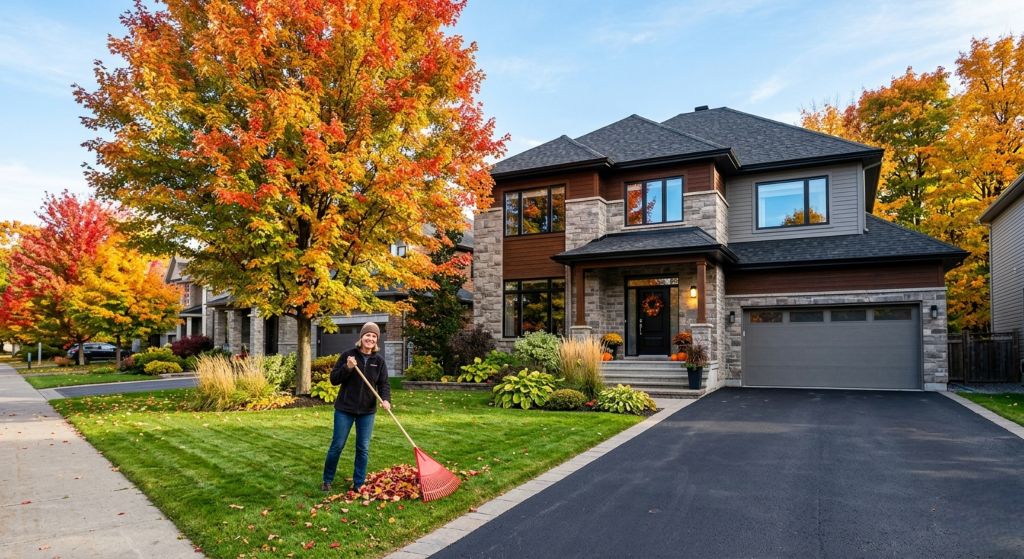
Fall curb appeal needs upkeep because nature works against you. Keep fallen leaves cleared, gardens tidy as they die back, and the exterior neat — an unraked, messy yard reads as neglect. Late-season flowers or a tasteful autumn touch at the entrance add warmth, and clean gutters and a tidy approach signal a well-maintained home heading into winter.
Buyers in fall are also quietly assessing how the home will handle the coming winter, so a well-kept exterior — and evidence of maintenance like clean eavestroughs — reassures them. Presentation outside matters as much as inside, even as the growing season ends.
Fall pricing strategy
Pricing in fall rewards realism. With a smaller buyer pool, an overpriced home has fewer buyers to begin with and can sit until the winter freeze, so accurate pricing from the start matters even more than in spring. At the same time, motivated fall buyers with little competition can act decisively on a well-priced, well-presented home. A comparative market analysis based on current fall activity sets the number, and provincial selling information is available from the Government of Ontario.
The strategy is to price sharply and present well, converting the season’s serious buyers rather than hoping a thin market will bid a high price up. In fall, a stale, overpriced listing has fewer chances to recover before winter.
Selling and buying in fall
If you’re selling to buy, fall can actually make the two-sided move easier than spring. You’re selling into a serious-buyer market, and you’re also buying with less competition from other buyers, so you may face fewer bidding wars on the purchase side than a hot spring would bring. The trade-off is a shorter window before the winter slowdown, so the timing has to be tighter and better planned.
The key, as always with a simultaneous move, is coordinating the sale and purchase so one doesn’t strand the other — and in fall, doing it before activity tapers toward the holidays. A deliberate plan, set before you list, keeps a fall buy-and-sell from getting squeezed against the calendar. For many move-up sellers, fall’s calmer buying conditions are a genuine reason to prefer it over a frantic spring.
What if you don’t sell before winter?
It’s worth planning for the possibility that a fall listing doesn’t sell before the market quiets. A home that lingers into December often sits until January or February, when buyers return — so if a fall sale is taking longer than hoped, you and your agent face a choice: adjust the price or presentation to convert a serious winter buyer, or pause and relist fresh in the new year. Neither is a failure, but the decision should be deliberate rather than drifting.
This is another reason to list early in the fall and price sharply from the start: it maximizes your runway to sell before the slowdown, and it avoids the stale-listing problem that hurts a home carried into and out of the winter freeze.
Fall vs spring: which suits you?
There’s no universal winner. Choose fall if you value less competition, more serious buyers, and a quicker, cleaner sale, and your home shows well in the season. Lean toward spring if you want maximum exposure and the best shot at a competitive multiple-offer situation, and you can prepare to stand out in a crowded field. Your circumstances — when you need to move, whether you’re buying too — often matter as much as the season itself. Buyers compare homes on REALTOR.ca year-round, so a well-prepared, well-priced home can succeed in either season.


Posted on Google 

Jennifer Clark
10 days ago
 Trustindex verifies that the original source of the review is Google.
His availability to communicate was incredible which is so important when selling a house. Great at everything else too.
Posted on Google

Aarushi Govil
21 days ago
Trustindex verifies that the original source of the review is Google. Working with Jason has been an absolute privilege from start to finish. Finding the right realtor can be daunting, but Jason exceeded every expectation. He is remarkably knowledgeable and was extremely punctual and responsive to every question or request we had, no matter the time or the day. What stood out most was his complete sincerity and zero-pressure approach. When we walked through houses, he was transparent, pointing out both the pros and potential red flags instead of trying to make a quick sale. His honest feedback gave us complete confidence in our decision. If you want a dedicated, honest, and highly skilled agent in your corner, look no further than Jason!
Posted on Google

Joe Ireland
35 days ago
Trustindex verifies that the original source of the review is Google. Jason helped me buy my first home.
He was extremely responsive and available from our very first call, and assisted with booking multiple viewings across Ottawa.
He was punctual to every viewing and honest with his feedback with the homes we saw, and when it came time to go from viewing to buying, he had an impressive array of contacts from brokers to inspectors to lawyers, all with excellent reviews and who were great to work with in their own right.
As a first-time home buyer, his responsiveness and patience with many questions were extremely reassuring and really streamlined the process, and I signed an offer on my home within just 2 weeks of meeting him.
I would strongly recommend Jason to anyone buying a home in Ottawa, especially to those who are strangers to the process like I was.
Thank you again, Jason!
Posted on Google

Marina
65 days ago
Trustindex verifies that the original source of the review is Google. We had a wonderful experience working with our realtor - Jason Polonski. He is a professional, knowledgeable, responsive, and truly attentive to our needs. Jason guided us through every step of the process, answered all of our questions. My family are very grateful for his work and would absolutely recommend him to anyone looking for a reliable and trustworthy realtor in Ottawa and around !
Posted on Google

Vatrul “Vatrul”
69 days ago
Trustindex verifies that the original source of the review is Google. First time home seller. Every process of the journey was explained and laid out perfectly.. Very highly recommended.. thank you Jason..
Posted on Google

Olga V.
70 days ago
Trustindex verifies that the original source of the review is Google. Jason is very knowledgeable realtor in Kanata. He’s been always good beyond to help his clients. We had a place experience buying a house in Kanata. I highly recommend him.
Posted on Google

Yuri Tsouker
77 days ago
Trustindex verifies that the original source of the review is Google. Working with Jason on the sale of my property was genuinely one of the smoothest professional experiences I've had. He was responsive at every step, patient with every question (and I had many), and he clearly knew the local market inside and out.
My sale wasn't a simple one — there was a tenant, a rental water heater, a plumber to coordinate, and plenty of complications that made this a genuinely difficult case. Jason handled all of it with calm, practical advice and always got back to me quickly, often with a solution before I even finished asking about the problem.
What stood out most was his honesty. He didn't push, he didn't overpromise, and every recommendation he made turned out to be exactly right. I felt like I had a professional in my corner from day one.
If you're looking for a realtor who is knowledgeable, responsive, and genuinely trustworthy, I can't recommend Jason highly enough. Thank you, Jason — much appreciated!
Posted on Google

Denis Pepin
101 days ago
Trustindex verifies that the original source of the review is Google. Outstanding Experience with Jason Polonski!
Last May, my wife and I sold our home in Stittsville with Jason Polonski, and we couldn't be happier with our decision. Jason made the entire process remarkably smooth and stress-free.
From day one, Jason stood out for his exceptional communication. He was always prompt and available to answer our queries—often within minutes—no matter the time of day. Whenever we had questions regarding paperwork, listing strategies, or handling property details, he addressed every concern with a truly genuine, human touch.
What impressed us most was how proactive and reassuring he was at every step. When we had to coordinate the buyout of our water heater rental, Jason handled the reimbursement seamlessly, reassuring us with, "We should have a smooth sale now. :)"—and it truly was! Even post-closing, when we needed to arrange delivery for mailbox keys or track down final funds from head office, Jason stayed on top of every detail, putting a rush on things and constantly keeping us updated.
Jason is a dedicated, attentive, and highly professional realtor who genuinely cares about his clients. It has been an absolute pleasure working with him, and we highly recommend Jason Polonski to anyone looking to buy or sell a home in the Ottawa region.
Posted on Google

Tammy Puhakka
110 days ago
Trustindex verifies that the original source of the review is Google. I highly recommend Jason Polonski, a realtor in Kanata, Ottawa. He truly went above and beyond for me. During a long weekend, he called me and, within just two hours, had an offer to purchase prepared and sent so I could secure the home I had found and fallen in love with.
Jason was professional, efficient, knowledgeable, and incredibly pleasant to work with. His rates are very reasonable, and his dedication to his clients is outstanding. If you’re looking for fast, reliable, and friendly service, I would absolutely recommend contacting him.❤️
Posted on Google

Joe Melindy
115 days ago
Trustindex verifies that the original source of the review is Google. Everything went smoothly. Jason is very good at what he does. Would highly recommend. Thanks Jason 😊
Jason Polonski is a full-time Ottawa REALTOR® with Right at Home Realty who helps sellers decide whether fall suits their home and time it to close before the holiday slowdown, seven days a week across Kanata, Stittsville, Barrhaven, Manotick, and the wider west end. His Bachelor of Commerce from Concordia University, a double major in Marketing and Finance, grounds the season-and-timing decision in real market analysis, and his construction background helps sellers present a home that reassures buyers heading into an Ottawa winter.
Working within the professional standards set by the Real Estate Council of Ontario and drawing on work with hundreds of Ottawa buyers and sellers, Jason turns fall’s serious buyers and light competition into a strong result. If you’re weighing a fall sale, a quick conversation about timing and your home is the right first step.
Related guides: the best time to sell · selling in the spring market · selling your home in winter · how interest rates affect selling · about Jason Polonski · his Google reviews
Thinking about selling? See how much your Ottawa home is worth.
Selling in the Fall Market (FAQs)
Yes — it’s the second-strongest season. There are fewer buyers than in spring, but more serious ones, and less competition from other listings, so a well-presented home can stand out and attract motivated, ready buyers.
Early fall — September into October — is generally the sweet spot, with motivated buyers back from summer and enough time to close before the holidays. Activity tapers toward late November as buyers start waiting for the new year, so listing early is best.
Less competition and more serious buyers. With fewer homes on the market, your listing stands out, and buyers have fewer alternatives; fall buyers usually have a real reason and timeline rather than casually browsing.
A smaller buyer pool than in spring, which can mean fewer showings and, in some segments, less chance of a multiple-offer situation. For homes that thrive on maximum exposure, spring may still have an edge.
Emphasize light against the shorter days — open blinds, add warm lighting — and lean into cozy warmth with soft textures and warm neutral tones. Keep it warm but neutral, and keep curb appeal tidy as leaves fall and gardens die back.
Not necessarily. Fall offers less competition and serious buyers, which can suit many homes better than a crowded spring. The best choice depends on your home, your timeline, and current conditions — it’s worth weighing rather than defaulting to spring.
