There are seven reasons to buy a home in Carp, Ontario, starting with more land, a genuine village community, and quick highway access to Ottawa. Carp sits within the City of Ottawa’s West Carleton-March ward, northwest of Kanata, and it draws buyers who want a rural or semi-rural lifestyle without giving up a manageable commute. Growing families looking for a bigger lot, downsizers ready to trade a condo for a quieter street, and first-time buyers priced out of denser west-end neighbourhoods all show up in Carp for slightly different reasons. This guide walks through seven specific reasons Carp continues to attract that mix of buyers, along with the practical details — lot servicing, schools, and commute times — that matter once you’re comparing an actual offer. For a broader look at the area, the Carp neighbourhood guide covers lifestyle and housing stock in more depth.

1. Larger Lots and More Living Space
Carp’s rural-residential lots are typically larger than what you’ll find in established Ottawa neighbourhoods closer to the core, which matters for buyers who want space for a workshop, a large garden, or simply more distance from the neighbours. The village core itself is designated as a “Village” area under Ottawa’s Official Plan, which permits a maximum of two dwelling units per lot on properties that aren’t serviced by municipal water or sewer, keeping density low and the streetscape consistent with its small-town character.
Because many Carp properties rely on a private well and septic system rather than municipal services, it’s worth budgeting for a proper well and septic inspection before closing. Canada Mortgage and Housing Corporation’s guide to buying a home with a well and septic system is a useful starting point for understanding what to ask for.
This is also where Carp tends to suit specific buyer types especially well. Downsizers looking for a single-level home on a larger, quieter lot, and growing families who want room for a garage workshop, a pool, or simply more distance between houses, are the buyers who typically get the most value out of Carp’s lot sizes compared to an equivalent urban property.
2. Trails, Rivers, and Everyday Access to the Outdoors
Carp sits along the Carp River watershed, and outdoor recreation is part of daily life here rather than something you drive to on weekends. Hiking, cycling, and cross-country skiing are all accessible nearby, and the Trans Canada Trail’s Ottawa-Carleton section connects Stittsville to Carp along a former rail corridor that’s popular with cyclists and walkers year-round.
For buyers who want a four-season connection to trails and green space without leaving the neighbourhood, this is one of the more tangible differences between Carp and a typical Ottawa subdivision. Winters bring cross-country skiing and snowshoeing on the same trail network that’s used for hiking and cycling in warmer months, so the outdoor access isn’t a seasonal perk — it’s a year-round part of living here.
Sell Your Ottawa Home for Just 1% Listing Commission
Why pay 2.5% listing commission to sell your home when you don't have to? Jason Polonski lists Ottawa homes for a simple 1% listing commission. Full MLS® and REALTOR.ca exposure, professional photography, powerful online marketing, expert pricing, and a skilled negotiator fighting for every dollar of your sale price. Top-tier service — you just keep thousands more when your home sells. Smart sellers are already making the switch. Your home deserves the best, and your wallet deserves a break.
3. A Genuine Village Community and Local Traditions
Carp still functions like a village in the way many Ottawa suburbs no longer do. The Carp Farmers’ Market runs through the growing season, and the Carp Fair — an agricultural fair that’s run since the 1860s — draws visitors from across the region every September.
That kind of continuity tends to translate into a community where neighbours know each other and local events aren’t manufactured for a subdivision newsletter. The Carp Community Association and a handful of long-standing local shops and services in the village core give residents a reason to stay in the community for day-to-day errands rather than driving into Kanata for everything.
Buyers relocating from denser parts of Ottawa often cite this as the thing they didn’t expect to value as much as they do. The moving to Carp guide covers what that adjustment actually looks like.
Get Cash Back When You Buy a Home in Ottawa
Can you get cash back when buying a home in Ottawa? Yes. Jason Polonski, a Chairman's Club REALTOR® serving Ottawa and Kanata, shares part of his commission with buyers — up to $3,000 cash back at closing.* You still get full-service, award-winning representation: expert pricing, sharp negotiation, and hands-on guidance from first showing to keys in hand. No cut corners and no rebate-only shortcuts — just real money back in your pocket when you buy your Ottawa or Kanata home.
4. Strong Local Schools Close to Home
Families in Carp have access to Huntley Centennial Public School, part of the Ottawa-Carleton District School Board, directly in the village. Catholic elementary options are available through the regional Catholic school board, a short drive away, and Carp’s location keeps families within reach of Kanata and Stittsville for secondary school and specialized programs, including French immersion.
For a rural community, that combination of an in-village elementary school and nearby secondary options is a genuine advantage over communities that require a longer daily bus ride. Families considering a move should confirm current boundary and registration details directly with the relevant school board, since attendance areas can shift from year to year.

5. Quick Highway Access to Ottawa Without Losing Rural Character
Despite its rural feel, Carp is a manageable commute from downtown Ottawa via Highway 417, typically 30 to 45 minutes depending on traffic and the specific route in from March Road or Carp Road. That balance — rural lot sizes and a village pace, with a realistic commute — is the trade-off most buyers are actually weighing when they compare Carp to a fully urban neighbourhood.
| Detail | Carp, Ontario |
|---|---|
| Municipal ward | West Carleton-March (Ward 5) |
| Approximate drive to downtown Ottawa | 30–45 minutes, depending on traffic |
| Main highway access | Highway 417 via March Road / Carp Road |
| Water & sewer servicing | Mostly private well and septic; village core has limited municipal servicing |
| School board options | Ottawa-Carleton District School Board, plus a nearby Catholic board option |
| Signature landmark | The Diefenbunker, a National Historic Site of Canada |
6. Comparative Affordability Within the Ottawa Market
Compared to fully serviced neighbourhoods closer to the core, Carp often provides more house and land per dollar, though pricing varies significantly by property type, lot servicing, and how recently a home was updated. First-time buyers purchasing an eligible home in Ontario may also qualify for a land transfer tax refund of up to $4,000, which is worth factoring into a Carp purchase alongside the usual closing costs.
Current pricing shifts with the broader market, so rather than quoting a number that’s likely to be outdated by the time you read this, it’s worth reviewing live listings on REALTOR.ca or through the Carp real estate complete guide for a current picture, or browsing what’s actually on the market at Carp homes for sale.
Rural properties also come with cost variables that a fully serviced urban home doesn’t: well and septic maintenance, propane or oil heating in some cases, and longer driveways to plow. The Financial Consumer Agency of Canada’s homebuying resources are a useful place to work through the full cost of ownership, not just the purchase price, before making an offer.
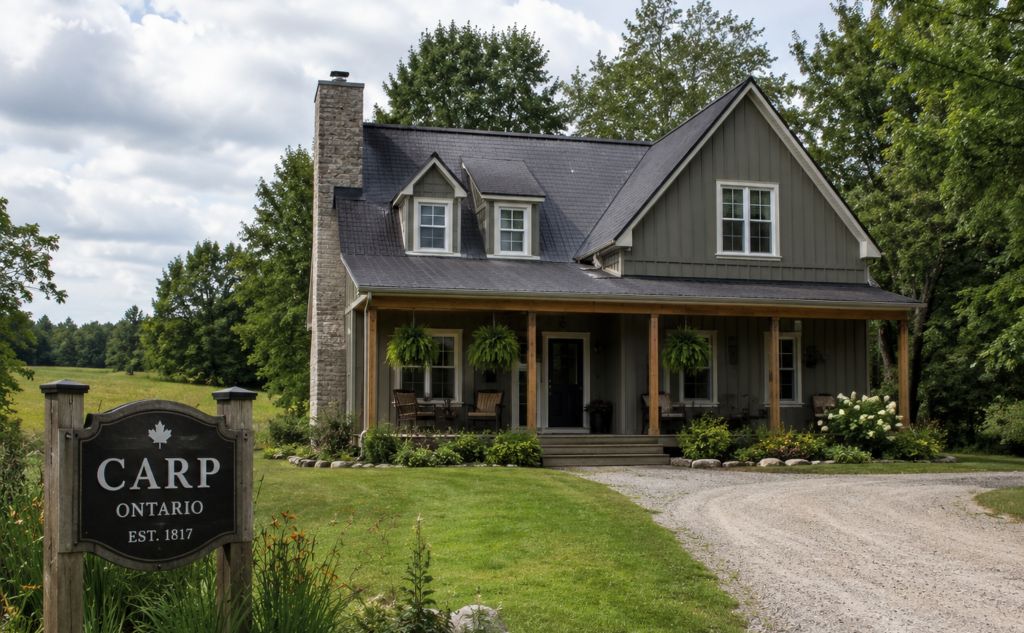
7. A Growing Local Economy With Small-Town Charm
Carp isn’t a static village frozen in place. The Carp Road Corridor has developed into a genuine business hub, with light industrial and commercial activity that the City of Ottawa has planned for through the Carp Road Corridor Community Design Plan, while the village core keeps its small-town storefronts and services.
The Diefenbunker, Canada’s Cold War museum and a designated National Historic Site, continues to draw visitors to the area and supports a modest but steady stream of local tourism. Carp Airport adds another layer of local activity, from flight training to small aviation businesses, without changing the residential feel of the village streets themselves.
For buyers, that combination of quiet residential streets and a nearby working economy is part of what keeps Carp from feeling like a purely bedroom community, and it means the village has an economic base that doesn’t depend entirely on commuters heading into Ottawa.

Your Local Guide to Buying a Home in Carp
This guide was put together by Jason Polonski, a REALTOR® with Right at Home Realty who has spent more than 15 years working across Ottawa’s west end, including Carp, Kanata, Stittsville, and the surrounding communities of West Carleton-March. Jason’s background is in construction, including a technical diploma in Construction Electricity, alongside a Bachelor of Commerce from Concordia University — a combination that’s particularly useful in a market like Carp, where well water, septic systems, and older electrical work are common inspection findings rather than exceptions.
Jason has helped hundreds of buyers and sellers work through rural and semi-rural purchases across the Ottawa area, and he’s available seven days a week to talk through what a specific Carp property will actually cost to own, not just what it costs to buy. That local track record has been recognized with industry honours, including the Chairman’s Club award and recognition as one of Ottawa’s Top REALTORS®, but the more relevant credential for a Carp purchase is time spent walking rural properties, not the awards themselves.
If you’re weighing a purchase in Carp, working with a Carp REALTOR® who knows the area’s wells, septic systems, and zoning rules can save you from surprises after closing. If you also need to sell a current home to make the move, the selling your home in Carp guide is a good place to start, and Jason can walk through the timing of both sides of that move before you write an offer.
Reasons to Buy a Home in Carp (FAQs)
Carp is a good fit for buyers who want a larger, quieter lot and a genuine village community while staying within commuting distance of Ottawa. It suits growing families, downsizers, and first-time buyers priced out of denser west-end neighbourhoods, though it requires more comfort with rural systems like well water and septic than a fully serviced urban home.
The drive from Carp to downtown Ottawa typically takes 30 to 45 minutes via Highway 417, depending on traffic and whether you access the highway from March Road or Carp Road. Commute times can vary by time of day and season, so it’s worth doing the drive yourself before making an offer.
Most properties in Carp rely on a private well and septic system rather than municipal water and sewer, and the village core itself has only limited municipal servicing. Buyers should budget for a well and septic inspection before closing, since these systems function differently from municipal service and carry their own maintenance costs.
Carp often provides more house and land per dollar than fully serviced neighbourhoods closer to the core, but pricing varies by property type, lot servicing, and condition, so this isn’t true of every listing. The most reliable way to compare is to review current, comparable listings rather than relying on a general rule of thumb.
Huntley Centennial Public School, part of the Ottawa-Carleton District School Board, is located directly in the village. Families also have access to a Catholic elementary option a short drive away, and to secondary schools and specialized programs, including French immersion, in nearby Kanata and Stittsville.
Carp can work well for first-time buyers, particularly those who qualify for Ontario’s land transfer tax refund of up to $4,000 and want more space than a comparably priced urban home offers. First-time buyers new to rural properties should plan extra time to learn how septic and heating systems differ from those in a municipally serviced home.
Before buying in Carp, have the well and septic system professionally inspected, test the water quality, and confirm the heating source, since many rural homes use propane or oil rather than natural gas. It’s also worth confirming zoning and any restrictions tied to the property’s Village or rural designation under Ottawa’s Official Plan.
Yes. Jason Polonski is a REALTOR® with Right at Home Realty who has spent more than 15 years working across Ottawa’s west end, including Carp and the surrounding West Carleton-March communities, and he’s available seven days a week. His background in construction and electrical work is particularly useful for evaluating the wells, septic systems, and older wiring common in rural Carp properties.